CM Sukhu Flags GI Push for Chamba's Crafts and Produce
Synopsis
Himachal Pradesh CM Sukhvinder Singh Sukhu, honoured by Chamba District Congress leaders with traditional gifts, announced that Chamba Metal Art has secured a GI tag and that three more regional products — Bhot Jau, Chamba Chukh, and Plectranthus honey — are in the GI registration pipeline.
Key Takeaways
Chamba Metal Art has received a Geographical Indication (GI) registration , providing legal protection and market recognition for the craft.
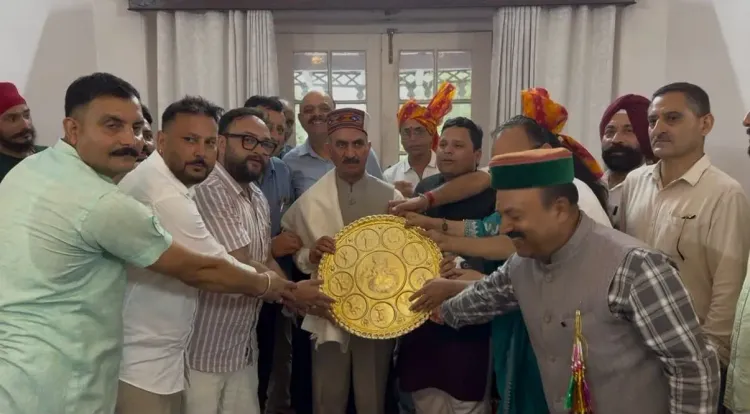
CM Sukhvinder Singh Sukhu was honoured by the Chamba District Congress Committee with a traditional thaal , cap, and shawl on 2 August 2026 .
GI applications are pending for Bhot Jau (Pangi region barley), Chamba Chukh (chilli condiment), and Plectranthus honey (Bharmour).
A successful GI tag would directly benefit local artisans, farmers, and forest communities in remote Chamba sub-regions.
The drive aligns with a broader Indian state-government pattern of using GI registration to link cultural heritage with economic opportunity.
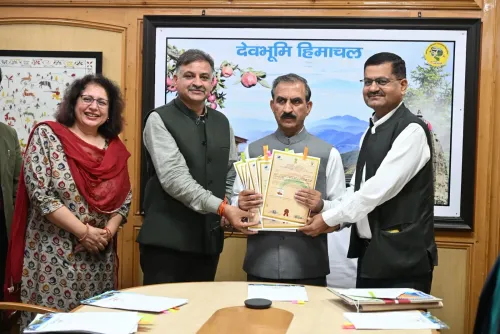
A traditional thaal (ceremonial plate), cap, and shawl — symbols of Chamba's centuries-old folk heritage — were presented to Himachal Pradesh Chief Minister Sukhvinder Singh Sukhu by office-bearers of the Chamba District Congress Committee under the leadership of its president, Surjit Sharma Bharmouri, on 2 August 2026. The gesture was more than ceremonial — the Chief Minister used the occasion to announce the state's accelerating drive to win global recognition for Chamba's crafts and regional produce.
Metal Art earns its GI badge
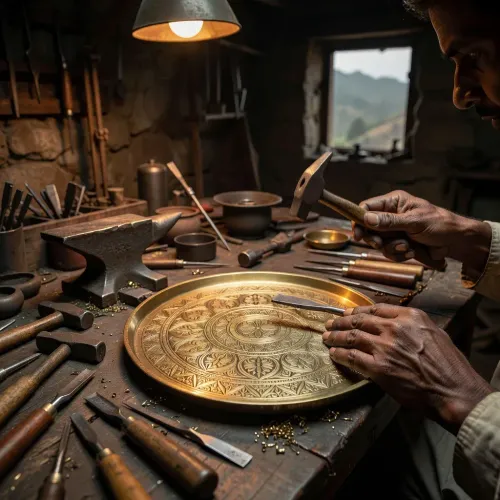
The headline achievement the Chief Minister cited is the Geographical Indication (GI) registration secured for Chamba Metal Art — the district's distinctive traditional metalwork. A GI tag under India's Geographical Indications of Goods (Registration and Protection) Act, 1999 grants legal protection to products tied to a specific region's heritage and quality, shielding artisans from imitation and helping them command premium value in national and international markets. For Chamba's metal craftspeople, the recognition marks a long-sought formal acknowledgement of their craft's uniqueness.
Three more products in the GI pipeline
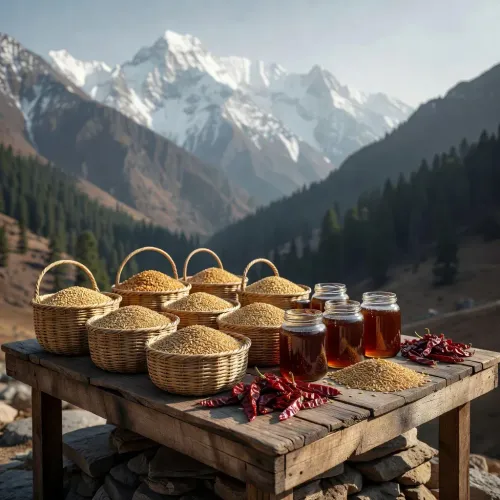
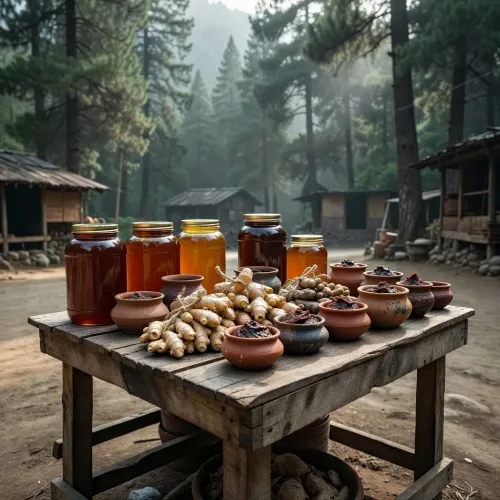
Sukhu signalled that the state is not stopping there. Applications are underway to secure GI tags for Bhot Jau (a heritage barley variety from the remote Pangi region), Chamba Chukh (the district's signature chilli-based condiment), and Plectranthus honey from the Bharmour area. Each product carries a distinct ecological and cultural footprint — Pangi's high-altitude grain, a condiment inseparable from Chamba's culinary identity, and a rare mountain honey tied to the biodiversity of Bharmour's forests. A successful GI registration for any of them would directly benefit local farmers and forest communities who produce them.
Himachal's broader heritage-economy bet
The push fits a well-established pattern across Indian states: using GI registration to convert cultural distinctiveness into economic leverage. Himachal Pradesh has pursued this route for several of its products over the past two decades, and the Chamba cluster — spanning metal art, food, and agri-produce — represents one of the more concentrated regional efforts in the state. The Chief Minister's public acknowledgement of the honour, framed alongside a policy update, signals that the Chamba GI drive has political as well as administrative momentum behind it.
The real test comes when the pending applications clear — or don't. Artisans in Bharmour and farmers in Pangi are watching the outcome closely.
Point of View
A heritage grain, a condiment, and forest honey — is a telling example of how state governments are increasingly treating cultural distinctiveness as an economic asset rather than a preservation footnote. For the Congress government in Himachal Pradesh, securing GI tags for remote-area produce like Pangi's Bhot Jau and Bharmour's Plectranthus honey also carries a political dividend: it signals administrative attention to constituencies that often feel overlooked. The Metal Art registration is a concrete deliverable; the three pending applications will be the real measure of the programme's momentum. Whether the state can sustain the bureaucratic follow-through beyond the announcement cycle will determine whether local artisans and farmers see tangible benefit.
NationPress
2 Aug 2026
Frequently Asked Questions
What is the GI tag and why does Chamba Metal Art getting one matter?
A Geographical Indication (GI) tag is a legal certification under India's 1999 GI Act that links a product to its region of origin, protecting it from imitation and helping producers command better prices. Chamba Metal Art receiving one means the craft is now formally recognised as unique to the region, giving artisans legal recourse against counterfeits and improved market access.
Which Chamba products are currently seeking a GI tag?
Three products are in the pipeline: Bhot Jau, a heritage barley variety from the Pangi region; Chamba Chukh, the district's traditional chilli condiment; and Plectranthus honey from the Bharmour area. Their applications are ongoing as of August 2026.
Who is Surjit Sharma Bharmouri?
Surjit Sharma Bharmouri is the president of the Chamba District Congress Committee. He led the delegation of party office-bearers that honoured CM Sukhu with traditional Chamba gifts on 2 August 2026.
What is Chamba Chukh?
Chamba Chukh is a traditional chilli-based condiment that is closely associated with the culinary identity of Chamba district in Himachal Pradesh. The state government is pursuing a GI tag to protect and promote it.
How does a GI tag benefit local farmers and artisans in Himachal Pradesh?
A GI tag prevents producers outside the designated region from using the product's name, helping genuine local producers differentiate their goods, access premium markets, and receive better prices. For remote communities in areas like Pangi and Bharmour, it can translate directly into higher incomes and sustained livelihoods.