PoK unrest: Decades of neglect fuelling a mass movement, analysis warns
Synopsis
A detailed analysis published in The Secretariat draws a stark parallel between today's PoK and pre-1971 Bangladesh — pointing to mass displacement, military land seizures, chronic power shortages, and a terror infrastructure that even local residents are protesting. The JAAC-led movement, active since 2023, has moved well beyond economic grievance into a broader political challenge to Islamabad's control.
Key Takeaways
The JAAC has been leading protests in PoK since 2023 , with grievances spanning inflation, power tariffs, and subsidised goods costs.
Only one hospital serves every 1.5 lakh people ; 50% of PoK's population lacks clean drinking water, causing over 3,000 deaths annually from waterborne disease.
The Mangla Dam displaced over 1,00,000 residents ; 80% of its electricity output goes to mainland Pakistan.
The Pakistani military has reportedly seized over 50,000 acres of agricultural land in PoK for military and commercial use.
Terror camps allegedly run by FIF , JuD , and other outfits in PoK were reportedly targeted by India during Operation Sindoor .
Local residents staged a peaceful protest in Muzaffarabad in 2019 against militancy, carrying banners reading 'We want peace, not militancy.'
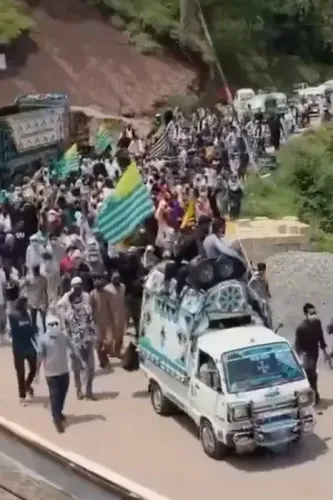
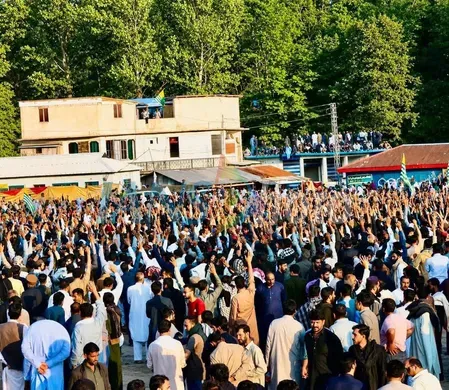
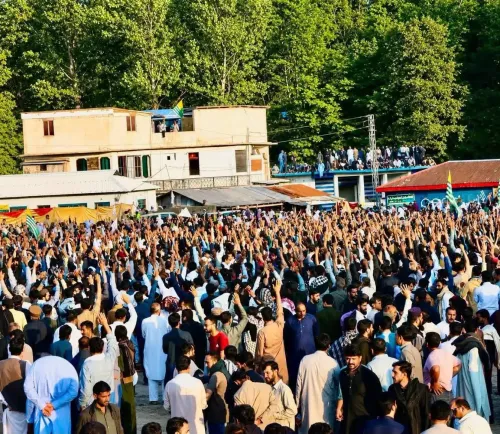
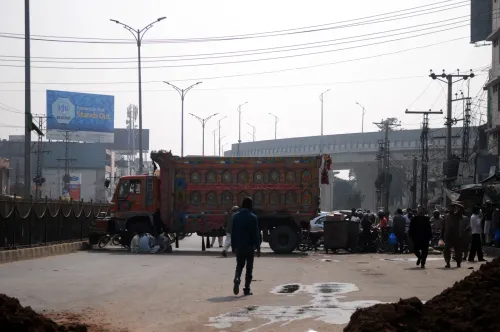
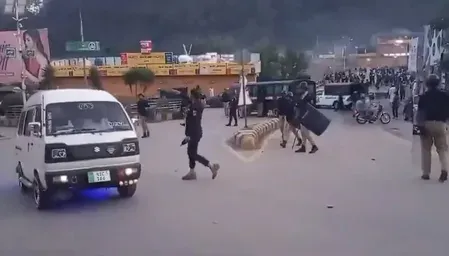
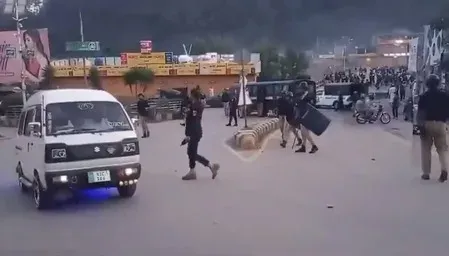
Pakistan-Occupied Kashmir (PoK) is witnessing a deepening crisis rooted in decades of systemic neglect, with a grassroots protest movement that geopolitics commentator Ravi Verma has compared — in scale and trajectory — to the conditions that preceded the 1971 Bangladesh Liberation War, according to a report published in The Secretariat. The region came under sharp international focus following a police crackdown on civilian demonstrators, intensifying scrutiny of Islamabad's governance record in the territory.
The Roots of Unrest
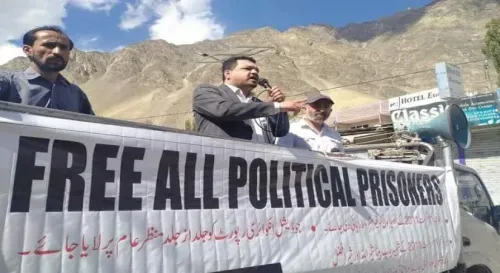
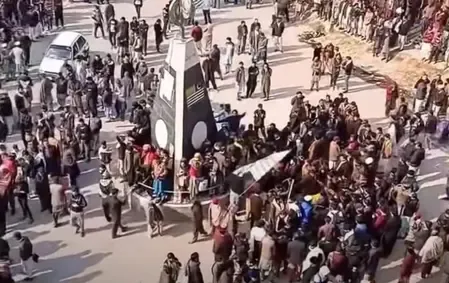
The Jammu Kashmir Joint Awami Action Committee (JAAC) — a broad coalition of traders, activists, and civil society groups — has been leading protests in PoK since 2023. What began as an economic grievance movement has, according to Verma's analysis, evolved into a wider political struggle against entrenched power structures.
The immediate triggers include soaring inflation, high electricity tariffs, and the rising cost of subsidised staple goods. But the deeper fault lines run further: reportedly only one hospital serves every 1.5 lakh people in the region, and 50 per cent of PoK's population lacks access to clean drinking water — a deficit that, according to the report, contributes to more than 3,000 deaths annually from waterborne diseases.
Dam Displacement and Land Seizures
The construction of the Mangla Dam displaced over 1,00,000 residents of PoK, yet 80 per cent of the electricity generated by the dam is reportedly sent to mainland Pakistan, leaving PoK in chronic power shortage. The dam has also caused significant environmental damage, including soil erosion.
Compounding this, the Pakistani military has reportedly seized over 50,000 acres of agricultural land across PoK, repurposing it for military installations or leasing it to large commercial entities. In the Jhelum Valley, 2,000 acres of fertile farmland have been converted into military installations; in Muzaffarabad, a further 5,000 acres of productive agricultural land has been similarly repurposed, according to the report.
Despite attracting over one million tourists annually, local businesses in PoK reportedly receive only 20 per cent of the tourism revenue — a figure that underscores the economic marginalisation of the local population.
Terror Infrastructure Under Scrutiny
Verma's report further states that the Pakistan military has been operating terror camps in PoK through charity organisations including the Falah-e-Insaniat Foundation (FIF), Jamaat-ud-Dawa (JuD), Idara Khidmat-e-Khalq, and Al-Rashid Trust.
The Indian government has repeatedly flagged Pakistan's alleged operation of terrorist infrastructure in PoK, citing active launch pads, training camps, and command hubs used by militant groups such as Lashkar-e-Taiba (LeT), Jaish-e-Mohammed (JeM), and Hizbul Mujahideen. Several of these installations were reportedly destroyed by the Indian military during Operation Sindoor.
Notably, PoK residents themselves have protested against this terror infrastructure. In 2019, a peaceful demonstration in Muzaffarabad saw residents carrying banners reading, 'No more violence in our land' and 'We want peace, not militancy,' according to Verma's account.
A Broader Pattern
This is not the first time PoK has seen civic unrest, but analysts note the current movement is distinguished by its organisational depth and cross-sectoral participation. The JAAC's ability to sustain protests across trader communities, civil society, and ordinary citizens signals a structural shift in public sentiment — one that Pakistan's security apparatus has so far addressed primarily through force.
How Islamabad responds in the coming months — and whether it offers any credible economic relief — will likely determine whether the movement broadens further or is suppressed.
Point of View
An external military intervention, and Cold War geopolitics that do not map neatly onto PoK today. What the comparison does usefully highlight is the danger of prolonged economic extraction without political accommodation. Pakistan's response — police crackdowns rather than structural reform — mirrors the playbook that historically accelerates, not suppresses, separatist sentiment. The more significant detail in this report is the JAAC's cross-sectoral composition: when traders, civil society, and ordinary citizens coalesce under one platform, it signals that the movement has moved beyond a single-issue protest into something harder to co-opt or disperse. India's interest in amplifying this narrative is obvious, which is precisely why independent verification of the specific figures cited — land seizures, hospital ratios, waterborne death counts — remains essential for credible coverage.
NationPress
2 Aug 2026
Frequently Asked Questions
What is driving the unrest in Pakistan-Occupied Kashmir?
The unrest in PoK is driven by a combination of economic hardships — including soaring inflation, high electricity tariffs, and costly subsidised goods — and deeper structural grievances such as military land seizures, chronic power shortages, and inadequate healthcare. The JAAC coalition has been leading organised protests since 2023, and what began as economic dissent has evolved into a broader political movement.
Who is the JAAC and what role does it play in PoK protests?
The Jammu Kashmir Joint Awami Action Committee (JAAC) is a coalition of traders, activists, and civil society groups that has been spearheading protests in PoK since 2023. It has provided organisational structure to a movement rooted in economic grievances, helping it evolve into a wider political challenge to existing power structures in the region.
How does the Mangla Dam connect to PoK's power crisis?
The Mangla Dam displaced over 1,00,000 PoK residents during its construction, yet 80 per cent of the electricity it generates is reportedly sent to mainland Pakistan. This leaves PoK with a severe power deficit despite being the source of the generation, a disparity that has become a central grievance for protesters.
What terror infrastructure has been reported in PoK?
According to the analysis, the Pakistan military has allegedly operated terror camps in PoK through organisations including the Falah-e-Insaniat Foundation (FIF), Jamaat-ud-Dawa (JuD), Idara Khidmat-e-Khalq, and Al-Rashid Trust. India has separately and repeatedly accused Pakistan of running launch pads and training camps for groups such as Lashkar-e-Taiba and Jaish-e-Mohammed in the region.
What is Operation Sindoor and how does it relate to PoK?
Operation Sindoor was a military operation conducted by the Indian armed forces that reportedly targeted and destroyed several terror infrastructure sites in Pakistan-Occupied Kashmir. The Indian government has cited these installations as command hubs and training facilities used by militant organisations including Lashkar-e-Taiba and Jaish-e-Mohammed.