CM Sukhu launches electric buses for HRTC at Kyari Ghat, Solan
Synopsis
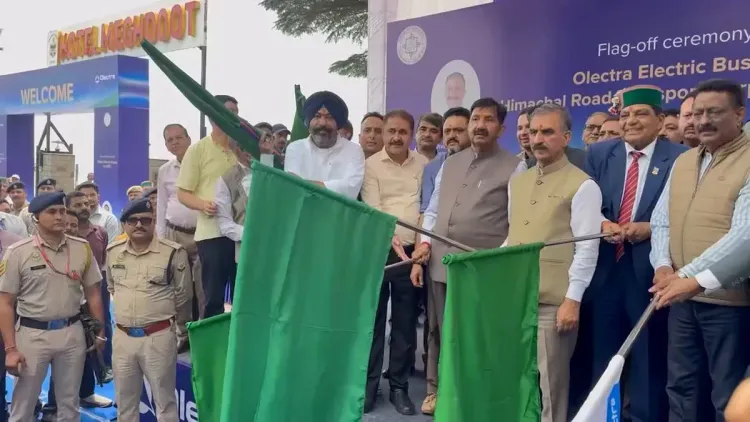
Himachal Pradesh CM Sukhvinder Singh Sukhu launched new HRTC electric buses at Kyari Ghat, Solan on 30 July 2026, extending clean mobility to the state's challenging mountain routes and building on India's FAME scheme for electric vehicle adoption.
Key Takeaways
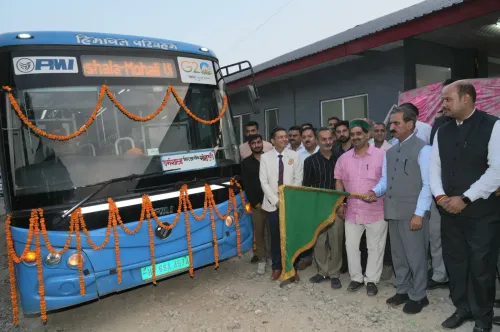
CM Sukhvinder Singh Sukhu inaugurated new electric buses for HRTC at Kyari Ghat, Solan on 30 July 2026 .
HRTC serves as the primary public transport lifeline across Himachal Pradesh , connecting students, patients, and families on remote mountain routes.
The launch aligns with India's FAME scheme (expanded 2019 ), which supports electric bus adoption by state transport undertakings.
Electric buses on Himalayan terrain face added challenges including steep gradients and cold-weather battery performance.
Charging infrastructure buildout across HRTC's dispersed hill network will be the critical next step for fleet-wide electrification.
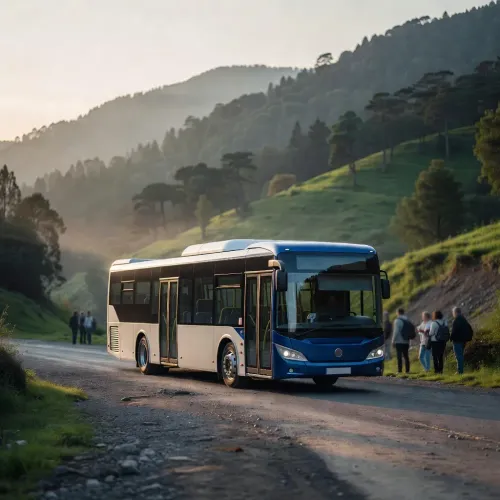
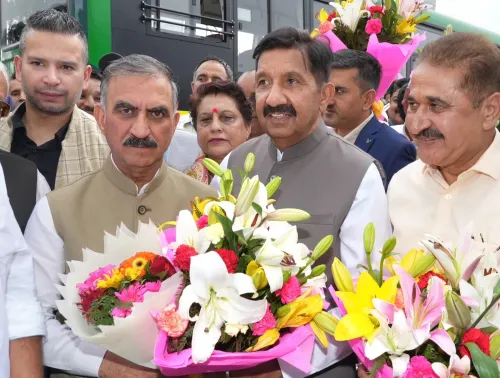
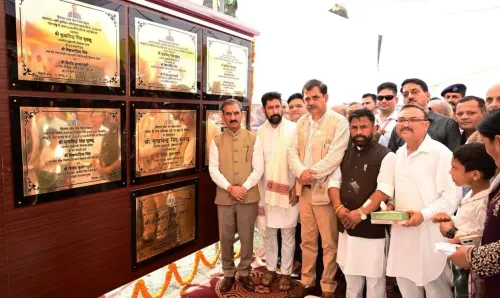
On the steep mountain roads where a missed connection can mean a missed surgery or a lost school day, Himachal Pradesh Chief Minister Sukhvinder Singh Sukhu on Thursday, 30 July 2026 flagged off a new fleet of electric buses for the Himachal Road Transport Corporation (HRTC) at Kyari Ghat, Solan — taking a decades-old public lifeline into the electric age.
Marking the launch, CM Sukhu wrote: 'वर्षों से HRTC बसें हिमाचल के जनजीवन की साथी रही हैं' — 'For years, HRTC buses have been companions of Himachal's daily life. On the difficult mountain roads, these buses have connected millions of families to their loved ones, students to education, patients to treatment, and youth to new opportunities. Today's launch of new electric buses is a fresh initiative to carry that trust forward.'
HRTC's mountain mission — and why electrification is harder here
HRTC is the backbone of mobility across Himachal Pradesh, threading through high-altitude passes and remote valleys where no other transport reaches. For students in hill villages, a daily HRTC bus is the difference between attending school and not. For patients, it is often the only route to a district hospital. That social weight makes fleet quality a political and humanitarian issue simultaneously.
Electric buses on Himalayan gradients present real engineering challenges — battery range shrinks on steep climbs and cold temperatures reduce efficiency. That makes this inauguration more than a ribbon-cutting; it is a proof-of-concept for clean mobility at altitude.
India's FAME push reaches the hills
The launch sits within India's broader FAME scheme (Faster Adoption and Manufacturing of Electric Vehicles), first introduced in 2015 and expanded in 2019, which has channelled central support toward state-level electric bus adoption, including in hill states. Across India, state transport undertakings have been incrementally replacing diesel fleets to cut emissions and reduce dependence on fuel imports. Himachal Pradesh, with its fragile mountain ecology, has a particular stake in lowering diesel exhaust on its roads.
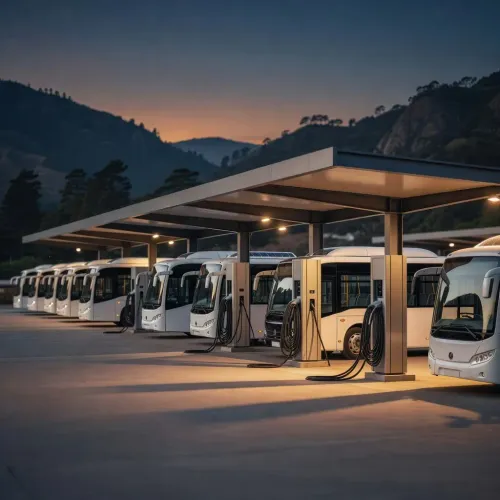
The next test will be infrastructure: charging stations capable of handling HRTC's dispersed, high-altitude network. How quickly the state can build that backbone will determine whether today's launch becomes a fleet-wide transformation or a limited pilot.
Point of View
Where public transport is not a convenience but a social contract — a state where geography makes the government's bus the only bus. Framing electrification as continuity of that contract, rather than a technocratic upgrade, is deliberate and smart. The broader arc connects to a national pattern: state governments using central FAME funding to signal green credentials while managing the fiscal pressure of diesel subsidy. The real policy test, however, is charging infrastructure — without it, electric buses in the hills risk becoming a headline that doesn't scale.
NationPress
30 Jul 2026
Frequently Asked Questions
What did CM Sukhu inaugurate at Kyari Ghat Solan?
CM Sukhvinder Singh Sukhu launched a new fleet of electric buses for the Himachal Road Transport Corporation (HRTC) at Kyari Ghat in Solan district on 30 July 2026.
What is HRTC and why does it matter in Himachal Pradesh?
HRTC (Himachal Road Transport Corporation) is the state's public bus operator, serving remote hilly areas where it is often the only available transport for students, patients, and daily commuters.
How does India's FAME scheme support electric buses in hill states?
India's FAME scheme, launched in 2015 and expanded in 2019, provides central funding to support state transport undertakings in adopting electric vehicles, including in challenging terrains like Himachal Pradesh.
What are the challenges of running electric buses in Himachal Pradesh?
Steep mountain gradients and cold temperatures reduce electric battery range and efficiency, making fleet electrification in Himalayan states more technically demanding than in plains regions.
What comes next after the HRTC electric bus launch?
The key next step is building charging infrastructure across HRTC's dispersed, high-altitude network — without which the electric fleet cannot be expanded to cover all routes.