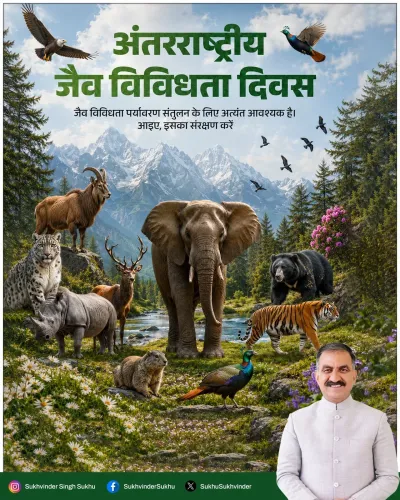
CM Sukhu Launches HiBiSCUS Scheme for Biodiversity

Synopsis
Himachal Pradesh CM Sukhvinder Singh Sukhu has launched HiBiSCUS, a biodiversity conservation scheme with Rs 2 crore in funding. The initiative targets medicinal plant conservation, nursery development, and traditional knowledge documentation, aiming to benefit 2 lakh farmers and 10,000 community groups.
Key Takeaways
HiBiSCUS (Himachal Biodiversity Stakeholder-led Conservation Unified Scheme) was launched by CM Sukhvinder Singh Sukhu on 27 July 2026 .
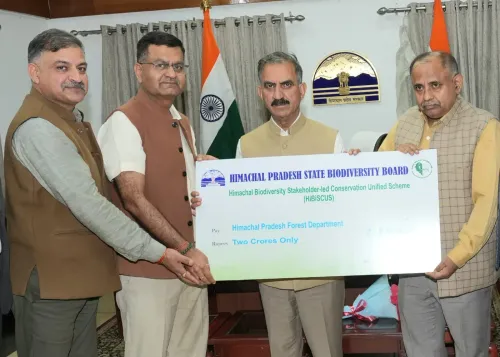
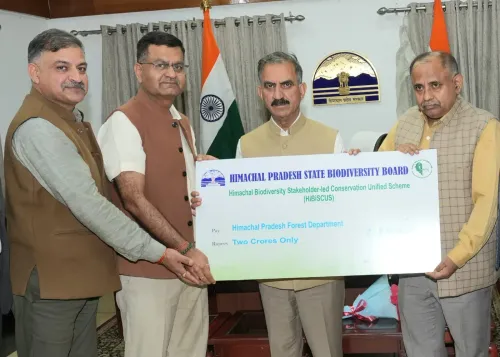
The scheme has an initial fund release of Rs 2 crore .
It is projected to benefit approximately 2 lakh farmers and 10,000 community groups in Himachal Pradesh.
Key focus areas include conservation and sustainable use of medicinal plants, nursery development, and documentation of traditional knowledge.
The initiative aligns with the Biological Diversity Act, 2002 and India's commitments under the Convention on Biological Diversity .
Rollout will hinge on nursery establishment, fund disbursement mechanisms, and potential coordination with central medicinal plant missions.
Himachal Pradesh Chief Minister Sukhvinder Singh Sukhu on Monday, 27 July 2026, announced the launch of the Himachal Biodiversity Stakeholder-led Conservation Unified Scheme (HiBiSCUS), a state initiative aimed at conserving medicinal plants, promoting sustainable use of natural resources, and documenting traditional knowledge systems. The scheme comes with an initial outlay of Rs 2 crore and is expected to benefit approximately 2 lakh farmers and 10,000 community groups across the state.
Context
Posting on X, CM Sukhu stated that HiBiSCUS ka shubhaarambh kiya gaya hai ('HiBiSCUS has been launched'), describing the scheme as a step toward strengthening biodiversity conservation, local livelihoods, preservation of traditional knowledge, and sustainable use of natural resources. The announcement underscores the Indian National Congress-led government's stated commitment to ecology-linked rural welfare in the Himalayan state.
Policy Backdrop
The scheme draws its mandate from the Biological Diversity Act, 2002, which established State Biodiversity Boards across India to regulate access to biological resources and support the documentation of traditional knowledge. Himachal Pradesh, with its dense forest cover and rich repository of medicinal flora, has long been a focal point for such conservation efforts. The HiBiSCUS initiative aligns with national commitments under the Convention on Biological Diversity and complements central missions focused on medicinal plants and non-timber forest produce in Himalayan regions.
Under the scheme, four key areas are prioritised: conservation of medicinal plants, their sustainable use, development of nurseries, and systematic documentation of traditional knowledge held by local communities. The Rs 2 crore released at launch is intended to seed these activities across the state's biodiversity-rich districts.
Stakeholders and Impact
The primary beneficiaries are approximately 2 lakh farmers and 10,000 community groups who depend on medicinal plant cultivation and forest produce for their livelihoods. By formalising nursery development and sustainable harvesting practices, the scheme aims to create structured income pathways for rural households that have traditionally relied on informal knowledge and seasonal collection. Community groups are expected to play a central role in both conservation activities and the documentation process, embedding local expertise into the formal policy framework.
The initiative also carries significance for Himachal Pradesh's traditional knowledge holders — herbalists, vaidyas, and farming communities — whose practices risk being lost without systematic recording. Documentation under HiBiSCUS is designed to preserve this knowledge base while potentially supporting intellectual property protections for community-held resources.
What's Next
Attention will now turn to the operational rollout: establishment of nurseries, activation of community groups, and the mechanisms through which the Rs 2 crore fund will be disbursed and monitored. Coordination with central government programmes on medicinal plants will be a key variable in determining the scheme's reach. Effective fund utilisation and transparent documentation processes will be critical benchmarks as the state government moves from announcement to implementation.
Point of View
The Sukhu government signals institutional seriousness while keeping the messaging accessible to grassroots constituencies. The Rs 2 crore seed fund is modest relative to the scale of ambition — 2 lakh farmers and 10,000 community groups — making implementation quality and fund utilisation the real test of the initiative's credibility. If documentation of traditional knowledge is executed rigorously, HiBiSCUS could also serve as a template for other biodiversity-rich states seeking to formalise community knowledge systems.
NationPress
27 Jul 2026
Frequently Asked Questions
What is the HiBiSCUS scheme in Himachal Pradesh?
HiBiSCUS stands for Himachal Biodiversity Stakeholder-led Conservation Unified Scheme, launched by CM Sukhvinder Singh Sukhu on 27 July 2026 to conserve medicinal plants, develop nurseries, and document traditional knowledge in Himachal Pradesh.
How much funding has been released for the HiBiSCUS scheme?
The Himachal Pradesh government has released Rs 2 crore as the initial fund for the HiBiSCUS scheme.
Who will benefit from the HiBiSCUS scheme?
Approximately 2 lakh farmers and 10,000 community groups across Himachal Pradesh are expected to benefit from the HiBiSCUS scheme.
What does the HiBiSCUS scheme focus on?
The scheme focuses on four areas: conservation of medicinal plants, their sustainable use, development of nurseries, and documentation of traditional knowledge held by local communities.
How does HiBiSCUS relate to existing biodiversity laws in India?
HiBiSCUS aligns with the Biological Diversity Act, 2002, which mandates State Biodiversity Boards to regulate access to biological resources and support traditional knowledge documentation, and with India's commitments under the Convention on Biological Diversity.