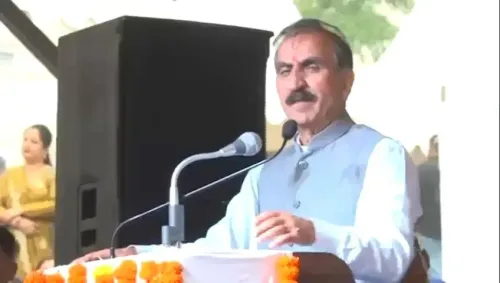
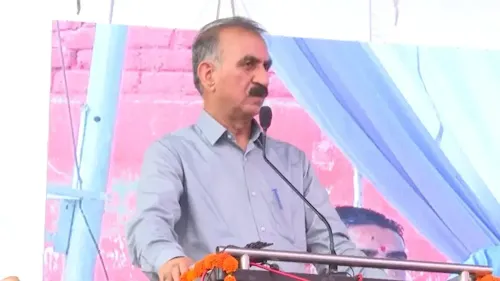
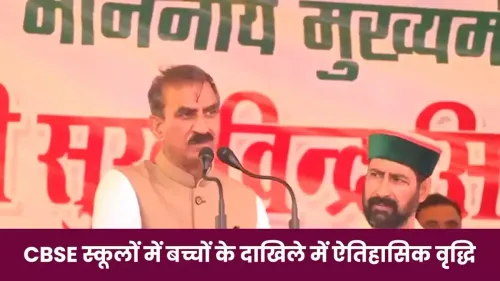
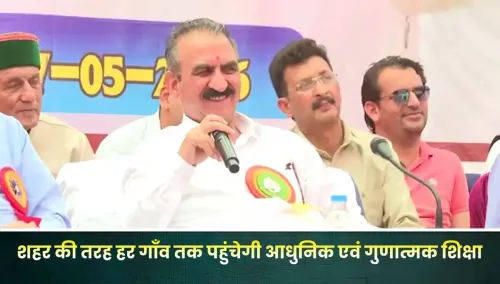
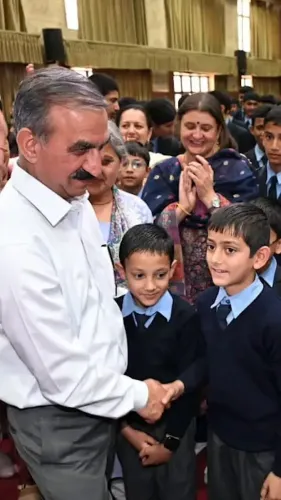
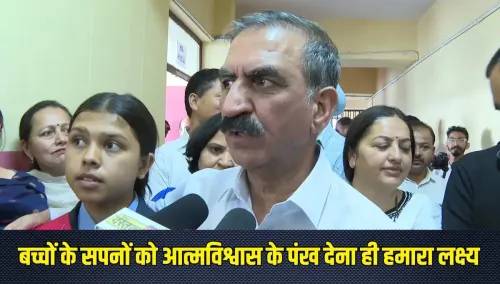
CM Sukhu to affiliate Sangrah govt school with CBSE

Synopsis
CM Sukhvinder Singh Sukhu announced CBSE affiliation for Rajkiya Varshtha Madhyamik Pathshala, Sangrah, and pledged primary-level teacher deployment in CBSE-affiliated government schools across Himachal Pradesh to improve rural education quality.
Key Takeaways
Rajkiya Varshtha Madhyamik Pathshala, Sangrah will be affiliated with CBSE , giving rural children access to a nationally recognised curriculum.
The Himachal Pradesh government will deploy teachers at the primary level in CBSE-affiliated schools — addressing a common structural gap in earlier affiliation drives.
CM Sukhvinder Singh Sukhu framed both measures as a direct improvement to the overall quality of school education in the state.
The move continues a broader pattern of Indian states extending CBSE affiliation to government-run schools to advance rural educational equity.
Sangrah is a sub-divisional town in Sirmour district , Himachal Pradesh, where access to private CBSE schools is limited for most families.
Rural Himachal Pradesh is getting a new educational doorway. Himachal Pradesh Chief Minister Sukhvinder Singh Sukhu announced on Friday, October 30, 2026, that the Rajkiya Varshtha Madhyamik Pathshala, Sangrah will be affiliated with the Central Board of Secondary Education (CBSE) — and that the state will also deploy teachers at the primary level in CBSE-affiliated schools across Himachal Pradesh.
What the Sangrah affiliation means for village children
In his post, CM Sukhu stated plainly: 'गांवों के बच्चों को CBSE स्कूल में पढ़ने का अवसर मिलेगा' — 'children from villages will get the opportunity to study in a CBSE school.' For families in Sangrah, a sub-divisional town in Sirmour district, this is a concrete shift. Until now, access to a CBSE-curriculum school largely meant either a private institution or relocating to a larger town — both out of reach for many rural households.
The CBSE affiliation brings a nationally recognised curriculum, standardised examinations, and a qualification that travels across state lines. For a student from Sangrah aiming at a central-government college entrance exam, that uniformity is not a small thing.
Primary-level teachers: the gap that often goes unnoticed
The second announcement — deploying teachers at the primary level in CBSE schools — targets a structural weakness that has quietly undermined earlier affiliation drives. Government schools in several states have gained CBSE affiliation on paper, only to run senior classes on a skeletal staff while the foundational years go under-resourced. CM Sukhu's explicit commitment to staff the primary grades addresses that gap before it widens.
He framed both moves around a single outcome: 'स्कूली शिक्षा की गुणवत्ता में सुधार होगा' — 'the quality of school education will improve.' The logic is clean: a national curriculum plus qualified teachers from day one equals a meaningful upgrade, not just an administrative rebranding.
Himachal's incremental push on school standards
The announcement fits into a broader pattern visible across multiple Indian states — expanding CBSE affiliation to government schools as a lever for rural educational equity. Himachal Pradesh has pursued incremental school-quality upgrades over successive governments, and the Sukhu administration has framed education access as a priority in hilly and remote constituencies where private CBSE schools are economically unviable.
What to watch next: how quickly the Sangrah affiliation process moves through the CBSE's formal recognition pipeline, and whether the primary-teacher deployment commitment extends to additional CBSE-affiliated government schools across the state.
For Himachal's rural students, a national board stamp on their school certificate has always been a city child's advantage. That calculus is now being rewritten, one affiliation at a time.
Point of View
CM Sukhu is trying to pre-empt a familiar criticism — that CBSE tags on government schools are cosmetic without staffing to match. Whether the rollout follows the announcement at the pace rural families need is the real test; Himachal's school-reform record under successive governments has been incremental rather than transformative, and this initiative will be judged by the same standard.
NationPress
30 Oct 2026
Frequently Asked Questions
Which school in Himachal Pradesh is being affiliated with CBSE?
Rajkiya Varshtha Madhyamik Pathshala (Government Senior Secondary School) in Sangrah, Sirmour district, is set to be affiliated with CBSE, as announced by CM Sukhvinder Singh Sukhu on October 30, 2026.
What is CBSE affiliation and why does it matter for government schools?
CBSE affiliation means a school follows the Central Board of Secondary Education curriculum and conducts board examinations under its framework, giving students a nationally recognised qualification useful for competitive entrance exams and college admissions across India.
Will Himachal Pradesh government CBSE schools get primary-level teachers?
Yes. CM Sukhu specifically committed to deploying teachers at the primary level in CBSE-affiliated government schools in Himachal Pradesh, aiming to address understaffing at the foundational stage.
How will Sangrah's CBSE affiliation benefit rural students?
Students from Sangrah and nearby villages will gain access to a CBSE-curriculum school without needing to move to a city or pay private school fees, improving educational opportunities for families who previously lacked this option.
Is Himachal Pradesh the only state expanding CBSE affiliation to government schools?
No. Several Indian states have pursued CBSE affiliation for government-run schools as a strategy to deliver a uniform national curriculum and better facilities to rural children; Himachal Pradesh's move follows this broader national pattern.