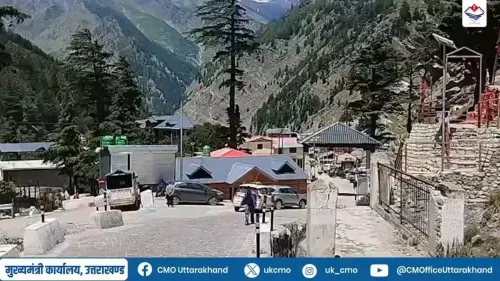
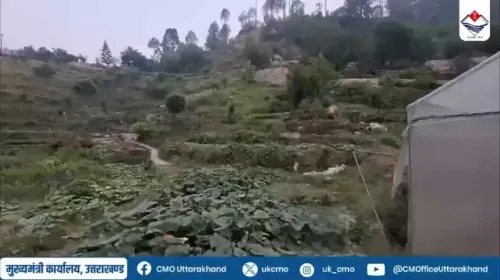
CM Uttarakhand: Bagori Village Sets Cleanliness Model
Synopsis
The Chief Minister's Office of Uttarakhand has spotlighted Bagori, a tourism village in Harsil Valley, Uttarkashi, where the indigenous Jaad community is independently tackling solid waste generated by rising tourist numbers — positioning it as a model of community-led cleanliness under the Swachh Bharat Mission framework.
Key Takeaways
Bagori village in Harsil Valley, Uttarkashi has been highlighted by the Uttarakhand CMO on 1 July 2026 as a cleanliness and public participation model.
The indigenous Jaad community is self-organising to address solid waste challenges arising from increased tourist activity.
Harsil Valley lies on the route to Gangotri and is part of the ecologically sensitive Char Dham corridor.
The initiative aligns with the national Swachh Bharat Mission , which emphasises community-led rural waste management.
Rising tourist footfall across Uttarakhand's Himalayan valleys has created visible waste pressure, making decentralised local solutions increasingly critical.
The Bagori model could serve as a template for other designated tourism villages across the state.
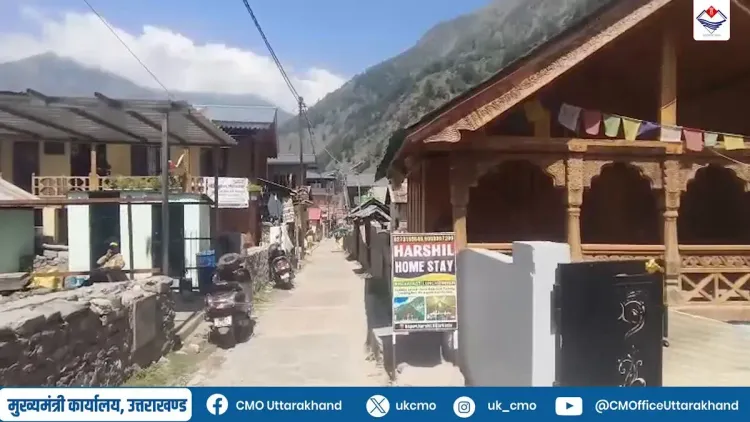
The Chief Minister's Office of Uttarakhand on Wednesday, 1 July 2026 highlighted Bagori, a tourism village in the Harsil Valley of Uttarkashi district, as an emerging model of community-led cleanliness and public participation in waste management driven by rising tourist footfall.
The official post stated: 'Uttarkashi ki khubsurat Harsil Ghati ka paryatan gram Bagori aaj swachhata aur janbhagidari ki nayi misal ban raha hai' — 'The tourism village of Bagori in the beautiful Harsil Valley of Uttarkashi is today becoming a new example of cleanliness and public participation.' It further noted that the Jaad community villagers are themselves finding solutions to the waste challenge generated by increasing tourism.
Context
Harsil Valley, situated in Uttarkashi district along the route to Gangotri, is known for its scenic landscape, apple orchards, and growing popularity among pilgrims and leisure travellers. Bagori is one of the villages in this valley that the Uttarakhand government has promoted under its tourism village designation programme, aimed at channelling visitor interest into structured, sustainable experiences for hill communities.
The Jaad community is a traditional tribal group indigenous to the upper reaches of Uttarkashi, historically engaged in pastoralism and trade. Their active role in addressing waste pressures marks a notable instance of community ownership over an environmental challenge that is increasingly common across Uttarakhand's Himalayan tourism corridors.
Policy Backdrop
The emphasis on local participation aligns closely with the Swachh Bharat Mission, the national cleanliness programme launched in 2014, which places community-led solid waste management at the centre of its rural component. Uttarakhand has integrated this framework into its tourism planning, particularly for ecologically sensitive zones.
Rising tourist numbers along the Char Dham corridor — which passes through Uttarkashi — have placed visible pressure on waste infrastructure in high-altitude villages. State authorities have increasingly emphasised decentralised, locally owned solutions rather than relying solely on centralised municipal systems that are difficult to sustain in remote terrain.
Stakeholders and Impact
The primary stakeholders are the Jaad community residents of Bagori, whose livelihoods are intertwined with tourism income but who also bear the direct environmental cost of unmanaged waste. Community-driven models, when sustained, tend to generate stronger compliance and longer-term upkeep than externally imposed systems.
For the broader Uttarkashi region and the state's tourism economy, a replicable village-level waste management model carries significance. Harsil Valley draws visitors seeking pristine natural settings; any visible degradation risks undermining the very appeal that drives footfall and local income.
What's Next
Attention will now focus on whether the Uttarakhand government formalises support — through budget allocations, technical assistance, or infrastructure grants — for decentralised waste systems in other designated tourism villages across the state. The Bagori example, if documented and scaled, could inform a broader state policy on community waste management in ecologically fragile Himalayan zones.
Similar community initiatives in other villages along the Char Dham route will be closely watched as indicators of whether this model represents an isolated effort or the beginning of a wider, state-backed shift toward sustainable tourism infrastructure.
Point of View
The post also carries a soft signal about tribal agency and local governance capacity in hill regions. However, the durability of such models depends heavily on whether state support follows the social media recognition — in the form of infrastructure funding or technical capacity. The broader pattern suggests Uttarakhand is increasingly using its tourism village programme as a platform for demonstrating sustainable development credentials ahead of what is expected to be a high-footfall pilgrimage season.
NationPress
1 Jul 2026
Frequently Asked Questions
What is Bagori village in Uttarakhand known for?
Bagori is a tourism village in the Harsil Valley of Uttarkashi district, promoted by the Uttarakhand government for sustainable tourism. It lies on the route to Gangotri and is associated with the indigenous Jaad community.
Who are the Jaad community in Uttarakhand?
The Jaad are a traditional tribal community indigenous to the upper reaches of Uttarkashi district in Uttarakhand, historically known for pastoralism and cross-border trade with Tibet.
What waste problem is Bagori village facing?
Rising tourist footfall in Harsil Valley has generated increasing solid waste, which the local Jaad community is now addressing through community-led cleanliness and waste management efforts.
How does the Swachh Bharat Mission relate to Bagori's cleanliness drive?
The Swachh Bharat Mission, launched in 2014, promotes community-led solid waste management in rural India. Bagori's initiative reflects the mission's core principle of local public participation in cleanliness.
What is the Char Dham corridor and why does waste management matter there?
The Char Dham corridor connects four major Hindu pilgrimage sites in Uttarakhand, including Gangotri near Uttarkashi. The corridor sees very high annual footfall, making waste management in its villages an environmental and tourism priority.