CM Vishnu Deo Sai champions tribal heritage at Nava Raipur museum
Synopsis
Chhattisgarh CM Vishnu Deo Sai spotlights the digital Shaheed Veer Narayan Singh Memorial in Nava Raipur, framing it as the state's flagship effort to bring tribal valour and freedom-struggle history to a national audience and a new generation.
Key Takeaways
Chhattisgarh CM Vishnu Deo Sai posted on 12 November 2026 about the Shaheed Veer Narayan Singh Memorial-cum-Tribal Freedom Fighters Museum in Nava Raipur .
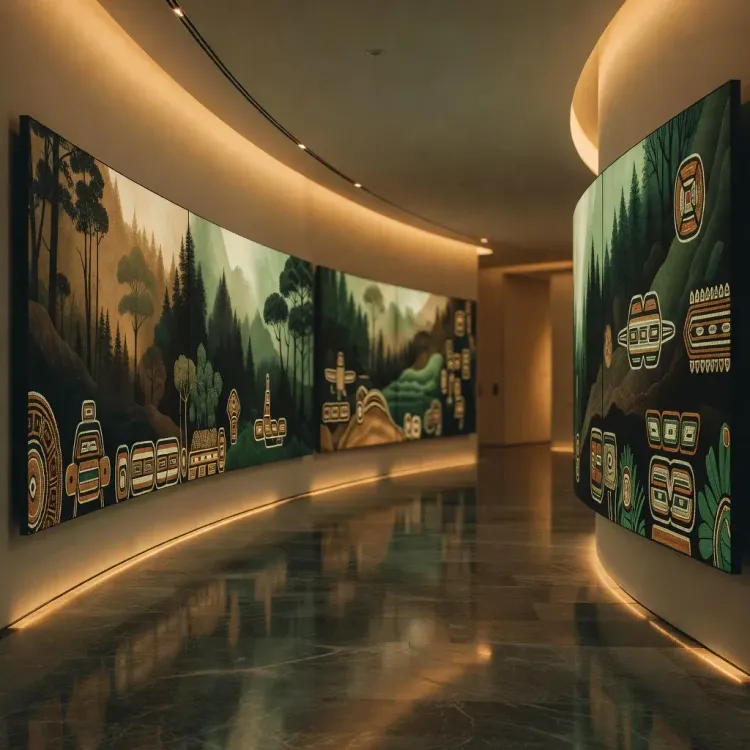
The museum uses modern digital technology to present the stories of tribal heroes and martyrs in an immersive, accessible format.
Veer Narayan Singh was a tribal chieftain executed by British forces during the 1857 revolt era and is one of Chhattisgarh's most revered martyrs.
Chhattisgarh's tribal population is approximately 32 percent of the state total, giving cultural heritage initiatives significant political and social weight.
Sai, who took office in December 2023 , is himself from the Oraon tribal community and has consistently prioritised tribal welfare and identity.
The initiative is part of a broader BJP pattern in tribal-majority states to centre indigenous communities in India's freedom struggle narrative through museums and digital archives.
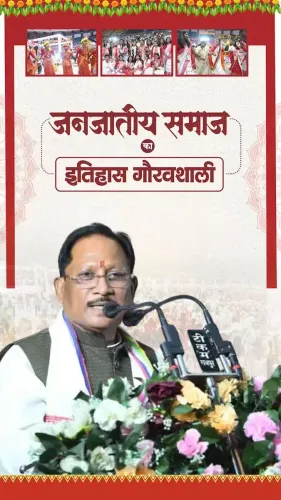
A 19th-century tribal chieftain's sacrifice is now being told through digital screens, immersive galleries, and living history — and Chhattisgarh Chief Minister Vishnu Deo Sai wants every young Indian to know the story. On Thursday, 12 November 2026, Sai took to X to spotlight the Shaheed Veer Narayan Singh Memorial-cum-Tribal Freedom Fighters Museum in Nava Raipur, calling it the living embodiment of his government's pledge to preserve and pass on Chhattisgarh's tribal legacy.
Writing in Hindi, Sai declared: 'शौर्य, बलिदान और जनजातीय अभिमान की गौरवगाथा को मिला राष्ट्रीय मंच!' — 'The glorious saga of valour, sacrifice and tribal pride has found a national stage!' He described the museum as a 'concrete realisation' of his administration's resolve to safeguard the state's rich tribal traditions, culture, and history, and to carry them forward to new generations.
Who was Veer Narayan Singh — and why does the memorial matter
Veer Narayan Singh was a tribal chieftain from what is today Chhattisgarh who organised resistance against British authority in the era of the 1857 revolt. Captured and executed by colonial forces, he became one of the earliest and most revered martyrs of central India's independence movement. For decades, his story lived largely in local oral traditions — rarely reaching textbooks or national discourse. The Nava Raipur memorial is designed precisely to change that.
The museum sits in Nava Raipur, the planned modern capital developed after Chhattisgarh's formation as a separate state in 2000. That creation itself unlocked dedicated state policies for tribal heritage preservation, and the memorial is widely seen as one of the most visible outcomes of that policy commitment. Sai's post underlines how the institution uses modern digital technology to present the stories of tribal heroes — combining archival depth with an accessible, visually immersive format aimed squarely at younger audiences.
BJP's broader push to centre tribal martyrs in India's freedom narrative
The Nava Raipur museum is not an isolated initiative. Across BJP-governed states with significant tribal populations, the past few years have seen a deliberate expansion of memorials, digital archives, and cultural events that position indigenous communities as foundational contributors to India's freedom struggle — not footnotes to it. This framing serves a dual purpose: genuine historical recognition for communities whose sacrifices were long marginalised, and a sharper political message about national integration and cultural identity.
Chhattisgarh, where roughly 32 percent of the population belongs to Scheduled Tribes, is one of the states where this approach carries the most weight. Sai, who took office in December 2023 and is himself from the Oraon tribal community, has consistently placed tribal welfare and cultural pride at the centre of his governance pitch. The museum, as he framed it on Thursday, is 'the medium for giving a new identity to their historical contribution and establishing tribal pride on the national canvas.'
Digital galleries bridging generations
What distinguishes this memorial from earlier stone-and-plaque tributes is its technological ambition. The museum deploys digital interactive exhibits to bring to life the stories of tribal warriors and freedom fighters — a format designed to resonate with a generation that consumes history on screens. The goal, as Sai articulated it, is not just preservation but transmission: ensuring that tribal valour is not locked in archival silence but actively experienced by schoolchildren, students, and citizens visiting the state capital.
Whether similar digital tribal museums will follow in other states — or whether a national-level commemoration of such freedom fighters is in the pipeline — remains the question that tribal communities, historians, and cultural policymakers will now be watching closely.
Chhattisgarh has lit the torch. The question is who else picks it up.
Point of View
The BJP simultaneously addresses a genuine historiographical gap — the marginalisation of indigenous freedom fighters — and reinforces its outreach among Scheduled Tribe voters. The choice of digital-first museum infrastructure, rather than conventional stone memorials, also signals a deliberate effort to convert historical memory into active civic engagement among youth. If replicated across other tribal-majority BJP states, this model could redefine how India's official memory of the freedom struggle is curated at the sub-national level.
NationPress
12 Nov 2026
Frequently Asked Questions
What is the Shaheed Veer Narayan Singh Museum in Nava Raipur?
It is the Shaheed Veer Narayan Singh Memorial-cum-Tribal Freedom Fighters Museum located in Nava Raipur, Chhattisgarh's planned capital. The museum uses modern digital technology to present the stories of tribal heroes and freedom fighters, aiming to make their legacy accessible to new generations.
Who was Veer Narayan Singh?
Veer Narayan Singh was a 19th-century tribal chieftain from present-day Chhattisgarh who led resistance against British colonial authority during the 1857 revolt era. He was captured and executed by British forces and is regarded as one of central India's earliest and most revered freedom fighters.
Why is CM Vishnu Deo Sai promoting tribal museums?
CM Vishnu Deo Sai has made tribal welfare and cultural preservation central to his governance since taking office in December 2023. He is himself from the Oraon tribal community, and Chhattisgarh's population is roughly 32 percent tribal, making such cultural initiatives both a policy priority and an important political signal.
Where is Nava Raipur and why was the museum built there?
Nava Raipur is the planned modern capital of Chhattisgarh, developed as an administrative and cultural centre after the state was carved out in 2000. Its formation unlocked dedicated state policies for tribal heritage preservation, and the memorial museum is one of the most prominent results of that commitment.
Is Chhattisgarh building more digital tribal museums?
The Nava Raipur museum is part of a broader BJP-led trend in tribal-heavy states of using digital archives and interactive museums to highlight indigenous freedom fighters. Similar expansions in Chhattisgarh and other BJP-ruled states are being watched by cultural policy observers.