CM Vishnu Deo Sai Honours Pandwani Artists at Ahivara Mahasammelan
Synopsis
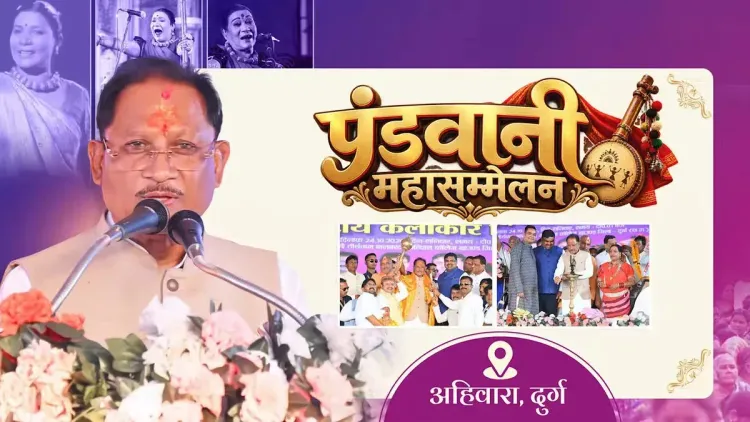
On International Artists' Day, Chhattisgarh CM Vishnu Deo Sai honoured Pandwani folk performers at a Mahasammelan in Ahivara, Durg, pledging state commitment to preserving and transmitting the centuries-old Mahabharata oral tradition to future generations.
Key Takeaways
CM Vishnu Deo Sai attended the Pandwani Mahasammelan in Ahivara, Durg district on 24 October 2026 , coinciding with International Artists' Day .
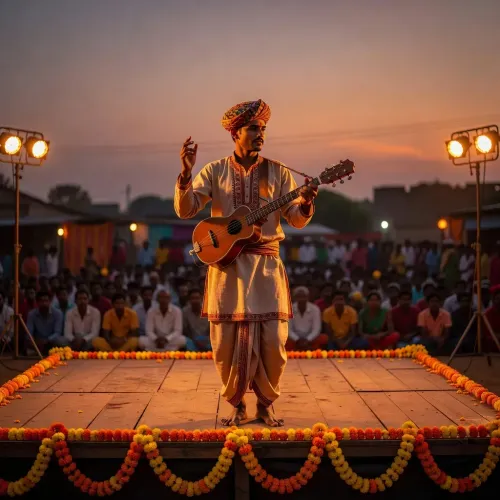
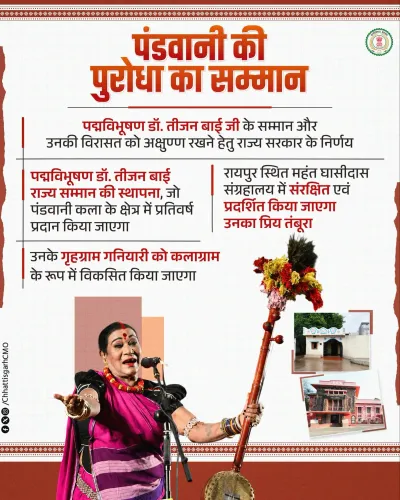
Pandwani is a centuries-old Chhattisgarhi solo performance tradition narrating Mahabharata episodes through music, dance, and oral storytelling.
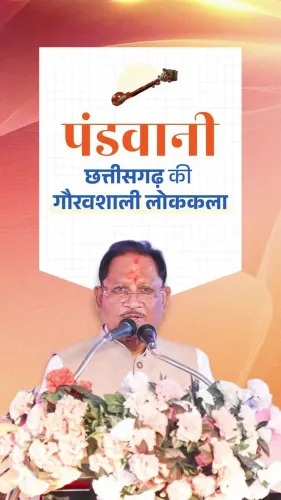
The Chief Minister described Pandwani as 'an invaluable heritage of Chhattisgarh's cultural identity' and pledged government support for its conservation and promotion.
The Sai government, in office since December 2023 , has positioned cultural patronage as central to its Chhattisgarhi identity agenda.
Policy watchers are looking for budget allocations and integration of Pandwani into education or tourism programmes as the real test of the stated commitment.
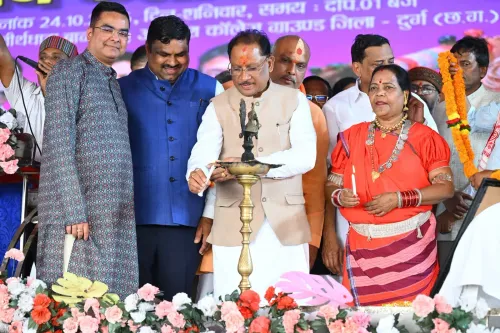
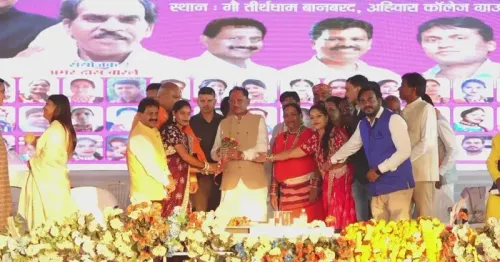
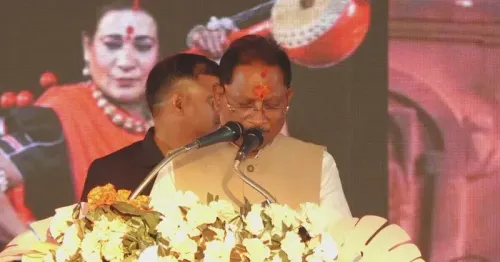
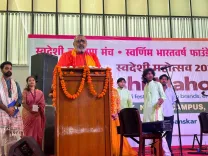
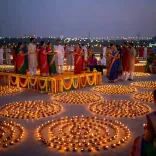
An ancient oral tradition that has kept the Mahabharata alive through the voices of Chhattisgarh's villages got its moment in the spotlight on Saturday, 24 October 2026 — International Artists' Day — as Chhattisgarh Chief Minister Vishnu Deo Sai attended the Pandwani Mahasammelan in Ahivara, Durg district, honouring the state's folk artists and reaffirming his government's commitment to preserving the tradition.
Posting on X after the event, CM Sai called Pandwani 'छत्तीसगढ़ की समृद्ध लोक-संस्कृति, हमारी परंपराओं और सांस्कृतिक अस्मिता की अनमोल धरोहर' — 'an invaluable heritage of Chhattisgarh's rich folk culture, our traditions, and cultural identity.' He added that the gathering celebrated the artistic devotion and dedication of the state's folk performers.
What Pandwani Is — and Why It Matters
Pandwani is a centuries-old performing tradition unique to Chhattisgarh, in which solo artists — typically women — narrate and enact episodes from the Mahabharata through a fusion of music, dance, and storytelling. Rooted in the oral cultures of the region's tribal and agrarian communities, the form carries a living memory that written texts alone cannot. The Pandwani Mahasammelan in Ahivara brought that tradition to a public stage, placing the art form and its practitioners at the centre of the International Artists' Day observance.
Sai Government's Cultural Preservation Pledge
CM Sai stated clearly that his government is committed to 'the conservation and promotion of folk arts, encouraging artists, and passing this glorious heritage of Chhattisgarh to the new generation.' That language is deliberate. Durg district, home to Ahivara, sits in the industrialised belt of central Chhattisgarh — a region where modernisation pressures on traditional life have been felt acutely for decades.
Chhattisgarh governments across administrations have long used public events, documentation drives, and artist-honour programmes to keep indigenous art forms visible alongside the state's heavy-industry identity. The Sai-led BJP government, which assumed office in December 2023, has positioned cultural patronage as part of a broader identity politics of Chhattisgarhi pride — channelling the idea that economic development and intangible heritage are not competing priorities.
The Larger Stakes for Folk Arts in Central India
The challenge facing Pandwani is not unique to Chhattisgarh. Across central India, intangible heritage forms are in a race against time — master practitioners ageing out, younger generations drawn to cities, and institutional memory thinning. State-sponsored Mahasammelans serve a dual purpose: they celebrate the present community of artists while creating visible, aspirational platforms that can draw younger talent back toward the tradition.
What comes after the celebration matters most. Watchers of Chhattisgarh's culture policy will be tracking whether the state's budget allocations for its culture department reflect the rhetoric, and whether Pandwani finds its way into school curricula or state tourism programming — the two levers most likely to guarantee generational continuity.
A folk tradition that has survived centuries of change now has a state government publicly on record as its guardian. The artists of Ahivara performed; the Chief Minister bore witness. The next act belongs to policy.
Point of View
Not just rural ones. Whether Pandwani ultimately gains institutional longevity will depend less on Mahasammelans and more on whether it earns a line in the state education curriculum.
NationPress
25 Oct 2026
Frequently Asked Questions
What is Pandwani folk art?
Pandwani is a traditional Chhattisgarhi performing art in which solo artists — often women — narrate and enact episodes from the Mahabharata through music, dance, and oral storytelling. It is considered a living heritage unique to Chhattisgarh.
Where was the Pandwani Mahasammelan 2026 held?
The Pandwani Mahasammelan was held in Ahivara , located in Durg district , Chhattisgarh, on 24 October 2026 , on the occasion of International Artists' Day.
What did CM Vishnu Deo Sai say about Pandwani?
CM Sai called Pandwani 'an invaluable heritage of Chhattisgarh's rich folk culture, traditions, and cultural identity,' and stated his government is committed to preserving folk arts and passing them on to the new generation.
When did Vishnu Deo Sai become Chief Minister of Chhattisgarh?
Vishnu Deo Sai assumed office as Chief Minister of Chhattisgarh in December 2023 , following the BJP's victory in the state assembly elections.
What is International Artists' Day?
International Artists' Day is observed on 25 October each year to celebrate the contributions of artists globally. The Pandwani Mahasammelan in Ahivara was held in observance of this day.