CM Mohan Yadav: UCC Gets Cross-Religion Support in MP
Synopsis
MP Chief Minister Dr. Mohan Yadav cited UCC suggestion committee findings on 19 July 2026, claiming over 80% of Muslim women and 40% of Muslim men in Madhya Pradesh support the Uniform Civil Code, signalling a possible cabinet move on the legislation.
Key Takeaways
Madhya Pradesh Chief Minister Dr.
Mohan Yadav posted on 19 July 2026 citing UCC suggestion committee findings.
The committee reportedly found over 80 per cent of Muslim women surveyed in the state support the Uniform Civil Code.
More than 40 per cent of Muslim men surveyed were also said to be in favour, according to the same committee data.
The post was tagged #cabinetdecision , indicating a formal government decision may be imminent.
Uttarakhand remains the only Indian state to have enacted a UCC law, having done so in February 2024 .
The UCC is grounded in Article 44 of the Indian Constitution, which directs the State to work toward uniform civil laws for all citizens.
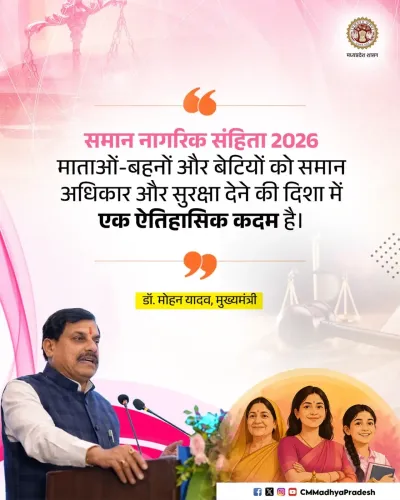
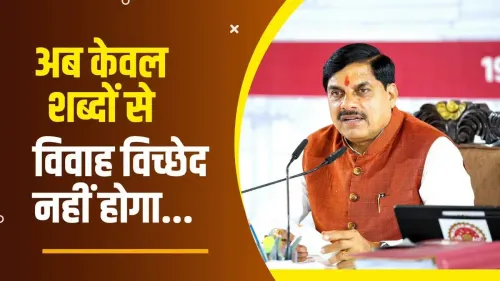
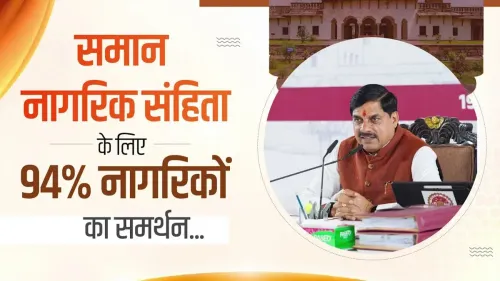
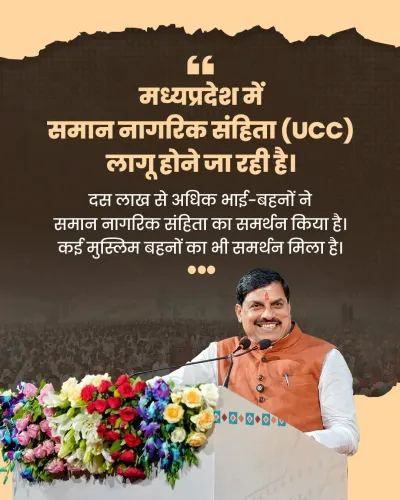
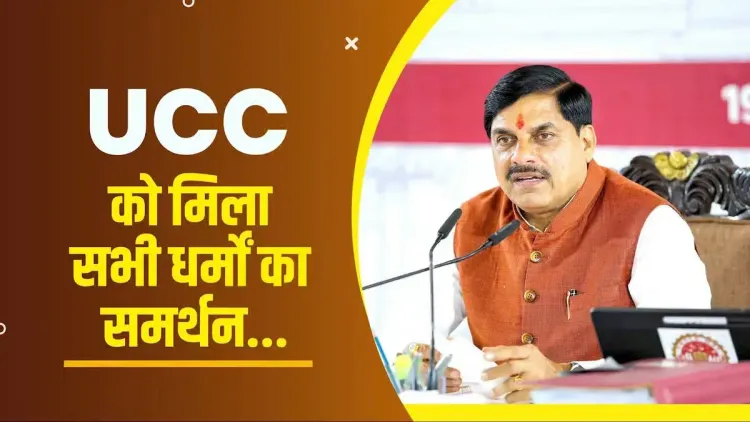
Madhya Pradesh Chief Minister Dr. Mohan Yadav on Sunday, 19 July 2026, cited figures from the state's UCC suggestion committee to claim broad cross-community backing for the Uniform Civil Code, stating that over 80 per cent of Muslim women and more than 40 per cent of Muslim men surveyed had expressed support for the proposed legislation.
Posting on X, the Chief Minister wrote: 'UCC ko sabhi dharmon ka samarthan mila hai' ('The UCC has received support from all religions'), adding that it was a matter of joy that the UCC suggestion committee's findings showed such levels of endorsement from the Muslim community.
Context
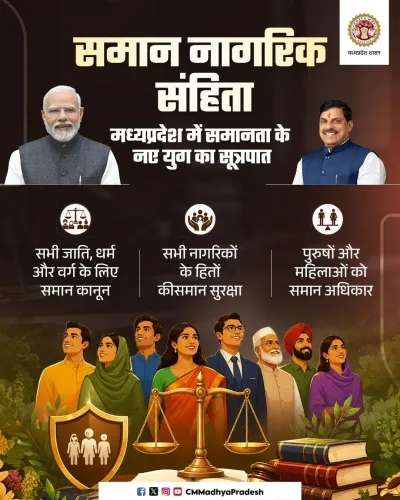
The Uniform Civil Code seeks to replace religion-based personal laws governing marriage, divorce, inheritance, and adoption with a single set of civil laws applicable to all citizens regardless of faith. The push is rooted in Article 44 of the Indian Constitution, which directs the State to endeavour to secure a UCC for all citizens. Madhya Pradesh, a BJP-governed state in central India, constituted a suggestion committee to examine how such a code could be framed and to gather public opinion on it.
Dr. Mohan Yadav, who assumed office as Chief Minister in December 2023, has been a consistent advocate of the UCC within the BJP's broader ideological framework. His post on Sunday referenced the committee's findings and was tagged #UniformCivilCode, #UCC, and #cabinetdecision, signalling that the issue may be moving toward a formal cabinet-level discussion.
Policy Backdrop
Uttarakhand became the first Indian state to pass a UCC law in February 2024, setting a legislative precedent that BJP-ruled states have since pointed to as a model. The argument advanced by proponents is that a common civil code would ensure gender equality — particularly for women in communities where personal laws permit practices such as unilateral divorce and polygamy.
The Madhya Pradesh suggestion committee's consultations appear to have included outreach to Muslim communities, and it is these figures — over 80 per cent of Muslim women and over 40 per cent of Muslim men in favour — that the Chief Minister highlighted as evidence of consensus beyond the BJP's traditional support base. The specific methodology and scope of the committee's survey have not been independently verified.
Stakeholders and Impact
Muslim women have historically been among the most directly affected by personal law provisions, particularly those related to divorce and maintenance. Advocates of the UCC argue that a uniform code would extend to them the same legal protections available to women of other faiths. Muslim men, as a demographic, have traditionally been more divided on the issue, making the committee's claimed 40-per-cent support figure politically significant if corroborated.
Critics of the UCC, including several minority rights organisations and opposition parties, have argued that the code risks overriding constitutionally protected religious freedoms and that consultation processes may not adequately represent community diversity. The debate in Madhya Pradesh is likely to intensify as the committee's report moves closer to formal consideration.
What's Next
The hashtag #cabinetdecision in the Chief Minister's post suggests that the Madhya Pradesh government may be preparing to table the UCC suggestion committee's report before the state cabinet. Should the cabinet endorse the committee's recommendations, the next step would be the drafting of legislation for introduction in the Madhya Pradesh Legislative Assembly.
With Uttarakhand's law already in force and Madhya Pradesh signalling forward movement, the UCC debate is poised to remain a central feature of BJP-governed states' legislative agendas in the months ahead — and a key fault line in national politics as the country watches whether more states follow suit.
Point of View
The government is attempting to deflect the charge that the UCC is a majoritarian imposition, instead presenting it as a reform with cross-community consent. The #cabinetdecision tag raises the political stakes, suggesting this is not routine social-media advocacy but a prelude to formal action. If Madhya Pradesh proceeds to legislation, it would mark a significant escalation in the UCC's journey from electoral promise to multi-state statutory reality.
NationPress
18 Oct 2026
Frequently Asked Questions
What is the Uniform Civil Code and why is it in the news?
The Uniform Civil Code is a proposed set of common civil laws on marriage, divorce, inheritance, and adoption that would apply to all Indian citizens regardless of religion. It is in the news because Madhya Pradesh Chief Minister Dr. Mohan Yadav cited a state suggestion committee's findings on 19 July 2026, claiming broad Muslim community support for the code and hinting at a cabinet decision.
What did the Madhya Pradesh UCC suggestion committee find?
According to Chief Minister Dr. Mohan Yadav's post, the committee found that over 80 per cent of Muslim women and more than 40 per cent of Muslim men surveyed expressed support for the Uniform Civil Code. The specific methodology of the committee's survey has not been independently verified.
Which state first implemented the Uniform Civil Code in India?
Uttarakhand became the first Indian state to enact the Uniform Civil Code, passing the relevant legislation in February 2024.
What does Article 44 of the Indian Constitution say about the UCC?
Article 44 of the Indian Constitution, under the Directive Principles of State Policy, directs the State to endeavour to secure a Uniform Civil Code for all citizens across India.
Is Madhya Pradesh going to pass a UCC law?
No formal legislation has been introduced yet. However, Chief Minister Dr. Mohan Yadav's use of the hashtag #cabinetdecision alongside his 19 July 2026 post suggests the state government may be preparing to place the UCC suggestion committee's report before the cabinet as a next step.