CM Mohan Yadav Flags IMF's 7% India Growth Forecast
Synopsis
Madhya Pradesh CM Dr. Mohan Yadav cited the IMF's World Economic Outlook projecting India's GDP at 7.0% growth for 2026 and 2027, linking the forecast to PM Modi's Viksit Bharat 2047 vision and ongoing structural reforms.
Key Takeaways
The IMF's latest World Economic Outlook projects India's GDP to grow at 7.0 percent in both 2026 and 2027 , according to CM Dr.
Madhya Pradesh Chief Minister Dr.
Mohan Yadav shared the forecast on October 13, 2026 , attributing growth to reforms, infrastructure and investment under PM Modi.
The forecast is framed as progress toward Viksit Bharat @ 2047 , India's vision to achieve developed-nation status by the centenary of independence.
India's growth foundations include the Goods and Services Tax (2017) and the PM Gati Shakti National Master Plan (2021) for multimodal infrastructure.
The IMF World Economic Outlook is published twice a year and is a key external benchmark used by Indian policymakers to signal economic credibility.
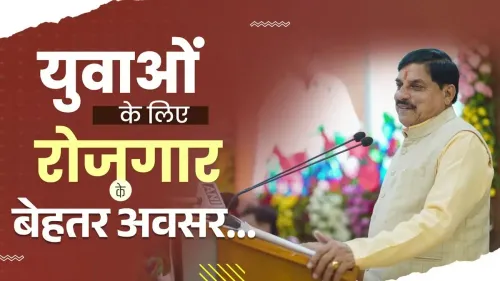
India is poised to be the world's fastest-growing major economy — and now the International Monetary Fund has put a number on it. Madhya Pradesh Chief Minister Dr. Mohan Yadav on Tuesday, October 13, 2026, cited the IMF's latest World Economic Outlook projecting India's GDP to grow at 7.0 percent in both 2026 and 2027, framing the forecast as validation of the country's reform-driven trajectory.
What the IMF projection says — and why it matters now
The IMF's World Economic Outlook, published twice a year, is among the most closely watched barometers of global economic health. A 7.0 percent projection for India across two consecutive years would cement its status as the standout performer among large economies at a time when growth in Europe and the United States remains comparatively subdued. Dr. Mohan Yadav described the forecast as reflecting 'the resilience and potential of our economy,' pointing to reforms, infrastructure development and investment as the three pillars driving momentum.
For context, India's growth story has been built on a sequence of structural interventions. The Goods and Services Tax, rolled out in 2017, unified a fragmented national market. The PM Gati Shakti National Master Plan, launched in 2021, stitched together multimodal infrastructure planning to cut logistics costs and speed up project execution. Each of these reforms added a layer to the foundation that global institutions now appear to be rewarding with higher confidence in India's forward trajectory.
Viksit Bharat 2047: the long-game framing behind the forecast
Dr. Yadav's post is not merely a headline share — it is a restatement of ideological intent. He explicitly linked the IMF projection to Prime Minister Narendra Modi's Viksit Bharat @ 2047 vision, the government's flagship long-term goal of achieving developed-nation status by the centenary of Indian independence. Prime Minister Modi first formally articulated this vision during the 2022 Independence Day address, and it has since been woven into NITI Aayog strategy papers, annual Union Budgets and state-level investment summits.
The framing is deliberate. By anchoring a short-term IMF number to a 21-year national ambition, BJP leaders at both the Centre and in the states have consistently used external validation to reinforce policy continuity. A 7-percent growth rate sustained across years feeds directly into the per-capita income thresholds that define developed-nation benchmarks — making every fraction of a percentage point politically as well as economically significant.
Where Madhya Pradesh fits into India's growth arc
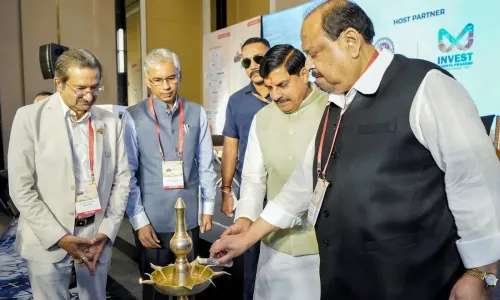
Dr. Mohan Yadav, who took oath as Chief Minister in December 2023, has positioned Madhya Pradesh as an active participant in India's investment story, hosting state-level summits and aligning state infrastructure spending with centrally sponsored schemes. His amplification of the IMF forecast signals that state governments, not just New Delhi, are invested in narrating — and delivering — India's growth credentials to domestic and global audiences.
The next Union Budget and the subsequent IMF World Economic Outlook update will either consolidate or test this narrative. For now, the forecast stands as a marker — and India's policymakers are making sure the world notices it.
Point of View
The party sidesteps the credibility risk of self-citation. The Viksit Bharat 2047 anchor is significant — it converts a point-in-time forecast into a chapter in a longer story, making it harder for critics to dispute on short-term grounds. The real test will come when the next IMF update and the Union Budget either reinforce or revise these projections.
NationPress
13 Oct 2026
Frequently Asked Questions
What is the IMF's GDP growth forecast for India in 2026 and 2027?
According to CM Dr. Mohan Yadav's post citing the IMF's latest World Economic Outlook, India's GDP is projected to grow at 7.0 percent in both 2026 and 2027 .
What is Viksit Bharat 2047?
Viksit Bharat 2047 is the Indian government's vision to achieve developed-nation status by 2047, the centenary of independence. It was formally articulated by PM Modi during the 2022 Independence Day address and is backed by NITI Aayog strategy papers and successive Union Budgets.
Why did MP CM Mohan Yadav post about India's GDP growth?
Dr. Mohan Yadav shared the IMF projection to highlight India's economic resilience and to reinforce the narrative that ongoing reforms under PM Modi are delivering results aligned with the Viksit Bharat 2047 goal.
What reforms are driving India's high economic growth rate?
Key structural reforms include the Goods and Services Tax (2017) , which unified the national market, and the PM Gati Shakti National Master Plan (2021) for multimodal infrastructure — both cited as pillars of India's sustained growth momentum.
What is the IMF World Economic Outlook?
The IMF World Economic Outlook is a flagship report published twice a year by the International Monetary Fund, containing economic growth forecasts for major economies worldwide including India.