Delhi air pollution: Bhupender Yadav flags off 150 electric buses at Anand Vihar hotspot
Synopsis
With peak pollution season weeks away, Union Minister Bhupender Yadav and Delhi CM Rekha Gupta descended on Anand Vihar — one of the capital's worst air quality hotspots — to flag off 150 electric buses, inaugurate EV charging stations at five depots, and commission 13 new air quality monitors. The government says 11 agencies have already completed short-term fixes; the real test comes when winter smog arrives.
Key Takeaways
Union Minister Bhupender Yadav and Chief Minister Rekha Gupta reviewed air pollution mitigation measures at Anand Vihar , Delhi, on 13 October 2026 .
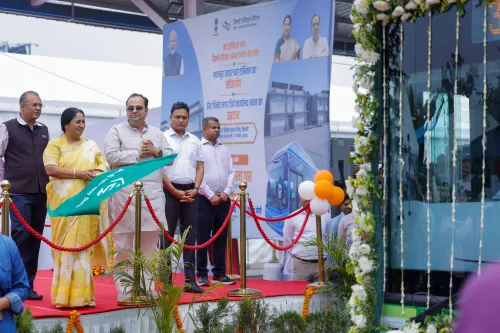
150 new electric buses were flagged off at Swami Vivekanand ISBT, Anand Vihar under the Sewa Sankalp Abhiyaan .
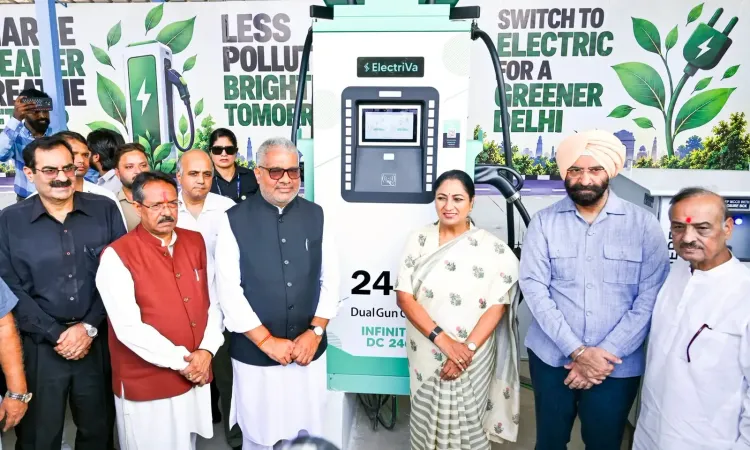
Public EV charging stations were inaugurated at five DTC depot locations across Delhi.
13 new Continuous Ambient Air Quality Monitoring Stations (CAAQMS) installed by the DPCC were commissioned across the city.
Yadav said 11 agencies have completed short-term interventions including road paving, encroachment removal, and illegal C&D waste clearance at the hotspot.
The dignitaries also visited the AI-enabled ICCC of the DPCC at Shastri Park .
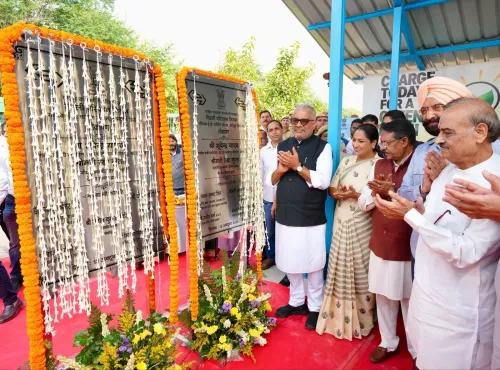
Union Minister for Environment, Forest and Climate Change Bhupender Yadav on Tuesday, 13 October 2026, said that targeted mitigation steps at key air pollution hotspots in Delhi are expected to deliver measurable improvements in the coming months. Speaking at an event in Anand Vihar, one of the city's most persistently polluted corridors, Yadav reviewed on-ground interventions and flagged off 150 new electric buses under the Sewa Sankalp Abhiyaan.
Key Developments at Anand Vihar
Addressing the gathering, Yadav outlined the scope of interventions already completed at the Anand Vihar hotspot. 'Short-term and long-term actions were assigned to 11 agencies. Internal roads have been paved, encroachment has been removed, construction activities followed green netting and dust control measures, illegal C&D waste dumping has been removed, and traffic congestion has been removed,' he said.
He added that long-term greening activities are now under way at the location, and credited the coordinated effort across multiple Delhi government departments for containing what has been a persistent pollution flashpoint. The Union Minister was joined at the event by Chief Minister Rekha Gupta and Delhi Environment Minister M.S. Sirsa.
Electric Buses and EV Charging Infrastructure
The 150 electric buses flagged off at Swami Vivekanand ISBT, Anand Vihar will be inducted into the Delhi Transport Corporation (DTC) fleet, expanding the capital's zero-emission public transport network. Simultaneously, public EV charging stations were virtually inaugurated at five locations: ISBT Anand Vihar, Nand Nagri depot, Rohini Sector-37 depot, Nangloi depot, and Keshopur depot.
Chief Minister Gupta, in a post on X, underscored the dual thrust of the initiative — adding electric buses to the fleet while rapidly scaling up charging infrastructure — calling it central to providing 'clean, modern, and convenient public transportation' for Delhi residents.
New Air Quality Monitoring Stations
The dignitaries also inaugurated 13 new Continuous Ambient Air Quality Monitoring Stations (CAAQMS) installed by the Delhi Pollution Control Committee (DPCC) across the city. The group additionally visited the AI-enabled Integrated Command and Control Centre (ICCC) of the DPCC at Shastri Park, which provides real-time oversight of pollution data across Delhi.
Why This Matters
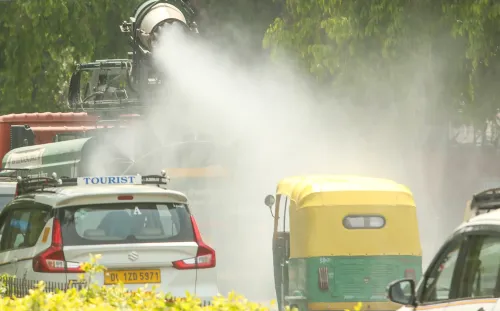
Delhi's air quality has ranked among the worst in the world for several consecutive winters, with areas like Anand Vihar — a major interstate bus terminal and transit hub — recording some of the city's highest particulate matter levels. The deployment of electric buses directly targets vehicular emissions, which alongside construction dust and crop stubble burning are cited as primary pollution drivers.
Notably, this intervention comes ahead of the peak pollution season between October and January, when a combination of calm winds, crop residue burning in neighbouring states, and temperature inversions routinely pushes Delhi's Air Quality Index (AQI) into the 'severe' category. The commissioning of 13 CAAQMS stations will strengthen the data infrastructure needed to track whether these steps are translating into real air quality gains.
What Comes Next
Officials indicated that long-term greening measures at hotspot locations will continue in the months ahead. The expansion of EV charging infrastructure is expected to accelerate as the DTC's electric bus fleet grows. Whether the mitigation steps deliver a statistically significant improvement in PM2.5 and PM10 readings at Anand Vihar this winter will be the true measure of the programme's effectiveness.
Point of View
Which at least creates a verifiable data trail. The harder question is whether 150 electric buses and dust-control measures at one corridor can move the needle on a city-wide AQI problem that is driven as much by stubble burning and meteorology as by local sources. The multi-agency coordination cited by Yadav is notable, but Delhi has announced hotspot interventions before without producing sustained winter improvements. This year, the new monitoring infrastructure means the results — or the lack thereof — will be harder to obscure.
NationPress
13 Oct 2026
Frequently Asked Questions
What steps has the government taken to reduce air pollution at Anand Vihar?
The government has deployed interventions across 11 agencies at the Anand Vihar hotspot, including paving internal roads, removing encroachments, enforcing green netting and dust control at construction sites, clearing illegal C&D waste, and easing traffic congestion. Long-term greening activities are also under way at the site.
How many electric buses were added to Delhi's fleet on 13 October 2026?
A total of 150 new electric buses were flagged off at Swami Vivekanand ISBT, Anand Vihar, on 13 October 2026 and inducted into the DTC fleet under the Sewa Sankalp Abhiyaan.
Where are the new EV charging stations located in Delhi?
Public EV charging stations were inaugurated at five locations: ISBT Anand Vihar, Nand Nagri depot, Rohini Sector-37 depot, Nangloi depot, and Keshopur depot.
What are the 13 new CAAQMS stations and why do they matter?
The 13 new Continuous Ambient Air Quality Monitoring Stations (CAAQMS), installed by the Delhi Pollution Control Committee across the city, provide real-time, continuous data on pollutant levels. They strengthen the government's ability to track whether mitigation measures are producing actual air quality improvements, especially during peak pollution season.
When is Delhi's worst pollution season and why is this intervention timed before it?
Delhi's air quality typically deteriorates sharply between October and January due to a combination of crop stubble burning in neighbouring states, calm winds, and temperature inversions. The pre-season interventions at hotspots like Anand Vihar are aimed at reducing baseline pollution levels before these seasonal factors compound the problem.