Punjab Police Hits Day 265 of Gangsteran Te Vaar, 556 Raids Conducted
Synopsis
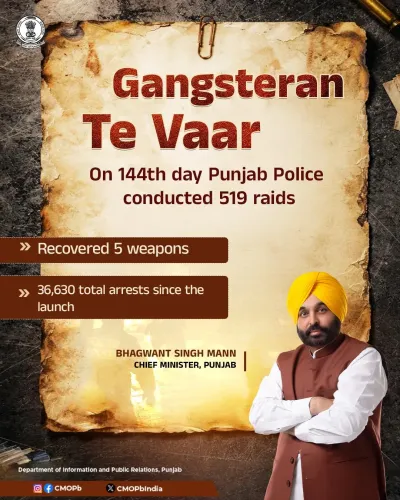
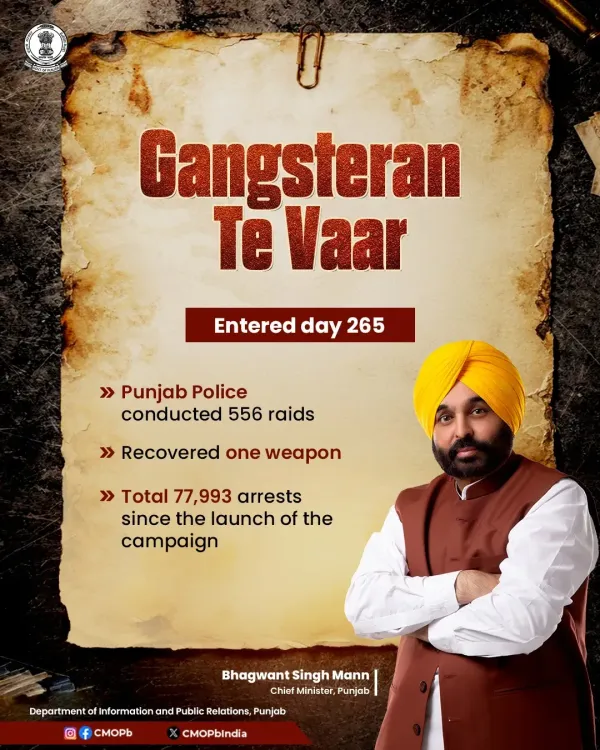
On Day 265 of the Gangsteran Te Vaar campaign, Punjab Police conducted 556 raids targeting gangster associates across the state, recovered a weapon, and raised the total arrest count to 77,993 since the campaign's launch in 2022.
Key Takeaways
556 raids were conducted by Punjab Police on Day 265 of the Gangsteran Te Vaar campaign on 13 October 2026 .
Teams arrested individuals and recovered one firearm during the day's operations.
Total arrests since the campaign's launch have reached 77,993 .
Raids targeted identified and mapped locations linked to associates of gangsters across Punjab.
The campaign was launched in 2022 by the Bhagwant Mann -led AAP government to dismantle organised crime networks.
The CMO Punjab publicly accounts for operations daily, framing transparency as a core element of the campaign's strategy.
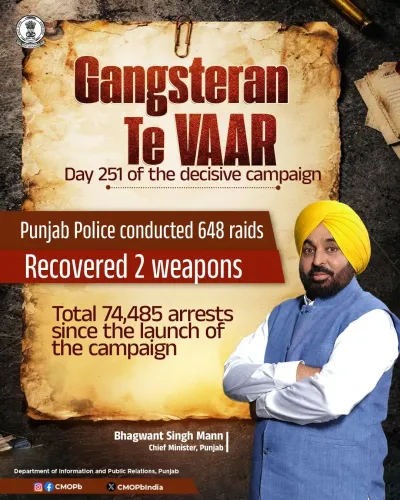
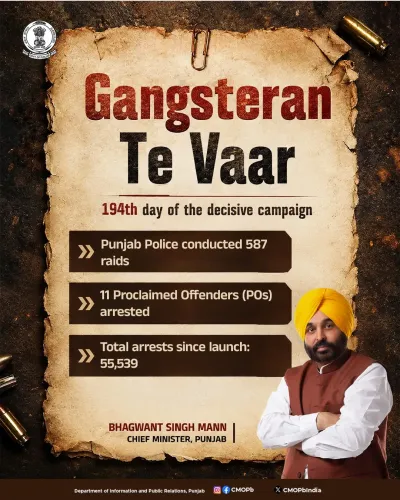
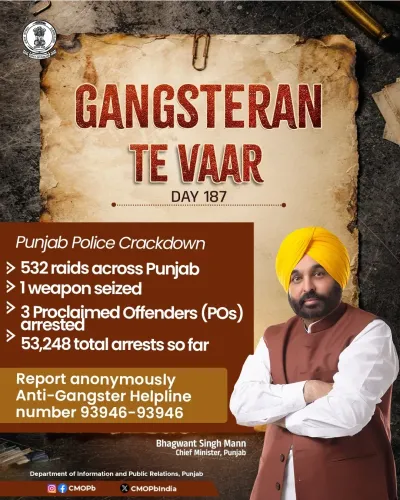
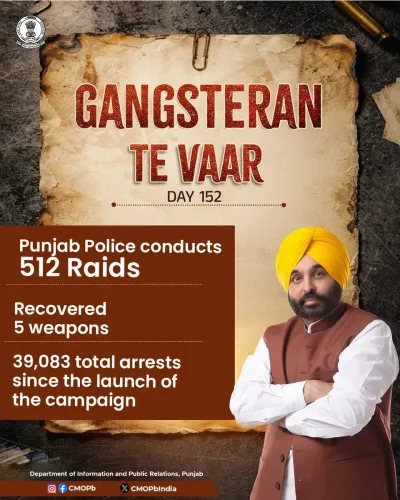
Nearly nine months into a relentless blitz against organised crime, Punjab Police showed no signs of letting up on Tuesday, 13 October 2026 — conducting 556 raids across the state on Day 265 of the Gangsteran Te Vaar ('Strike Against Gangsters') campaign, recovering a weapon and adding fresh arrests to a cumulative tally that has now crossed 77,993. The Chief Minister's Office of Punjab announced the milestone on X, underlining the Bhagwant Mann government's signature law-and-order push.
556 raids, one more weapon off the streets
On Day 265, police teams fanned out to identified and mapped locations linked to associates of gangsters, executing 556 raids in a single day. The operation yielded arrests and the recovery of one firearm — a steady, grinding accumulation that authorities say is designed to choke the supply lines and support networks that keep gang operations alive. The CMO's post framed the campaign as 'decisive', signalling that the government intends to sustain the pace rather than declare victory.
What Gangsteran Te Vaar has built since 2022
Launched in 2022 by the Aam Aadmi Party government under Chief Minister Bhagwant Mann, Gangsteran Te Vaar was conceived as a systematic, data-driven campaign to dismantle the organised crime networks that have long plagued Punjab — networks intertwined with extortion rackets, the drug trade, and targeted violence. The approach is deliberate: map the ecosystem of each gangster, then raid, arrest, and seize outward, from associates to logisticians to financiers. The 77,993 total arrests since launch reflect that breadth. Punjab has historically grappled with the nexus between drug trafficking and gang activity, and successive administrations have attempted police-led crackdowns; the current campaign distinguishes itself through its sheer duration and the daily public accounting of numbers.
Why the daily count matters politically
Publishing a day-by-day tally is itself a governance strategy. It creates accountability — any slowdown in raids or arrests becomes immediately visible — and it signals to both residents and criminal networks that the state is watching continuously, not in episodic bursts. For the Mann government, the campaign is also a proof point for AAP's law-and-order credentials ahead of any future electoral cycle. Punjab residents, long weary of gang-related extortion calls and violence, remain the most consequential audience for every update the CMO posts.
As long as the raids clock in and the numbers climb, the message from Chandigarh to every criminal associate across Punjab is unmistakable: there is no quiet stretch left to hide in.
Point of View
Publicly-tallied police pressure will both erode gang infrastructure and build voter confidence in AAP's law-and-order record. The daily disclosure of raid and arrest numbers is as much a political instrument as an operational one, creating a rolling narrative of state action. However, the real test of the campaign lies not in arrest volumes but in whether conviction rates, gang activity indices, and drug-crime linkages show measurable decline — metrics that raw arrest tallies alone cannot capture. Punjab's historical cycles of crackdown and resurgence suggest the structural challenge of dismantling crime-drug-extortion networks requires parallel judicial and social interventions beyond policing.
NationPress
13 Oct 2026
Frequently Asked Questions
What is the Gangsteran Te Vaar campaign in Punjab?
Gangsteran Te Vaar, meaning 'Strike Against Gangsters', is a sustained anti-crime campaign launched by the Punjab government in 2022 under Chief Minister Bhagwant Mann. It targets gangsters, their associates, and connected criminal networks through daily coordinated police raids and arrests across the state.
How many total arrests have been made under Gangsteran Te Vaar?
As of Day 265 of the campaign on 13 October 2026, total arrests since its launch have reached 77,993, according to the Chief Minister's Office of Punjab.
How many raids did Punjab Police conduct on Day 265?
Punjab Police conducted 556 raids at identified and mapped locations linked to gangster associates across the state on Day 265 of the Gangsteran Te Vaar campaign.
Who oversees the Gangsteran Te Vaar campaign?
The campaign operates under the Punjab Police and is backed by the state government led by Chief Minister Bhagwant Mann of the Aam Aadmi Party.
Why does the Punjab government publish daily raid statistics?
Daily public disclosure of raid and arrest figures creates operational accountability and signals continuous state pressure on criminal networks. It also serves as a governance transparency tool, allowing residents to track progress and preventing the campaign from fading into episodic bursts of activity.