CM Mohan Yadav Chairs State-Level UCC Awareness Meet
Synopsis
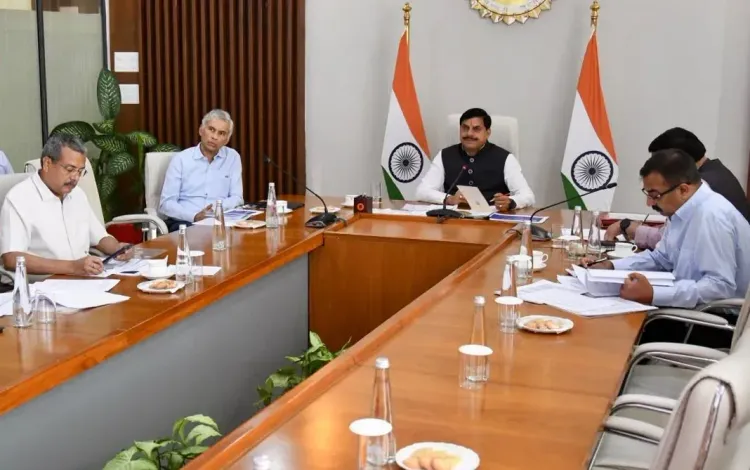
Chief Minister Dr. Mohan Yadav virtually chaired a state-level Uniform Civil Code meeting from Samatva Bhavan in Bhopal on 13 June 2026, directing all District Collectors across Madhya Pradesh to implement a structured UCC awareness campaign at the ground level.
Key Takeaways
Mohan Yadav virtually addressed a state-level meeting on the Uniform Civil Code on 13 June 2026 .
The meeting was convened from Samatva Bhavan , the Chief Minister's official residence in Bhopal .
All District Collectors of Madhya Pradesh received direct directives on rolling out a UCC Awareness Campaign .
Uttarakhand enacted India's first state-level UCC law in February 2024 , serving as the legislative model for BJP-governed states.
The Uniform Civil Code is grounded in Article 44 of the Indian Constitution as a Directive Principle of State Policy.
A possible UCC bill in the Madhya Pradesh Assembly remains the key legislative development to watch.
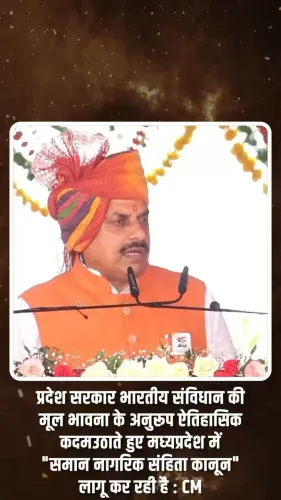
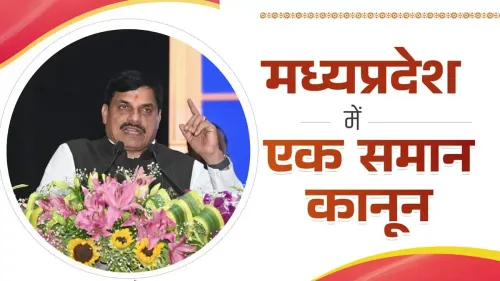
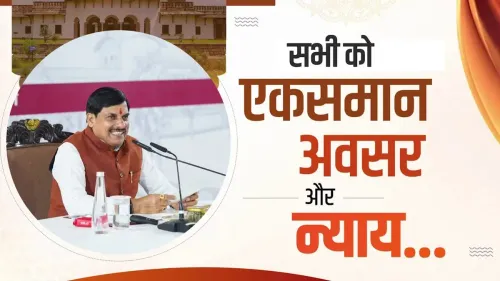
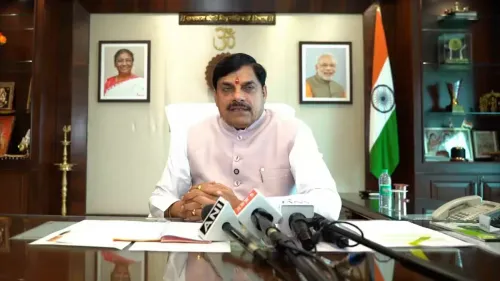
The Chief Minister's Office of Madhya Pradesh announced on Saturday, 13 June 2026 that Chief Minister Dr. Mohan Yadav virtually addressed a state-level meeting on the Uniform Civil Code (UCC), convened from Samatva Bhavan at his official residence in Bhopal. During the meeting, he issued directives to all District Collectors across the state regarding the rollout of a UCC awareness campaign.
Context
The meeting, addressed virtually by Dr. Mohan Yadav, marks a significant step in Madhya Pradesh's push to build public understanding of the Uniform Civil Code. The Chief Minister's Office stated that "समान नागरिक संहिता जागरूकता अभियान" (Uniform Civil Code Awareness Campaign) was the central agenda, with the Chief Minister directly briefing district-level administrators on necessary guidelines. The choice of Samatva Bhavan — meaning 'House of Equality' — as the venue carries symbolic weight given the UCC's core principle of uniform laws for all citizens regardless of religion.
Policy Backdrop
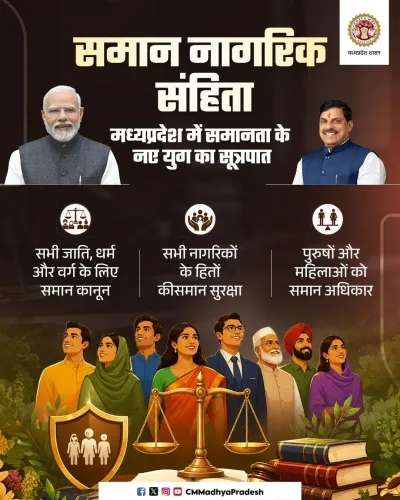
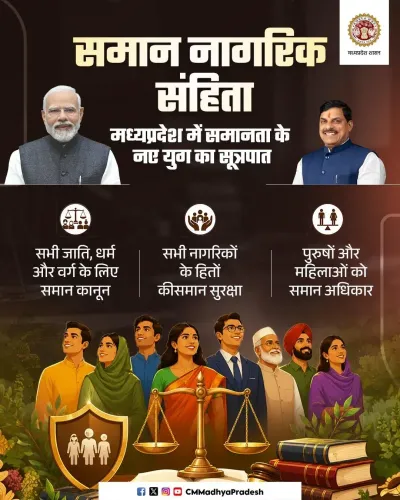
The Uniform Civil Code draws its constitutional basis from Article 44 of the Indian Constitution, which lists it as a Directive Principle of State Policy, directing the state to secure a uniform civil code for citizens across the country. Uttarakhand became the first Indian state to enact a UCC law in February 2024, setting a legislative precedent that BJP-governed states have since looked to as a template. The Bharatiya Janata Party has carried UCC as a long-standing manifesto commitment, positioning it as a measure to replace religion-specific personal laws — governing marriage, divorce, inheritance, and adoption — with a single, common framework applicable to all citizens.
Madhya Pradesh, a BJP stronghold, has been among the states signalling intent to advance UCC both at the administrative and legislative levels. A state-level meeting of this nature, bringing together all District Collectors under direct instruction from the Chief Minister, suggests the awareness drive is being treated as a structured, top-down administrative exercise rather than a purely political communication effort.
Stakeholders and Impact
The most immediate stakeholders are the District Collectors of Madhya Pradesh's 55 districts, who are now tasked with translating the Chief Minister's directives into ground-level awareness activities. Beyond the administrative machinery, the UCC debate directly concerns religious communities across the state — including Hindu, Muslim, Christian, and tribal populations — each of whom are governed by distinct personal law regimes that a uniform code would seek to consolidate. Civil society groups, legal experts, and community leaders are expected to be drawn into the awareness process as it unfolds at the district level.
For ordinary citizens of Madhya Pradesh, the campaign is likely to involve outreach on what a uniform civil code would mean for everyday matters such as marriage registration, inheritance rights, and divorce proceedings. The state's significant Scheduled Tribe population — whose customary laws have historically been treated as distinct — adds a layer of complexity to how awareness messaging will be calibrated across different regions.
What's Next
With district-level directives now issued, the focus shifts to how District Collectors operationalise the awareness campaign across Madhya Pradesh. Observers will watch for the possible introduction of a UCC bill in the Madhya Pradesh Legislative Assembly, which would follow the path charted by Uttarakhand in 2024. The state's moves are also likely to be read in the context of broader central government consultations on a nationwide UCC framework, making Madhya Pradesh a key state to watch in the unfolding legislative story of India's civil law reform debate.
Point of View
Chief Minister Dr. Mohan Yadav is treating the awareness campaign as a mainstream administrative exercise — a deliberate signal that the UCC push in Madhya Pradesh is moving from political rhetoric to bureaucratic execution. This mirrors the playbook seen in Uttarakhand, where administrative groundwork preceded legislation. The timing also aligns with what appears to be a coordinated BJP-governed-states strategy to build public familiarity with UCC principles ahead of any central legislative push. Madhya Pradesh's scale — with 55 districts and a diverse religious and tribal demography — means how the state navigates the awareness phase will be closely watched as a test case for UCC outreach in complex, pluralistic settings.
NationPress
15 Sept 2026
Frequently Asked Questions
What is the Uniform Civil Code and why is Madhya Pradesh holding awareness meetings?
The Uniform Civil Code (UCC) is a proposed set of common personal laws — covering marriage, divorce, inheritance, and adoption — applicable to all citizens regardless of religion, as envisioned under Article 44 of the Indian Constitution. Madhya Pradesh is conducting awareness meetings to educate citizens and prepare district-level administration for its potential implementation.
What did CM Mohan Yadav say at the UCC meeting on 13 June 2026?
CM Dr. Mohan Yadav virtually addressed a state-level UCC meeting from Samatva Bhavan and issued directives to all District Collectors in Madhya Pradesh regarding the implementation of a UCC awareness campaign. Specific outcomes of the meeting have not been detailed beyond these directives.
Which was the first Indian state to implement the Uniform Civil Code?
Uttarakhand was the first Indian state to enact a Uniform Civil Code law, passing it in February 2024. It has since served as a legislative model for other BJP-governed states considering similar steps.
What is Samatva Bhavan in Bhopal?
Samatva Bhavan is the official residence of the Chief Minister of Madhya Pradesh in Bhopal, from where CM Dr. Mohan Yadav convened the state-level UCC meeting on 13 June 2026.
Will Madhya Pradesh introduce a UCC bill in the Assembly?
The possibility of a UCC bill being tabled in the Madhya Pradesh Legislative Assembly is being closely watched, particularly following the state government's active push for a district-level awareness campaign. No bill has been officially announced as of the date of this meeting.