CM Mohan Yadav inspects Limbodi Talab water works in Indore
Synopsis
Madhya Pradesh CM Dr. Mohan Yadav visited Limbodi Talab in Indore on 18 June 2026 to inspect water conservation works under the Jal Ganga Sanvardhan Abhiyan, noting over 2 lakh works completed statewide and ongoing Amrut 2.0 restoration at three Indore lakes.
Key Takeaways
Mohan Yadav conducted shramdaan at Limbodi Talab, Indore on 18 June 2026 and administered a water-conservation pledge to citizens.
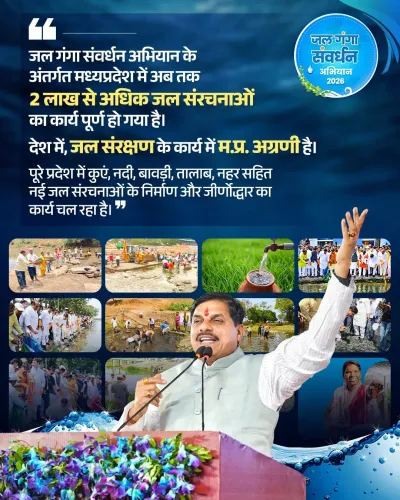
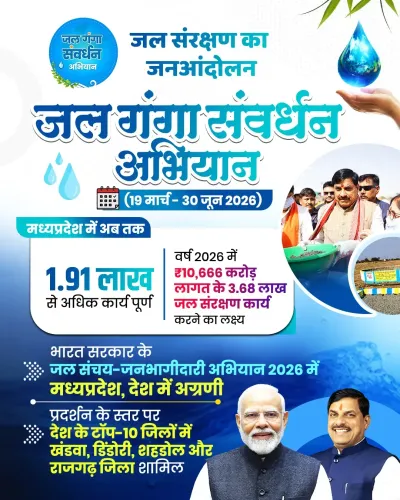
The Jal Ganga Sanvardhan Abhiyan was launched on Gudi Padwa and has recorded more than 2 lakh water conservation and enhancement works across Madhya Pradesh.
In Indore, conservation work has covered more than 10 large lakes and over 250 wells and stepwells .
Three Indore lakes — Bilawali, Limbodi, and Chhota Sirpur — are being restored and beautified under the central Amrut 2.0 scheme.
The campaign is framed as aligned with Prime Minister Narendra Modi 's national water-conservation priorities.
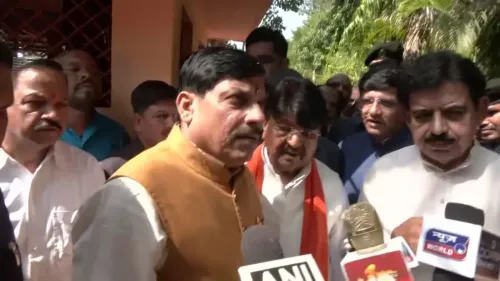
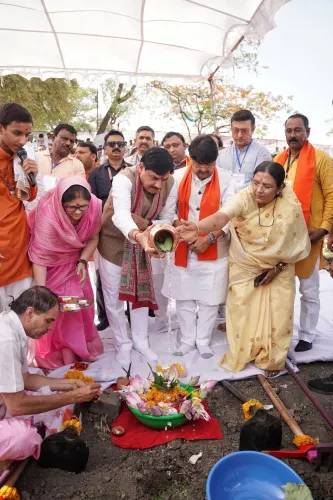
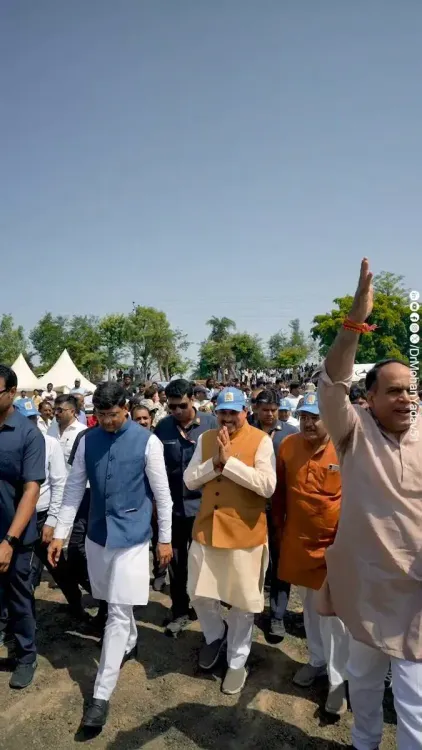
Madhya Pradesh Chief Minister Dr. Mohan Yadav on Thursday, 18 June 2026, visited Limbodi Talab in Indore to inspect ongoing water conservation and deepening works under the state-run Jal Ganga Sanvardhan Abhiyan, personally participating in shramdaan and administering a water-conservation pledge to citizens gathered at the site.
Context
Posting on X, Dr. Yadav described water conservation as 'aane waale kal ko surakshit karne ka samuhik sankalp' — 'a collective resolve to secure the tomorrow that lies ahead.' He noted that under the Jal Ganga Sanvardhan Abhiyan, more than 2 lakh water conservation and enhancement works have been completed across Madhya Pradesh since the campaign was launched on Gudi Padwa earlier this year. The Chief Minister attributed the drive's momentum to the water-conservation vision of Prime Minister Narendra Modi.
In Indore specifically, conservation and restoration work has been carried out at more than 10 large lakes and over 250 wells and stepwells (kunds and baolis), according to the post.
Policy Backdrop
The Jal Ganga Sanvardhan Abhiyan is a Madhya Pradesh state campaign aligned with centrally sponsored water missions. Three lakes in Indore — Bilawali, Limbodi, and Chhota Sirpur — are currently undergoing conservation, restoration, and beautification under the Amrut 2.0 scheme, the Atal Mission for Rejuvenation and Urban Transformation's second phase, which earmarks funds for urban water-body revival.
The Amrut 2.0 framework, a central urban infrastructure programme, dovetails with earlier national efforts such as the Amrit Sarovar Mission (launched 2022) and the Jal Jeevan Mission (2019), both of which emphasise source sustainability alongside supply-side interventions. Madhya Pradesh's shramdaan-and-pledge model adds a community-participation layer designed to build public ownership of the restored water bodies.
Stakeholders and Impact
Urban residents of Indore — the state's largest city — stand to benefit most immediately from restored lake ecosystems and recharged groundwater. Farmers in surrounding districts, who depend on groundwater levels replenished by urban and peri-urban water bodies, are a secondary beneficiary group. Local communities near the targeted lakes and stepwells gain improved recreational and hydrological infrastructure.
Indian cities have faced mounting pressure from declining water tables and erratic monsoons. Campaigns that combine desilting, bund repair, and public pledges are increasingly seen as a cost-effective complement to large-scale irrigation investment, particularly in rain-shadow or semi-arid zones of central India.
What's Next
Work under Amrut 2.0 on the three Indore lakes — Bilawali, Limbodi, and Chhota Sirpur — remains ongoing, with beautification components yet to be completed. Observers will watch for mid-term assessments of groundwater recharge levels following the campaign's declared target of 2 lakh-plus works statewide. Progress reports from other Madhya Pradesh cities running parallel water-body restoration drives under the same abhiyan are also expected in the coming months, as the state heads into the 2026 monsoon season.
Point of View
Lending the drive political legitimacy while generating grassroots optics. With over 2 lakh works claimed statewide, the Jal Ganga Sanvardhan Abhiyan positions Madhya Pradesh as a proactive partner in India's broader water-security push ahead of a critical monsoon season. The Amrut 2.0 alignment also signals the state's intent to draw central urban-infrastructure funds for lake beautification, blending conservation with civic development. How independently verifiable the 2-lakh-works milestone proves to be will determine whether the campaign translates into durable policy credibility or remains a mobilisation exercise.
NationPress
18 Sept 2026
Frequently Asked Questions
What is the Jal Ganga Sanvardhan Abhiyan in Madhya Pradesh?
The Jal Ganga Sanvardhan Abhiyan is a Madhya Pradesh state campaign for water conservation, desilting, and restoration of lakes, wells, and stepwells. It was launched on Gudi Padwa 2026 and has reportedly completed more than 2 lakh works across the state.
What work is being done at Limbodi Talab in Indore?
Limbodi Talab in Indore is undergoing desilting, conservation, and beautification work under both the Jal Ganga Sanvardhan Abhiyan and the central Amrut 2.0 scheme. CM Dr. Mohan Yadav personally participated in shramdaan there on 18 June 2026.
What is Amrut 2.0 and how does it relate to lakes in Indore?
Amrut 2.0 is the second phase of the Atal Mission for Rejuvenation and Urban Transformation, a central government urban infrastructure scheme. In Indore, it funds the conservation, restoration, and beautification of Bilawali, Limbodi, and Chhota Sirpur lakes.
How many lakes and wells have been restored in Indore under this campaign?
According to CM Yadav's post, more than 10 large lakes and over 250 wells and stepwells in Indore have seen conservation and restoration work under the Jal Ganga Sanvardhan Abhiyan.
What is shramdaan and why did CM Yadav do it at a lake?
Shramdaan refers to voluntary physical labour contributed as a form of community service. CM Yadav participated in shramdaan at Limbodi Talab to demonstrate public commitment to water conservation and encourage citizen participation in the ongoing restoration drive.