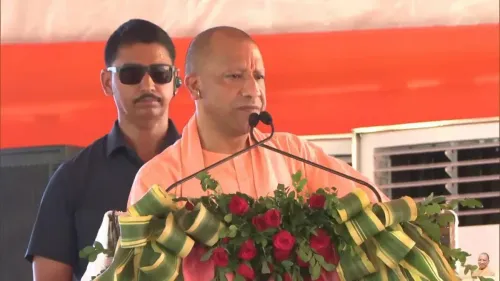
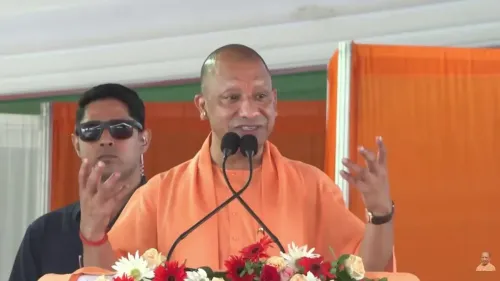
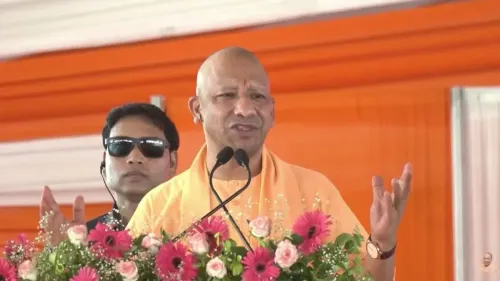
CM Yogi Asserts Zero Bias in UP's Anti-Graft Drive
Synopsis
Uttar Pradesh Chief Minister Yogi Adityanath on 17 July 2026 declared there is no discrimination in his government's enforcement actions, warning that anyone causing trouble will face consequences. The statement reaffirms his administration's zero-tolerance stance on corruption and criminal activity in the state.
Key Takeaways
CM Yogi Adityanath posted on 17 July 2026 asserting that Uttar Pradesh 's enforcement actions are free from discrimination.
The statement — 'कोई भेदभाव नहीं है... अगर कोई गड़बड़ कर रहा है...' — translates to 'There is no discrimination... if anyone is causing trouble...' Since 2017 , the Yogi administration has maintained a publicly declared zero-tolerance policy against corruption and criminal activity.
The government has consistently framed enforcement drives as impartial, countering opposition claims of selective targeting.
State officials, law enforcement, and civic groups in Uttar Pradesh are the primary stakeholders affected by this public declaration.
No specific incident has been officially cited as the trigger for this statement.
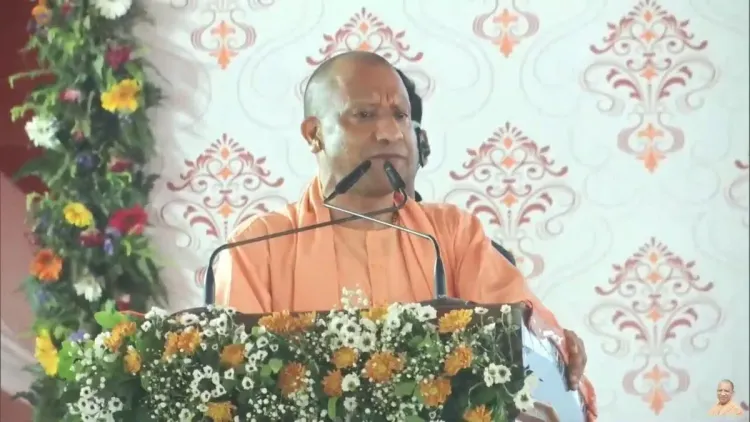
Uttar Pradesh Chief Minister Yogi Adityanath on Friday, 17 July 2026, declared that his government maintains no discrimination in its enforcement actions, warning that anyone found engaging in wrongdoing will face consequences regardless of background. The statement, posted on his official X account, reinforces the administration's long-standing zero-tolerance posture on corruption and criminal activity across the state.
Context
In the post, CM Yogi stated — 'कोई भेदभाव नहीं है... अगर कोई गड़बड़ कर रहा है...' ('There is no discrimination... if anyone is causing trouble...') — signalling that enforcement action in Uttar Pradesh is applied uniformly, without favour or selective targeting. The remark is characteristic of the administration's public communication style when addressing perceptions of bias in state-level crackdowns.
Posts of this nature from the Chief Minister's office typically follow high-profile administrative or police actions, serving as an official reaffirmation that rule of law applies equally to all. No specific incident has been officially cited in connection with this statement.
Policy Backdrop
Since assuming office in 2017, Yogi Adityanath has made anti-corruption and law-and-order the twin pillars of the Uttar Pradesh government's public identity. The administration has consistently framed enforcement drives as impartial and rule-based, often responding pre-emptively to opposition claims of selective targeting.
The zero-tolerance policy announced at the outset of his tenure has been invoked repeatedly — spanning action against illegal mining, land encroachment, and administrative misconduct — with state law enforcement directed to act without regard to political or community affiliation. Uttar Pradesh, India's most populous state, has historically been a benchmark for governance debates around law enforcement impartiality.
Stakeholders and Impact
The statement is directed at multiple audiences simultaneously: state officials and law enforcement agencies receive a public reminder of accountability standards, while citizens and opposition parties are signalled that the administration will not tolerate allegations of partisan enforcement going unanswered.
For Uttar Pradesh's bureaucracy and police apparatus, such public declarations from the Chief Minister carry operational weight, reinforcing that anti-corruption drives should proceed without interference. Civic groups and political observers tracking state governance will note the statement as part of an ongoing pattern of top-down messaging on impartiality.
What's Next
Attention will now turn to any follow-up action from the Uttar Pradesh government — whether in the form of official proceedings, departmental orders, or further statements clarifying the specific context of this declaration. State-level anti-corruption proceedings and enforcement drives in the coming days are likely to be viewed through the lens of this public commitment.
If a specific trigger surfaces, it will test whether the administration's stated principle of non-discrimination is reflected in the on-ground response — a question that opposition parties and civil society in Uttar Pradesh are certain to scrutinise closely.
Point of View
Designed to neutralise narratives of selective action before they gain traction. It fits a well-established pattern in his administration: pre-empting opposition criticism by publicly anchoring enforcement in the language of rule-of-law universality. The statement also serves an internal governance function, signalling to the bureaucracy and police that the Chief Minister's office is watching. Over the long arc of UP politics, this posture has helped the BJP consolidate its image as a party of order — a framing that will continue to be tested by the specifics of any enforcement action that follows.
NationPress
17 Jul 2026
Frequently Asked Questions
What did CM Yogi Adityanath say in his 17 July 2026 post?
CM Yogi Adityanath stated there is no discrimination in his government's enforcement actions and warned that anyone found causing trouble or engaging in wrongdoing will face action, regardless of background.
What is Yogi Adityanath's anti-corruption policy in Uttar Pradesh?
Since taking office in 2017, Yogi Adityanath has maintained a zero-tolerance policy against corruption and criminal activity in Uttar Pradesh, directing law enforcement to act impartially without regard to political or community affiliation.
Why did CM Yogi make this statement about no discrimination?
The statement follows the administration's established pattern of responding to perceptions of selective enforcement. No specific verified incident has been officially cited as the trigger for this particular post.
How has Yogi Adityanath's government handled corruption cases in UP?
The Yogi administration has conducted multiple enforcement drives spanning illegal mining, land encroachment, and administrative misconduct, consistently framing these actions as rule-based and impartial since 2017.
What happens next after CM Yogi's warning on enforcement in UP?
Observers will watch for follow-up government actions, departmental orders, or official statements that clarify the context of the declaration and test whether the stated principle of non-discrimination is reflected in on-ground enforcement.