CM Yogi backs Green Energy Corridor Phase-III, ₹54,082 cr Cabinet nod
Synopsis
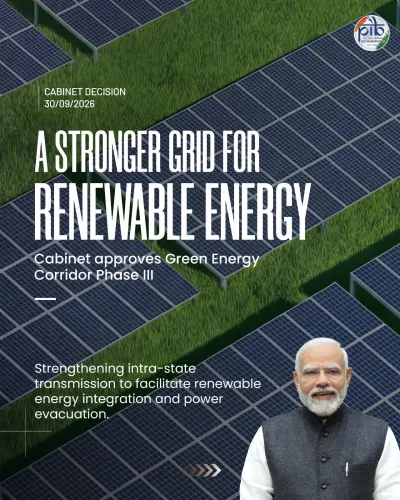
CM Yogi Adityanath welcomed the Union Cabinet's approval of Green Energy Corridor Phase-III on 30 September 2026, praising PM Modi for the ₹54,082 crore scheme that targets 135 GW renewable evacuation and 50 GWh of battery storage to strengthen India's intra-state power grid.
Key Takeaways
The Union Cabinet approved Green Energy Corridor Phase-III , with Central Financial Support of ₹54,082 crore .
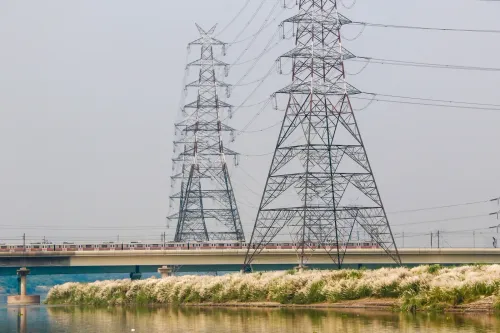
The scheme targets evacuation of up to 135 GW of renewable energy through upgrades to the Intra-State Transmission System (InSTS) .
A provision for 50 GWh of Battery Energy Storage Systems (BESS) is included to improve grid flexibility and dispatchability.
Green Energy Corridor Phase-I was first sanctioned in 2015 , covering states like Rajasthan, Gujarat, and Tamil Nadu.
The scheme supports India's broader goal of 500 GW non-fossil energy capacity by 2030 .
CM Yogi Adityanath publicly backed the initiative on 30 September 2026 , framing it as a step toward an 'Aatmanirbhar and Viksit Bharat.'
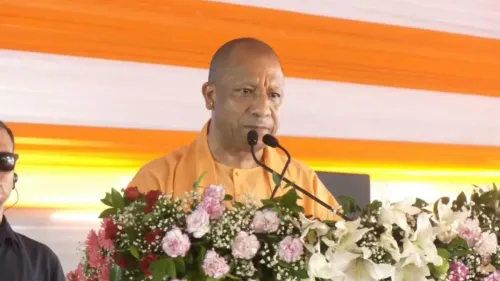
India's power grid just got a landmark upgrade on paper — and Uttar Pradesh Chief Minister Yogi Adityanath wants every voter to know who signed off on it. On Wednesday, 30 September 2026, CM Yogi took to X to welcome the Union Cabinet's approval of Green Energy Corridor Phase-III, a central scheme designed to unclog the single biggest bottleneck in India's clean-energy ambitions: getting renewable power from where it is generated to where it is consumed.
CM Yogi's post hailed the initiative as being driven by the 'visionary leadership' of Prime Minister Narendra Modi, describing it as a 'transformative initiative towards clean energy, sustainable growth and a stronger, Aatmanirbhar and Viksit Bharat.' The approval, he noted, covers a Central Financial Support of ₹54,082 crore and targets the evacuation of up to 135 GW of renewable energy through upgrades to the country's Intra-State Transmission System (InSTS).
Why the grid, not the panels, is India's real renewable problem
Building solar parks and wind farms is the visible part of the energy transition. Moving that electricity reliably across state grids — the invisible part — has consistently lagged behind. Green Energy Corridor Phase-I, sanctioned in 2015, first addressed this gap by building dedicated transmission links in states including Rajasthan, Gujarat, and Tamil Nadu. Successive phases have progressively pushed that infrastructure deeper into intra-state networks, where state power utilities — not the central grid — are responsible for the last stretch of transmission.
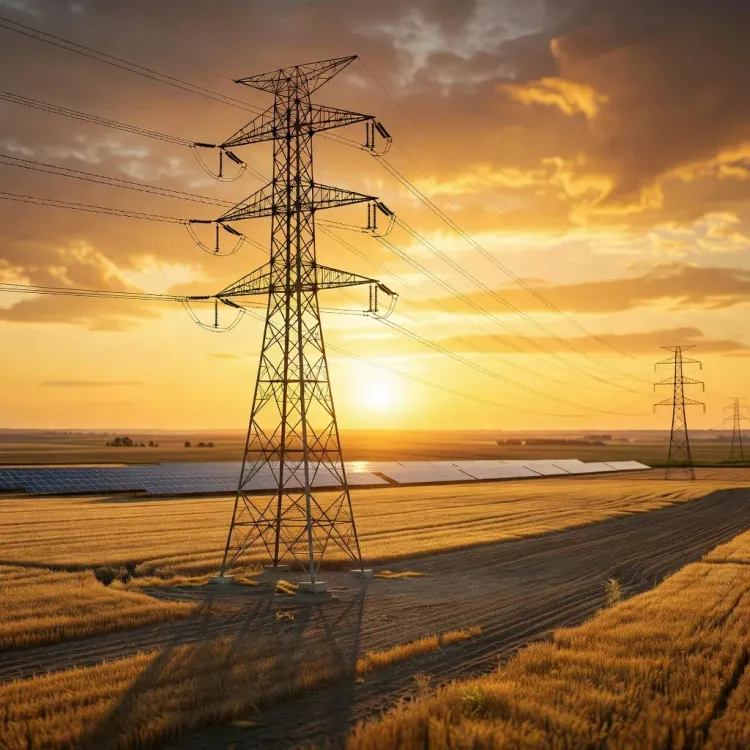
Phase-III targets precisely that intra-state layer. Without it, renewable capacity can be installed but not dispatched, creating what grid planners call 'stranded generation' — power that exists on a turbine or panel but never reaches a home or factory. The approved scheme directly addresses this recognised bottleneck.
The 50 GWh BESS provision and what it signals
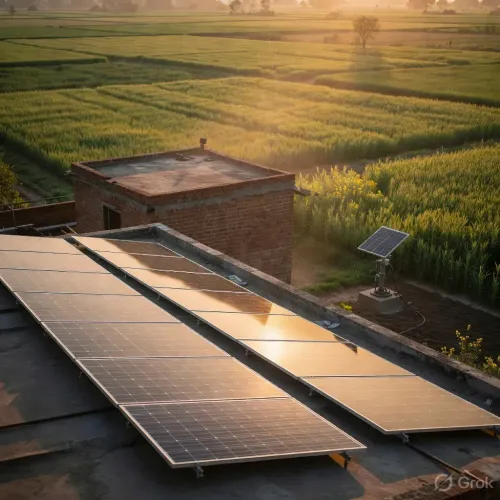
Buried inside the approval is a detail that energy analysts will flag as significant: a provision for 50 GWh of Battery Energy Storage Systems (BESS). Storage is the missing link that makes renewable energy dispatchable — available on demand rather than only when the sun shines or the wind blows. Embedding BESS capacity within a transmission corridor scheme, rather than treating it as a separate infrastructure project, marks a shift in how India is structuring its grid investments.
The inclusion of BESS also directly supports grid flexibility — the ability to absorb sudden surges or drops in renewable supply without destabilising the broader network. As India pushes toward its 500 GW non-fossil energy target by 2030, that flexibility will become less optional and more existential for grid operators.
CM Yogi's political framing of a national policy
The post is notable not just for what it announces but for who is announcing it. As Chief Minister of Uttar Pradesh — India's most populous state and a major electricity consumer — Yogi Adityanath has a direct stake in transmission upgrades that improve power availability for UP's urban and rural consumers alike. His amplification of a Union Cabinet decision also reinforces the BJP's consistent strategy of projecting central welfare and infrastructure schemes through state-level leadership, ensuring the political credit flows visibly from New Delhi to the party's grassroots.
What happens next will be watched closely: state-level project sanctions, competitive tendering for BESS capacity, and whether the approved outlay translates into actual renewable energy evacuated within the scheme's timeline. The Cabinet nod is the starting gun. The real race is in execution.
Point of View
Acknowledging that renewable generation targets are meaningless without the grid infrastructure to carry that power to consumers. CM Yogi's enthusiastic amplification of the decision underscores how state BJP leaders are increasingly cast as active co-owners of central infrastructure narratives, not passive recipients. The inclusion of a large BESS provision within a transmission scheme — rather than as a standalone project — signals a maturing understanding of grid management at the policy level. Whether the ₹54,082 crore outlay moves from approval to grounded infrastructure at pace will be the real test of this political moment.
NationPress
30 Sept 2026
Frequently Asked Questions
What is Green Energy Corridor Phase-III?
Green Energy Corridor Phase-III is a Union Cabinet-approved scheme that provides central financial support to upgrade intra-state transmission networks across India, enabling the evacuation of up to 135 GW of renewable energy and integrating 50 GWh of battery storage capacity.
How much money has the government approved for Green Energy Corridor Phase-III?
The Union Cabinet has approved a Central Financial Support of ₹54,082 crore for Green Energy Corridor Phase-III.
What is BESS and why is it included in the Green Energy Corridor scheme?
BESS stands for Battery Energy Storage Systems. It is included to store surplus renewable energy and release it when needed, making power supply more stable and reducing dependence on fossil-fuel backup plants.
What is the difference between inter-state and intra-state transmission corridors?
Inter-state corridors move electricity between states across the national grid, while intra-state corridors handle distribution within a single state. Earlier Green Energy Corridor phases focused on inter-state links; Phase-III targets the intra-state layer managed by state power utilities.
Why did CM Yogi Adityanath comment on a Union Cabinet decision?
As Chief Minister of Uttar Pradesh, India's most populous state and a major power consumer, Yogi Adityanath has a direct stake in transmission upgrades that improve electricity access for UP residents, and publicly backed the scheme on 30 September 2026.