CM Yogi flags UP's 15-year data gap, bets on Census 2027

Synopsis
Chief Minister Yogi Adityanath has underscored that Uttar Pradesh continues to build all its action plans on 2011 Census data, calling Census 2027 essential for accurate, calculable scheme delivery across India's most populous state.
Key Takeaways
CM Yogi Adityanath stated that every government action plan in Uttar Pradesh is still based on 2011 Census data.
India's planned 2021 Census was postponed indefinitely due to the COVID-19 pandemic, extending the data gap to over 15 years .
Yogi Adityanath argued that accurate, reliable data directly improves planning quality and produces 'calculated' scheme outputs.
Census 2027 is flagged as a critical inflection point for Uttar Pradesh's welfare, infrastructure and resource allocation planning.
Uttar Pradesh, as India's most populous state, faces the sharpest consequences from using an outdated demographic baseline.
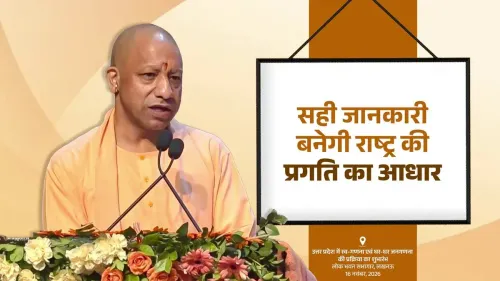
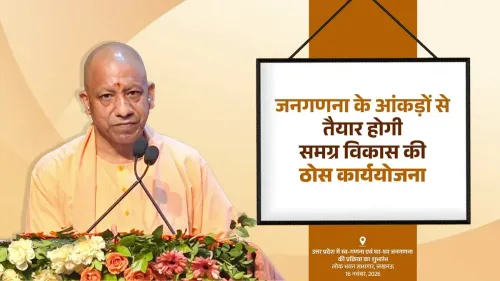
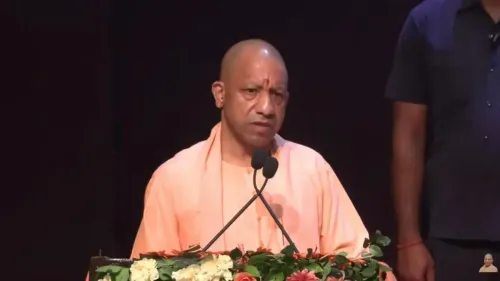
Uttar Pradesh has been planning its welfare and infrastructure schemes for over fifteen years using population data that is older than most of its beneficiaries' secondary-school records. Chief Minister Yogi Adityanath, speaking on Monday, 16 November 2026, made that uncomfortable arithmetic the centrepiece of a pointed argument for why Census 2027 matters more for Uttar Pradesh than perhaps any other state in the country.
The Chief Minister's Office of Uttar Pradesh quoted him directly: 'आपके पास सटीक और विश्वसनीय डेटा है, तो आपकी प्लानिंग भी बेहतर होगी और योजनाओं का आउटपुट भी कैलकुलेटेड होगा' — 'If you have accurate and reliable data, your planning will improve and the output of schemes will be calculated.' He added the blunt acknowledgement: every action plan the state government prepares today is still built on the 2011 Census.
Fifteen years of planning on a frozen snapshot
India's 2011 Census — the fifteenth national census — was always meant to be superseded by a fresh count in 2021. The COVID-19 pandemic forced an indefinite postponement, leaving every state to run welfare delivery, infrastructure allocation and beneficiary identification off data that is now approaching a generation old. For Uttar Pradesh, India's most populous state, the gap is not an administrative inconvenience — it is a structural problem. Scheme beneficiary lists, housing targets, food-security entitlements, and health infrastructure norms all carry the implicit assumption that the population looks like it did fifteen years ago.
That assumption is increasingly untenable. Uttar Pradesh has seen significant urban migration, demographic shifts, and expansion of its young workforce cohort since 2011. Planning schemes against an outdated baseline risks under-serving new clusters of need while over-allocating to areas whose populations have moved on.
Why 'calculated output' is the phrase to watch
Yogi Adityanath's choice of the phrase 'calculated output' — कैलकुलेटेड होगा — is deliberate. It frames Census 2027 not as a bureaucratic exercise but as a prerequisite for accountable governance: if the denominator is wrong, the scheme's impact cannot be measured, only guessed. It is an argument that cuts across political lines, because no administration — regardless of party — can claim efficiency while working from a frozen demographic snapshot.
The Chief Minister's statement signals that the state government is positioning itself to move quickly once fresh census data is available, recalibrating action plans across departments rather than simply updating a column in a spreadsheet.
What Census 2027 would change for UP's schemes
Fresh data would affect nearly every dimension of state planning — from the number of ration cards issued under food-security programmes, to school-enrolment projections, to the sizing of health infrastructure under centrally-sponsored schemes. Uttar Pradesh, as the state that draws the largest share of central transfers linked to population, also stands to see its fiscal allocations recalibrated once updated figures are available.
The specific timelines, methodology, and operational details of Census 2027 have not yet been officially confirmed. But Adityanath's public emphasis on the exercise suggests the state is already thinking about the institutional groundwork required — and expecting it to reshape the architecture of planning for the decade ahead.
India has waited fifteen years for a fresh demographic reckoning. If Census 2027 delivers, Uttar Pradesh's planners will, for the first time since the last UPA government, know exactly who they are building for.
Point of View
Not a statistical nicety. For the BJP's model of delivery-focused administration, the argument is strategically useful: it positions the party in power as the one that will finally plan with precision rather than approximation. It also quietly signals to the Centre that large states like UP have political and administrative skin in the game of getting the census done on schedule. Watch for whether the UP government announces any state-level preparatory exercises, which would signal ambition beyond rhetoric.
NationPress
16 Nov 2026
Frequently Asked Questions
Why is Census 2027 important for Uttar Pradesh?
Uttar Pradesh currently bases all its welfare and infrastructure schemes on 2011 Census data, which is over 15 years old. Census 2027 would provide updated population figures that enable more accurate planning and measurable scheme outcomes.
Why was the 2021 Census not conducted in India?
India's decennial census scheduled for 2021 was postponed indefinitely due to the COVID-19 pandemic, leaving states dependent on 2011 data for all planning purposes since then.
What did CM Yogi Adityanath say about Census 2027?
CM Yogi Adityanath said that with accurate and reliable data, planning improves and scheme outputs become 'calculated.' He emphasised that Census 2027 will play a uniquely important role in Uttar Pradesh's governance.
How does outdated census data affect government schemes in UP?
Outdated data skews beneficiary lists, housing targets, food-security entitlements and health infrastructure norms — making it impossible to precisely measure whether schemes are reaching the right people in the right numbers.
When will Census 2027 begin in India?
The specific start date, scope and operational details of Census 2027 have not yet been officially confirmed by the government.