CM Yogi declares Ayodhya India's No.1 Solar City
Synopsis
CM Yogi Adityanath announced on September 27, 2026 that Ayodhya has become India's top-ranked Solar City, framing the milestone as the culmination of the city's sweeping infrastructure transformation under the UP government's urban renewal drive.
Key Takeaways
CM Yogi Adityanath declared Ayodhya India's number-one Solar City on 27 September 2026 .
The announcement highlights the city's shift from chronic power shortages to a leading renewable-energy adopter.
Solar installations have been integrated into Ayodhya's broader urban redevelopment, covering public buildings, ghats, and rooftops.
The achievement is framed under the central government's Solar City programme and the National Solar Mission (launched 2010 ).
The UP government has signalled it plans to replicate the solar-city model across other urban centres in the state.
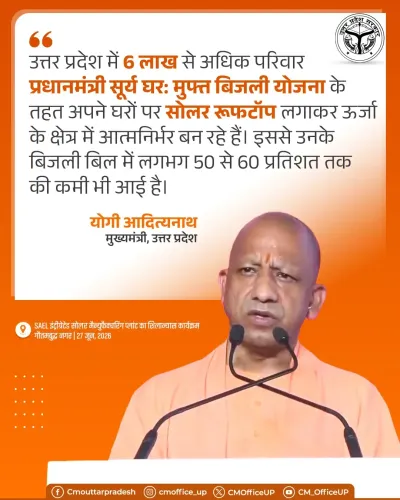
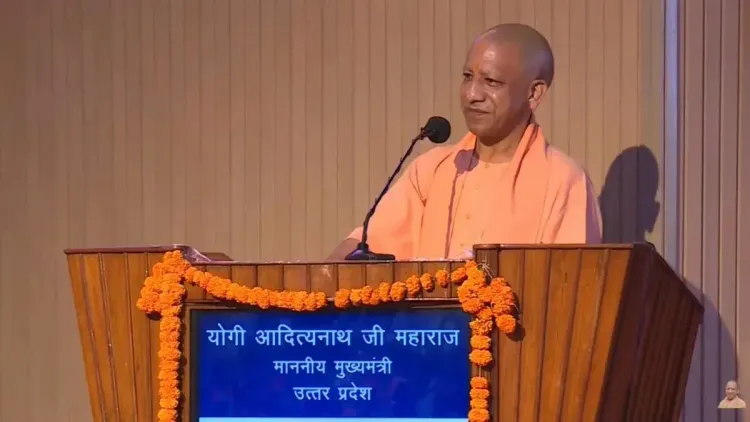
A city once synonymous with darkness is now drawing power from the sun. Uttar Pradesh Chief Minister Yogi Adityanath on Sunday, September 27, 2026, declared that Ayodhya — long under-lit and infrastructure-starved — has risen to become India's number-one Solar City, marking a striking new chapter in the ancient city's sweeping modern transformation.
Posting in Hindi on X, Chief Minister Adityanath wrote: 'Jo Shri Ayodhya ji andheron mein rehti thi, aaj woh desh ki number-1 solar city bhi ban gayi hai' — 'The Ayodhya that once lived in darkness has today become the country's number-one solar city as well.' The framing was deliberate: a pointed before-and-after that connects the city's religious resurgence with a very 21st-century infrastructure milestone.
From neglect to rooftops full of panels
Ayodhya's energy story is inseparable from its broader urban makeover. The Uttar Pradesh government has spent recent years layering renewable energy components onto the city's massive temple-precinct redevelopment — solar installations on public buildings, ghats, municipal offices, and residential rooftops have multiplied alongside new roads and pilgrim facilities. The philosophy has been straightforward: if you are rebuilding a city, wire it for the future the first time around.
That push draws on a national scaffolding: the National Solar Mission, launched in 2010, set the architecture for grid-connected urban solar, and the Solar City programme under the Ministry of New and Renewable Energy created a specific framework for designating cities that meet ambitious renewable-energy adoption targets. Ayodhya's claimed top rank — if confirmed by official data — would represent a remarkable journey for a city that for decades lagged on basic electricity reliability.
The political arithmetic behind the announcement
Chief Minister Adityanath has made Ayodhya the centrepiece of his governance narrative, pairing faith with concrete deliverables: airports, expressways, upgraded sewage, and now solar leadership. Claiming a national-level energy ranking adds a secular, development-metrics dimension to what might otherwise read as a purely religious project. It is a message aimed squarely at investors, urban planners, and a younger electorate that watches infrastructure scorecards as closely as it watches temple consecrations.
The Uttar Pradesh government has indicated it intends to replicate the solar-city model across other urban centres in the state — which, if executed, would make this Ayodhya announcement a policy template, not a one-off symbolic moment. Every district town that follows the same playbook will reference this milestone as the proof of concept.
Darkness to daylight — powered by the sun. If the ranking holds up to scrutiny, Ayodhya will have pulled off something rare: turning a centuries-old pilgrimage town into a benchmark for 21st-century clean energy.
Point of View
A combination that has defined his political brand since taking office. By claiming a national energy ranking, the UP government seeks to demonstrate that the Ayodhya project is not merely symbolic but produces hard infrastructure outcomes verifiable against national benchmarks. If the solar-city ranking is independently corroborated, it will significantly strengthen the argument that faith-driven mega-projects can double as sustainable urban development. The bigger question is whether the model scales: replicating solar-city status across UP's secondary towns would be a far more complex administrative challenge than concentrating resources on a single high-visibility destination.
NationPress
27 Sept 2026
Frequently Asked Questions
What is India's Solar City programme?
The Solar City programme is a central government initiative under the Ministry of New and Renewable Energy designed to help urban areas set and meet ambitious renewable-energy adoption targets, including rooftop solar installations on public and private buildings.
How did Ayodhya become a solar city?
The Uttar Pradesh government integrated solar installations — on public buildings, ghats, municipal offices, and residential rooftops — into Ayodhya's wider urban redevelopment drive, building on the framework of the National Solar Mission launched in 2010.
What did CM Yogi Adityanath say about Ayodhya's solar ranking?
CM Yogi Adityanath posted on X on September 27, 2026, saying that Ayodhya, which once 'lived in darkness,' has today become India's number-one Solar City, highlighting the city's transformation.
Is Ayodhya officially confirmed as India's number-one Solar City?
CM Adityanath made the claim on X; independent verification of the ranking against official central government data has not been separately confirmed at this time.
Will other UP cities follow Ayodhya's solar model?
The UP government has indicated plans to extend the solar-city approach to other urban centres in the state, with Ayodhya positioned as the proof-of-concept for the rollout.