CM Yogi Hails Cabinet Nod for Yuge Yugeen Bharat Museum
Synopsis
The Union Cabinet under PM Modi approved the Yuge Yugeen Bharat Museum at New Delhi's North and South Block on November 11, 2026. UP Chief Minister Yogi Adityanath hailed the decision as historic, saying the museum will bring India's civilizational heritage alive for the next generation and the global community.
Key Takeaways
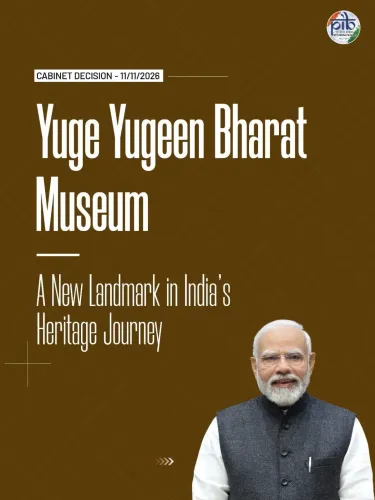
The Union Cabinet , chaired by PM Narendra Modi , approved the Yuge Yugeen Bharat Museum (YYBM) on November 11, 2026 .
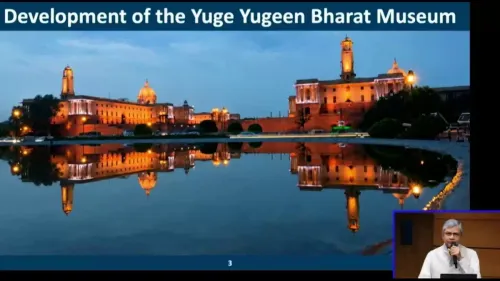
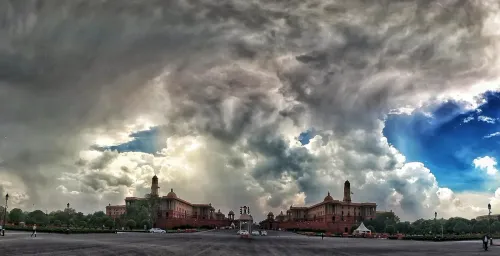
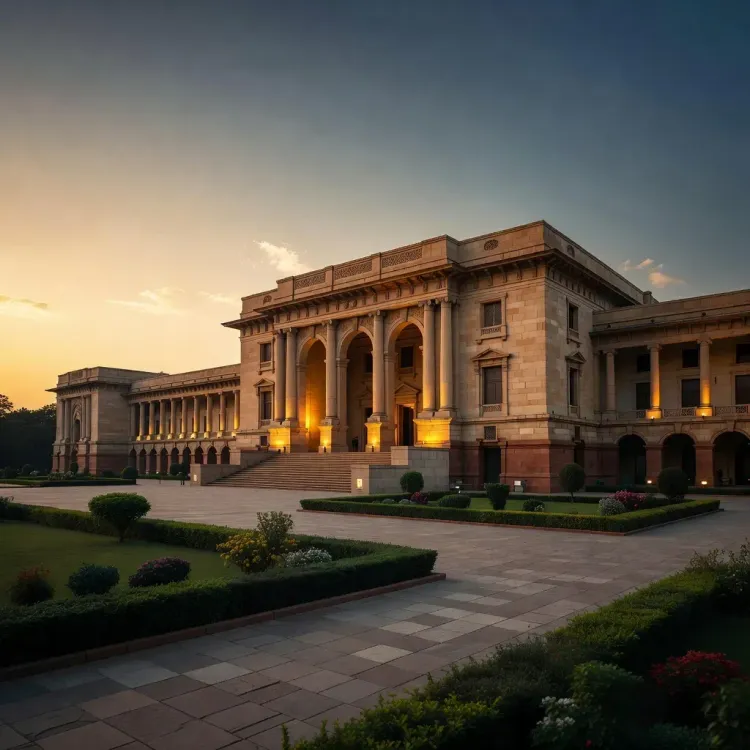
The museum will be developed within the North and South Block complex in New Delhi's Central Vista .
It is projected to have the world's largest exhibition area, integrating India's civilizational, historical, and cultural heritage in one complex.
CM Yogi Adityanath welcomed the Cabinet decision and thanked PM Modi, connecting the museum to Sanatan cultural consciousness .
The repurposing of North and South Block was first envisioned under the Central Vista redevelopment project approved in 2019 .
The museum is intended to serve students, historians, researchers, and international visitors through exhibitions, study, and cultural programming.
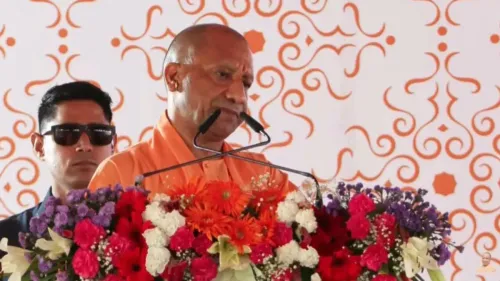
A landmark cultural decision out of New Delhi on Wednesday, November 11, 2026 — the Union Cabinet, chaired by Prime Minister Narendra Modi, approved the development of the Yuge Yugeen Bharat Museum (YYBM) within the historic North and South Block complex on Rajpath, turning two of India's most iconic administrative buildings into what is projected to be the world's largest exhibition-area museum. Uttar Pradesh Chief Minister Yogi Adityanath welcomed the decision, calling it a moment worthy of deep gratitude.
Posting on X in Hindi, CM Yogi wrote: 'विश्व में सबसे बड़े प्रदर्शनी क्षेत्र वाला यह संग्रहालय भारत की गौरवशाली सभ्यतागत विरासत, समृद्ध इतिहास और सांस्कृतिक वैभव को एक ही परिसर में जीवंत करेगा' — 'This museum, with the world's largest exhibition area, will bring alive India's glorious civilizational heritage, rich history, and cultural splendour within a single complex.' He added that the museum would give the younger generation an opportunity to connect with their heritage and introduce the global community to India's Sanatan cultural consciousness.
North and South Block: From Governance to Civilizational Gallery
The North and South Blocks have been the nerve centre of Indian governance since the colonial era, housing the Prime Minister's Office and key central ministries. The Cabinet's approval now sets in motion their transformation into a public cultural landmark — a repurposing that was first envisioned as part of the broader Central Vista redevelopment project approved in 2019. That project reshaped the ceremonial heart of the capital, and the YYBM is its most ambitious cultural chapter yet.
The museum is designed to house India's civilizational story in one integrated space — spanning archaeology, art, philosophy, science, and statecraft across millennia. Targeted audiences include students, historians, researchers, and international visitors, with the complex expected to serve as a hub for academic study and cultural programming alongside its exhibition galleries.
A Pattern of State-Backed Cultural Infrastructure
The YYBM approval is not an isolated gesture. It is the latest move in a sustained central government push to build large-scale heritage institutions that frame India's past through the lens of civilizational continuity. From the new Parliament building to the revamped National Museum proposals, the pattern is consistent: purpose-built or repurposed spaces that centralise and modernise heritage presentation at a national scale.
For CM Yogi — who leads both the government of Uttar Pradesh, a state with an extraordinary concentration of archaeological and religious heritage sites, and the Gorakhnath Math, one of North India's most prominent religious institutions — the museum's stated mission to acquaint the world with India's Sanatan cultural consciousness carries particular resonance. His endorsement signals strong alignment between state-level cultural governance and the Centre's heritage agenda.
What happens next will depend on construction timelines, budget allocations, and how the YYBM integrates with the ongoing Central Vista works — details that will shape whether this approval translates into a functioning landmark within this decade.
Point of View
Whose political and religious standing is deeply intertwined with cultural revivalism, the endorsement is both instinctive and strategic. The choice of North and South Block — the former seat of executive power — as the venue amplifies the symbolic weight: governance space yielding to civilizational story-telling. Watch whether the museum's curatorial direction, once finalised, sparks debate about whose history gets centred and whose gets footnoted.
NationPress
11 Nov 2026
Frequently Asked Questions
What is the Yuge Yugeen Bharat Museum?
The Yuge Yugeen Bharat Museum (YYBM) is a proposed national museum approved by the Union Cabinet on November 11, 2026, to be developed within the North and South Block complex in New Delhi. It aims to present India's civilizational heritage, history, and culture in a single integrated space and is projected to have the world's largest exhibition area.
Where will the Yuge Yugeen Bharat Museum be located?
The museum will be located in the historic North and South Block buildings on Rajpath in New Delhi, which are part of the Central Vista complex and have historically housed the Prime Minister's Office and key central ministries.
What did CM Yogi Adityanath say about the museum approval?
CM Yogi Adityanath welcomed the Cabinet decision on X, saying the museum would bring alive India's glorious civilizational heritage and cultural splendour in one complex, and would help the younger generation connect with their heritage and introduce the world to India's Sanatan cultural consciousness.
How does the YYBM connect to the Central Vista project?
The repurposing of North and South Block for public and cultural use was part of the broader Central Vista redevelopment project approved in 2019. The YYBM approval is the cultural centrepiece of that larger plan to redesign New Delhi's ceremonial core.
Who will benefit from the Yuge Yugeen Bharat Museum?
The museum is designed for students, historians, researchers, and international visitors. It will function as a hub for academic study, research, cultural programming, and large-scale exhibitions showcasing India's history and civilizational legacy.