CM Yogi Congratulates Dr K.K. Thakral on Padma Shri
Synopsis
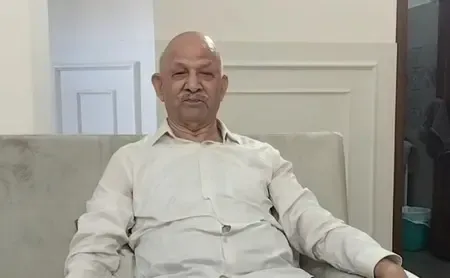
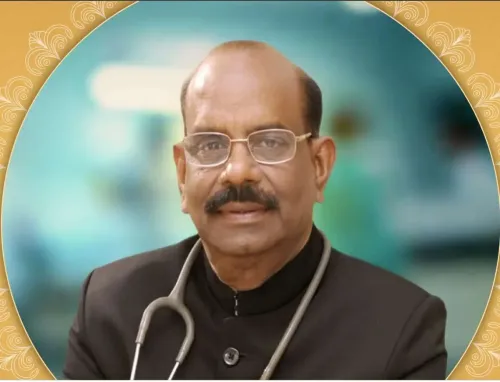
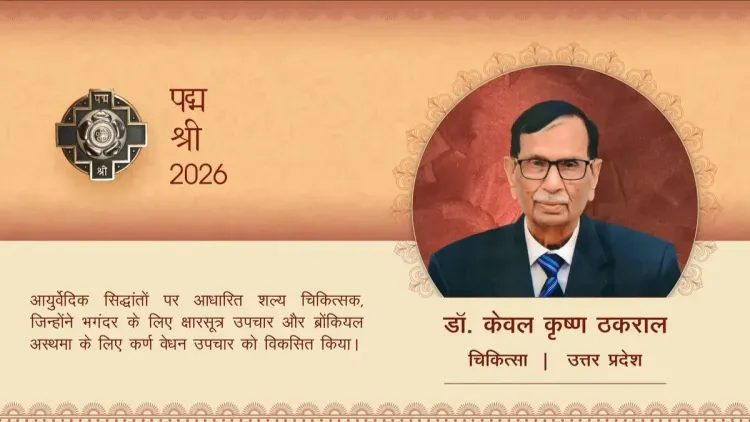
Uttar Pradesh CM Yogi Adityanath congratulated Dr. Kewal Krishna Thakral on receiving the Padma Shri from President Draupadi Murmu for six decades of Ayurveda research, including a classical 'Karnavedhan' technique for bronchial asthma treatment.
Key Takeaways
CM Yogi Adityanath publicly congratulated Dr.
Kewal Krishna Thakral on being awarded the Padma Shri in the field of medicine.
The award was conferred by President Draupadi Murmu at a ceremony in New Delhi on 25 May 2026 .
Thakral is credited with six decades of Ayurveda practice and research.
He developed the 'Karnavedhan' technique — a classical ear-based intervention — as a treatment approach for bronchial asthma .
His work is seen as contributing to the global recognition of ancient Indian medical systems.
The recognition aligns with the Ministry of AYUSH 's broader mandate to mainstream and validate traditional Indian medicine.
Uttar Pradesh Chief Minister Yogi Adityanath on Monday, 25 May 2026 extended congratulations to Dr. Kewal Krishna Thakral, a distinguished Ayurveda practitioner and researcher, on being conferred the Padma Shri — India's fourth-highest civilian honour — by President Draupadi Murmu at a ceremony in New Delhi.
Context
In his post, CM Yogi described Dr. Thakral as an 'ananya sadhak' (unparalleled devotee) and 'prakhyat shodhakartha' (eminent researcher) of Ayurveda. He highlighted the awardee's six decades of dedicated practice and credited him with developing the 'Karnavedhan' technique — a classical ear-piercing-based intervention — as a path-breaking approach for treating bronchial asthma. The Chief Minister noted that Dr. Thakral's research has brought global recognition to ancient Indian systems of medicine.
President Draupadi Murmu, who has served as Head of State since 2022 and is the first woman from a tribal community to hold the office, presided over the Padma awards investiture. The Padma Shri is awarded annually for distinguished service in fields including medicine and traditional knowledge systems.
Policy Backdrop
The recognition of Dr. Thakral fits within a sustained policy effort to mainstream traditional Indian medicine. The Ministry of AYUSH, established in 2014, has worked to promote research, education, and global acceptance of Ayurveda, Yoga, Unani, Siddha, and Homoeopathy. Civilian honours such as the Padma Shri have been deployed as a tool to spotlight practitioners who combine classical textual knowledge with clinical innovation.
India has also pursued health diplomacy through traditional medicine, positioning Ayurveda as a credible component of its soft-power outreach. Scientific documentation of classical practices — including procedural techniques rooted in ancient texts — has been a recurring priority across successive central administrations.
Stakeholders and Impact
Dr. Thakral's work is of particular significance to Ayurveda practitioners and respiratory patients, especially those suffering from bronchial asthma, a condition that affects millions across India. The 'Karnavedhan' technique, referenced in classical Ayurvedic literature, represents an attempt to validate and adapt ancient procedural knowledge for contemporary clinical use.
For the broader Ayurveda community, the Padma Shri award sends a signal that research combining classical scholarship with therapeutic innovation can receive national-level recognition. This may encourage further documentation and peer engagement around traditional treatment protocols.
What's Next
Attention will now turn to any follow-up from the Ministry of AYUSH on clinical validation studies or collaboration with bodies such as the World Health Organisation on traditional medicine frameworks. The next annual Padma awards cycle will again offer a window into which practitioners and disciplines the government chooses to highlight within the traditional medicine space. CM Yogi's public acknowledgement also reflects the continuing political salience of Ayurveda promotion in Uttar Pradesh, where the Gorakhnath tradition has deep historical ties to classical Indian healing practices.
Point of View
The post signals an appreciation for clinical specificity within Ayurveda — moving beyond generic celebration toward acknowledgement of research rigour. The Padma awards have increasingly been used to build a visible ecosystem of recognised practitioners in the AYUSH space, lending institutional credibility to the field. For Yogi Adityanath, whose identity is closely linked to the Gorakhnath tradition and its holistic worldview, such recognition also reinforces a cultural continuity between classical Indian knowledge systems and contemporary governance priorities.
NationPress
9 Oct 2026
Frequently Asked Questions
Who is Dr. Kewal Krishna Thakral and why did he receive the Padma Shri?
Dr. Kewal Krishna Thakral is a renowned Ayurveda practitioner and researcher who received the Padma Shri in 2026 for six decades of contributions to traditional Indian medicine, including developing the 'Karnavedhan' technique for bronchial asthma treatment.
What is the Karnavedhan technique in Ayurveda?
Karnavedhan is a classical Ayurvedic procedure involving ear piercing that Dr. Thakral developed as a therapeutic approach for treating bronchial asthma, drawing on ancient Indian medical texts.
What is the Padma Shri award?
The Padma Shri is India's fourth-highest civilian honour, awarded annually by the President of India for distinguished service in fields such as medicine, arts, science, and public affairs.
Why did CM Yogi congratulate Dr. Thakral?
CM Yogi Adityanath congratulated Dr. Thakral on receiving the Padma Shri, recognising his decades of Ayurveda research and his contribution to bringing global prestige to ancient Indian medical practices.
What is the Ministry of AYUSH and what does it do?
The Ministry of AYUSH, established in 2014, promotes research, education, and international acceptance of traditional Indian medicine systems including Ayurveda, Yoga, Unani, Siddha, and Homoeopathy.