CM Yogi invokes scripture, calls food a form of Brahman
Synopsis
Uttar Pradesh CM Yogi Adityanath invoked the Taittiriya Upanishad on 5 November 2026, sharing that Hindu scriptures regard food — anna — as a form of Brahman, blending his roles as mahant and Chief Minister in a single devotional post.
Key Takeaways
CM Yogi Adityanath posted a scriptural reflection on 5 November 2026 , quoting the Vedic concept of annam Brahma — food as Brahman.
The reference traces to the Taittiriya Upanishad , one of Hinduism's foundational philosophical texts.
Yogi holds the dual role of Uttar Pradesh Chief Minister and head of the Gorakhnath Math , a historic Nath Sampraday seat in Gorakhpur.
The post follows his established pattern of sharing scriptural and devotional content on social media to reach Hindu devotees across the state.
Uttar Pradesh has a population of approximately 240 million people , making Yogi's public communication platform among the largest of any state leader in the world.
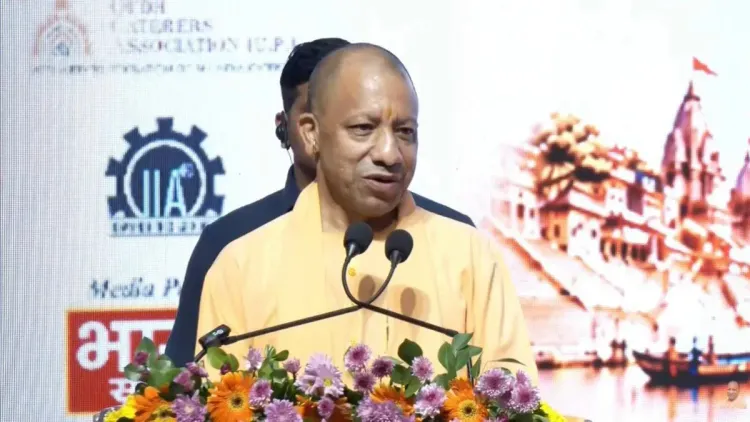
In a post steeped in Vedic philosophy, Uttar Pradesh Chief Minister Yogi Adityanath turned to India's ancient texts on Thursday, 5 November 2026, sharing a reflection that our scriptures have long regarded anna — food — as a manifestation of Brahman, the supreme cosmic reality.
The post, in Hindi, opens with the line: 'Hamare shaastron ne anna ko Brahma ka swaroop maana hai' — 'Our scriptures have regarded food as the very form of Brahman.' It is a reference rooted in the Taittiriya Upanishad, one of Hinduism's foundational texts, which states annam Brahma — food is Brahman — framing nourishment not merely as sustenance but as a divine act.
The Vedic idea at the heart of the message
The scriptural tradition Yogi draws from is ancient and specific. The Taittiriya Upanishad places food at the first layer of human existence — the annamaya kosha, the physical body sustained by food — and elevates it to the status of the sacred. To waste food, in this framework, is not merely wasteful; it is a transgression against the divine. To share it is an act of worship. This philosophical grounding has historically underpinned the institution of the langar, community kitchens at temples and dhaams, and the practice of anna daan — the gift of food — across India's religious traditions.Yogi Adityanath's pattern of scriptural outreach
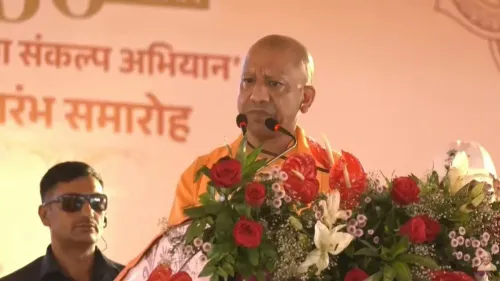
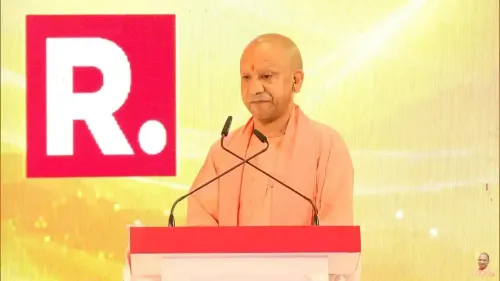
For Yogi Adityanath, the overlap between religious authority and political office is deliberate and consistent. As the head of the Gorakhnath Math in Gorakhpur, he occupies a centuries-old seat of the Nath Sampraday tradition. His social media presence regularly weaves Upanishadic thought, festival observances, and temple culture into his public communication — a practice that reinforces his identity not just as an administrator, but as a mahant, a monastic leader, speaking directly to Hindu devotees across Uttar Pradesh and beyond. This post carries no immediate policy announcement or event hook. Its weight is devotional and cultural — a reminder, in a single verse-like sentence, that the civilisational idea of the sacred in the everyday is still being amplified from the highest office in India's most populous state. When the Chief Minister of a state of 240 million people quotes the Upanishads in prime time, the message is both timeless and pointed: governance, in this vision, draws its moral grammar from the scriptures.Point of View
He signals to a large and devout constituency that his administration draws its moral authority from Hindu tradition, not merely electoral politics. This strategy has become a defining feature of the BJP's broader cultural politics in Uttar Pradesh, where the boundary between temple leadership and state leadership is intentionally blurred. Whether one reads it as authentic devotion or political messaging, the effect is the same: the Chief Minister's office becomes an extension of the Math.
NationPress
5 Nov 2026
Frequently Asked Questions
What did CM Yogi say about food in his post?
CM Yogi Adityanath wrote that Hindu scriptures have regarded food — anna — as a manifestation of Brahman, the supreme cosmic reality, referencing the Vedic concept of annam Brahma from the Taittiriya Upanishad.
What does 'annam Brahma' mean in Hinduism?
'Annam Brahma' is a phrase from the Taittiriya Upanishad meaning 'food is Brahman.' It elevates nourishment to the sacred, treating the act of eating and sharing food as a divine experience rather than a mere physical need.
Why does Yogi Adityanath post religious and scriptural content?
Yogi Adityanath is both the Chief Minister of Uttar Pradesh and the head of the Gorakhnath Math in Gorakhpur, a historic Nath Sampraday monastery. His scriptural posts reflect this dual identity and serve to communicate with a large Hindu devotee base across the state.
What is the Taittiriya Upanishad?
The Taittiriya Upanishad is one of the principal Upanishads in Hindu philosophy, forming part of the Yajur Veda. It introduces the concept of the five koshas, or layers of human existence, with the annamaya kosha — the food body — as the outermost, and frames food as a sacred form of Brahman.
What is Gorakhnath Math and what is Yogi Adityanath's role there?
Gorakhnath Math is a centuries-old monastic institution in Gorakhpur, Uttar Pradesh, associated with the Nath Sampraday tradition. Yogi Adityanath serves as its mahant, or head priest, a religious role he holds alongside his position as Chief Minister of Uttar Pradesh.