CM Yogi leads Deepotsav 2026 worship at Ayodhya Ram Darbar
Synopsis
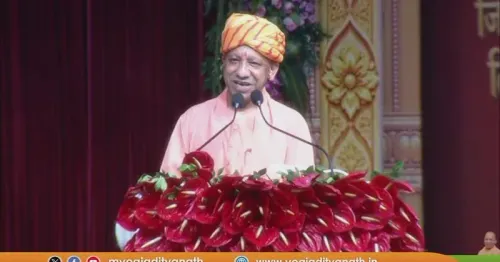
Uttar Pradesh CM Yogi Adityanath, joined by Vice President C.P. Radhakrishnan and Governor Anandiben Patel, offered the tilak at the symbolic Ram Darbar in Ayodhya on 7 November 2026 to mark Deepotsav 2026, praying for the realisation of Ram Rajya.
Key Takeaways
CM Yogi Adityanath performed the tilak ceremony at the symbolic Ram Darbar in Ayodhya Dham on 7 November 2026 .
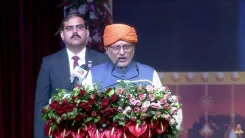
Radhakrishnan and UP Governor Anandiben Patel were present at the Deepotsav 2026 event.
Deepotsav has been organised annually by the Uttar Pradesh government since 2017 to mark Lord Rama's return to Ayodhya on Diwali.
The Ram Janmabhoomi Temple , consecrated in January 2024 , forms the centrepiece of Ayodhya's growing religious-tourism calendar.
CM Yogi invoked the ideal of Ram Rajya , framing the celebrations as an expression of truth, righteousness, and Sanatan Dharma for the world.
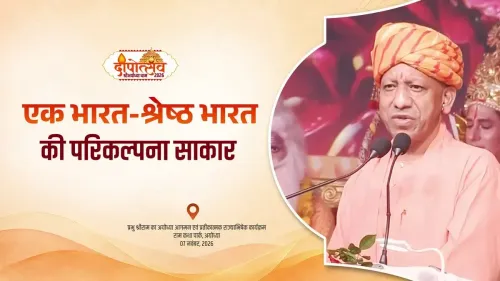
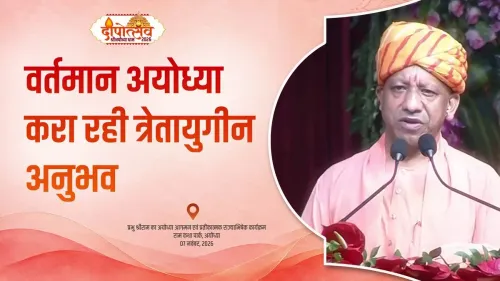
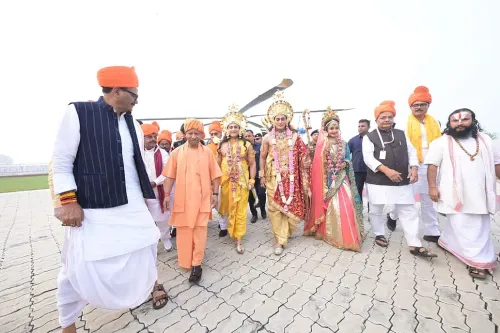
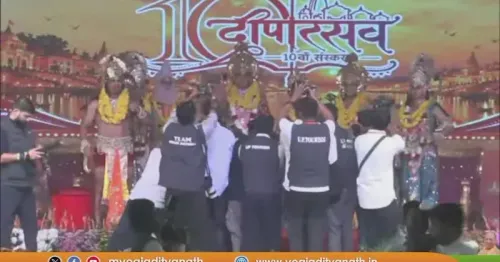
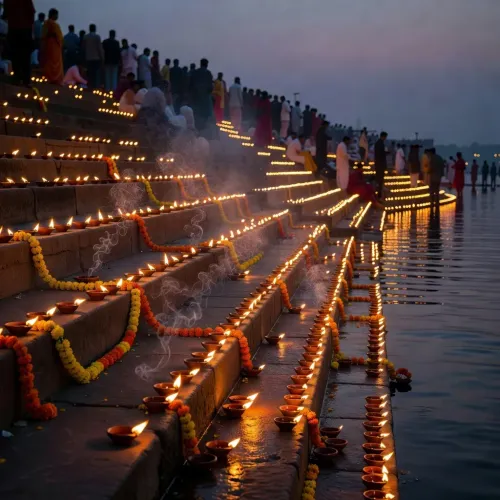
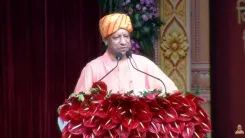
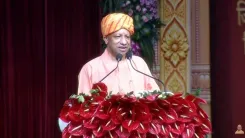
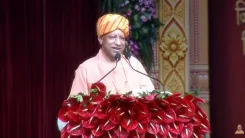
Thousands of lamps turned Ayodhya Dham into a river of light on Saturday, 7 November 2026, as Uttar Pradesh Chief Minister Yogi Adityanath performed the sacred tilak ceremony at the symbolic Ram Darbar — the divine court of Lord Rama — marking the centrepiece of Deepotsav 2026.
A tilak for the Ram Darbar, a gathering of dignitaries
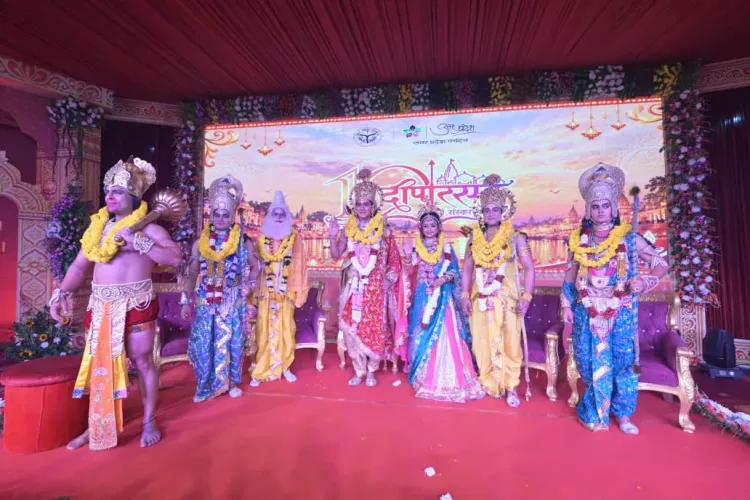
CM Yogi was joined by Vice President C.P. Radhakrishnan and Uttar Pradesh Governor Anandiben Patel for the veneration. The Chief Minister applied the tilak to the pratik swaroop — the symbolic representation — of the Ram Darbar, offering what he described as the fortune of paying homage ('vandan-abhinandan') at Lord Rama's sacred court. The opening Sanskrit shloka in his post — invoking Lakshmana to Rama's right, Sita to his left, and Hanuman before him — set the devotional register of the evening.
In his post, Yogi wrote that this blessed land, sanctified by the 'pavan charan raj' (holy foot-dust) of Lord Rama and Mother Janaki, is today radiating the eternal luminance of truth, righteousness, and Sanatan Dharma across the entire world. He closed with a prayer: 'Ramrajya ki sankalpana sakar ho' — 'May the vision of Ram Rajya be realised.'
Deepotsav: from a 2017 state initiative to a national spectacle
Deepotsav was launched by the Uttar Pradesh government in 2017, coinciding with Diwali, to celebrate the legendary return of Lord Rama to Ayodhya after fourteen years of exile. What began as a state cultural initiative has grown into one of India's most watched annual religious-tourism events, drawing pilgrims, dignitaries, and global attention to the banks of the Saryu river.
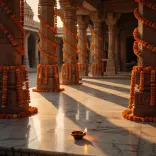
The scale of the festival has expanded each year. The Ram Janmabhoomi Temple, consecrated in January 2024 after decades of legal proceedings, has given Deepotsav an added layer of historic resonance — the celebrations now unfold in the shadow of a fully consecrated temple complex that itself was the subject of one of independent India's longest-running political and judicial sagas.
Ram Rajya as a governing ideal
The Chief Minister's invocation of Ram Rajya — the classical ideal of a just, prosperous, and dharmic rule — is not incidental. The concept has been a recurring touchstone in Yogi Adityanath's public articulation of Uttar Pradesh's development vision, linking ancient ideals of governance to contemporary state-building in Ayodhya and beyond. The presence of the Vice President and Governor at the ceremony underlines how Deepotsav has evolved from a state festival into a constitutionally significant state occasion.
As the ghats of Ayodhya glowed and the Sanskrit invocation echoed across the dham, the message from Lucknow was clear: the city of Rama is being repositioned — lamp by lamp, ceremony by ceremony — as the spiritual capital of a resurgent cultural India.
Point of View
Lending constitutional heft to the event. CM Yogi's repeated invocation of Ram Rajya signals an intent to draw a continuous line between ancient governance ideals and his administration's development narrative for the region. The trajectory — from a 2017 cultural initiative to a post-temple-consecration spectacle drawing the country's top constitutional figures — reflects how Ayodhya's symbolic weight has been systematically amplified over nearly a decade.
NationPress
7 Nov 2026
Frequently Asked Questions
What is Deepotsav in Ayodhya?
Deepotsav is an annual festival of lamps organised by the Uttar Pradesh government in Ayodhya to celebrate the return of Lord Rama after fourteen years of exile. It has been held every year since 2017 on Diwali and has grown into one of India's largest religious-cultural events.
What did CM Yogi Adityanath do at Deepotsav 2026?
CM Yogi Adityanath performed a tilak ceremony on the symbolic representation of the Ram Darbar — the divine court of Lord Rama — at Ayodhya Dham on 7 November 2026, alongside Vice President C.P. Radhakrishnan and UP Governor Anandiben Patel.
Who attended Deepotsav 2026 with CM Yogi?
Vice President C.P. Radhakrishnan and Uttar Pradesh Governor Anandiben Patel were present alongside CM Yogi Adityanath at the Deepotsav 2026 ceremony in Ayodhya.
What is the Ram Janmabhoomi Temple in Ayodhya?
The Ram Janmabhoomi Temple is a Hindu temple built at the site traditionally believed to be the birthplace of Lord Rama in Ayodhya. It was consecrated in January 2024 after decades of legal and political proceedings.
What does Ram Rajya mean?
Ram Rajya is a classical Indian concept referring to an ideal state of governance — just, prosperous, and dharmic — associated with the reign of Lord Rama. It has been frequently invoked by CM Yogi Adityanath as a philosophical framework for Uttar Pradesh's development vision.