CM Yogi Links Divyangjan to Six Welfare Schemes
Synopsis
The Chief Minister's Office of Uttar Pradesh says persons with disabilities are being linked to six economic schemes — CM YUVA, PM SVANidhi, ODOP, PM Vishwakarma, PM MUDRA, and Stand-Up India — as part of the state's disability-inclusive growth push under CM Yogi Adityanath.
Key Takeaways
Six schemes — CM YUVA, PM SVANidhi, ODOP, PM Vishwakarma, PM MUDRA, and Stand-Up India — are being extended to persons with disabilities in Uttar Pradesh.
PM MUDRA (2015) and Stand-Up India (2016) provide micro-credit and composite loans, respectively, targeting small and marginalised entrepreneurs.
PM Vishwakarma (2023) combines skill training and credit access for traditional artisans, relevant to disabled craftspeople.
ODOP , Uttar Pradesh's own 2018 initiative, links district-specific products to formal export value chains.
The Yogi Adityanath government's approach integrates divyangjan into existing national credit pipelines rather than creating standalone state programmes.
Actual beneficiary penetration data across UP's 75 districts remains the key metric to watch.
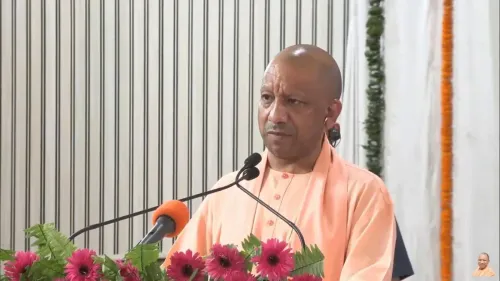
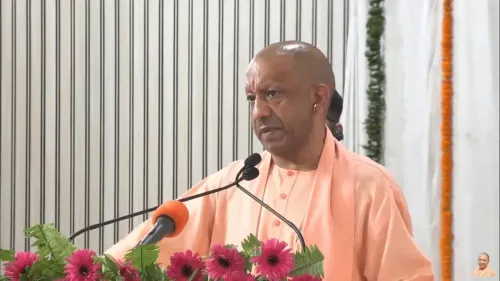
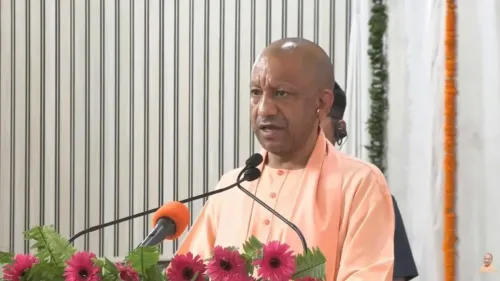
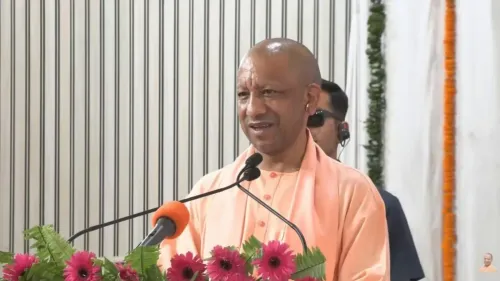
Persons with disabilities in Uttar Pradesh are being connected to a basket of six central and state schemes — an effort the state government says is actively opening new doors of economic opportunity for a community that has historically sat at the margins of mainstream enterprise. Chief Minister Yogi Adityanath's office stated this on Wednesday, September 30, 2026, citing the convergence of schemes as a deliberate inclusion push.
The Chief Minister's statement, shared by the CMOfficeUP handle, listed the beneficiary programmes as: CM YUVA, PM SVANidhi, ODOP, PM Vishwakarma, PM MUDRA, and Stand-Up India — covering everything from micro-credit to artisan upskilling to district-level product promotion.
Six Schemes, One Goal: Economic Entry Points for Divyangjan
Each scheme in the cited cluster targets a distinct gap. PM MUDRA, launched in 2015, provides micro-credit to non-corporate small businesses — the kind of low-ticket financing that can launch a one-person trade. Stand-Up India, introduced in 2016, extends composite bank loans specifically to SC/ST communities and women, a design that maps directly onto the intersectional vulnerabilities many persons with disabilities face.
PM SVANidhi, rolled out in 2020 under the Atmanirbhar Bharat umbrella, was originally aimed at street vendors dislocated by the pandemic — its working-capital logic translates well to divyangjan who operate informal micro-trades. PM Vishwakarma, the newest entrant at 2023, bundles skill training with credit access for traditional craftspeople, targeting artisans whose manual trades may have been disrupted by disability-related barriers.
ODOP — One District One Product — is Uttar Pradesh's own 2018 initiative, spotlighting district-specific products from Lucknow chikankari to Moradabad brassware, with export linkages and market access built in. Connecting divyangjan artisans to ODOP pipelines would, in principle, route their output into formal value chains. CM YUVA, the state-level youth entrepreneurship scheme, rounds out the portfolio with a focus on younger beneficiaries.
Uttar Pradesh's Inclusion Architecture Since 2017
The convergence approach reflects a pattern the Yogi Adityanath administration has leaned on since 2017: rather than creating standalone divyangjan programmes, the state has sought to plug persons with disabilities into existing national credit and employment pipelines. The logic is scale — national schemes carry larger corpus, established banking linkages, and central government co-financing that a state-only programme would struggle to match.
What remains the live challenge — and the metric to watch — is actual beneficiary penetration: how many persons with disabilities in UP's 75 districts have, in practice, been onboarded, what share have received and repaid loans, and whether awareness of these schemes reaches rural divyangjan communities where outreach infrastructure is thinnest.
Disability-inclusive entrepreneurship is not a headline number that moves markets or shifts poll trackers overnight. But for a state the size of a mid-ranking country, moving even a fraction of its disabled population from dependence into self-employment could be one of the quieter, durable economic shifts of this decade.
Point of View
Maximising reach without proportional state expenditure. For divyangjan specifically, the multi-scheme convergence signals that disability inclusion is being framed as an economic productivity issue rather than purely a social welfare one — a subtle but significant shift in political vocabulary. The real test is implementation depth: scheme convergence at the policy layer is well-documented; last-mile penetration among rural persons with disabilities in a state of UP's scale is where such announcements have historically lost momentum. Analysts will watch whether granular beneficiary data for divyangjan is published scheme-by-scheme, which would give the claim measurable substance.
NationPress
30 Sept 2026
Frequently Asked Questions
Which schemes is UP linking to divyangjan welfare in 2026?
The Uttar Pradesh government is connecting persons with disabilities to six schemes: CM YUVA, PM SVANidhi, ODOP, PM Vishwakarma, PM MUDRA, and Stand-Up India, covering micro-credit, artisan support, and district-level product promotion.
What is the PM Vishwakarma scheme and how does it help disabled artisans?
PM Vishwakarma, launched in 2023, supports traditional craftspeople with skill training and access to credit — making it relevant for persons with disabilities engaged in artisan trades who need both upskilling and financing.
What is ODOP and how does it apply to divyangjan in UP?
ODOP (One District One Product) is a Uttar Pradesh initiative from 2018 that promotes district-specific manufacturing and exports. Linking divyangjan artisans to ODOP is intended to route their products into formal value chains and wider markets.
How is Stand-Up India relevant to persons with disabilities?
Stand-Up India (2016) provides composite bank loans to SC/ST communities and women, categories that often overlap with persons with disabilities facing multiple socio-economic barriers, making it a useful financing channel for disabled entrepreneurs.
What is CM Yogi Adityanath's broader approach to disability inclusion in UP?
Rather than creating standalone divyangjan programmes, the Yogi Adityanath government since 2017 has pursued integration of persons with disabilities into existing national credit and employment schemes, leveraging larger central government corpus and banking networks.