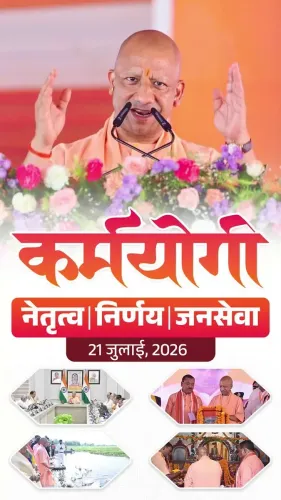
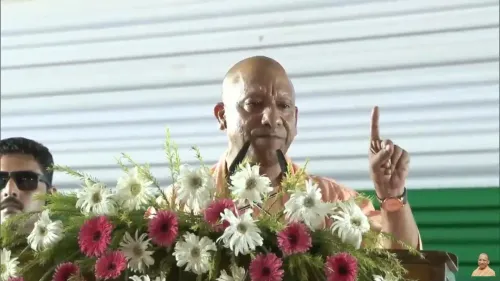
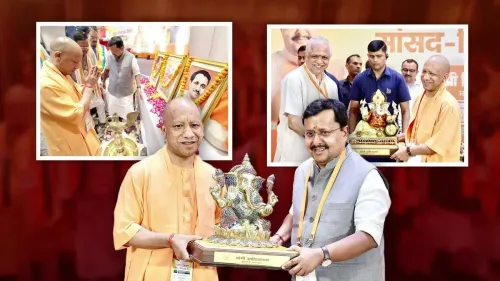
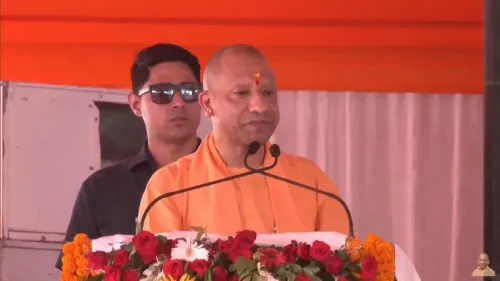
CM Yogi Reaffirms Modi's Vision: Public Money for Public Good
Synopsis
Chief Minister Yogi Adityanath's office on 26 May 2026 reiterated that public money will be spent for the people, crediting PM Modi's vision for visible development outcomes in Uttar Pradesh — continuing a consistent BJP governance messaging arc on fiscal accountability and welfare delivery.
Key Takeaways
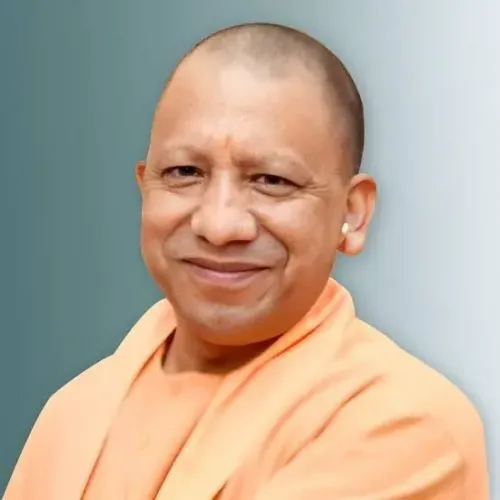
The Chief Minister's Office of Uttar Pradesh posted a statement from CM Yogi Adityanath on 26 May 2026 reaffirming the principle that public money must be spent for public good.
CM Yogi attributed this governance philosophy to the 'vision and inspiration' of PM Narendra Modi .
The statement claims development is now visibly manifest 'on the ground' in Uttar Pradesh .
The post fits a broader BJP pattern of crediting central leadership for state-level governance and development outcomes.
Direct Benefit Transfer and Aadhaar -linked delivery, expanded since 2014 , underpin the fiscal discipline narrative referenced in the statement.
Upcoming UP budget documents and expenditure audit reports will be key to verifying on-ground delivery claims.
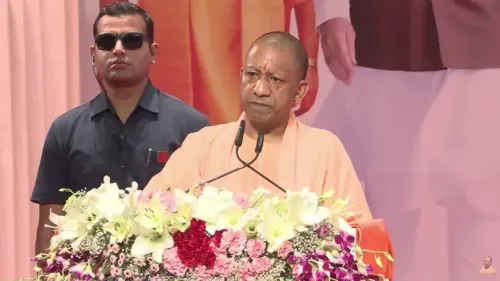
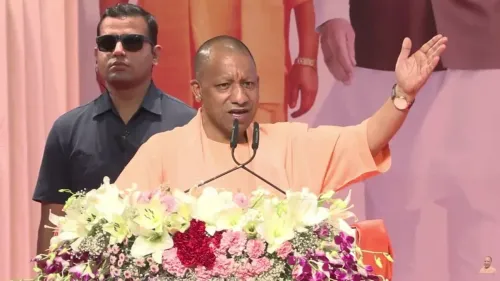
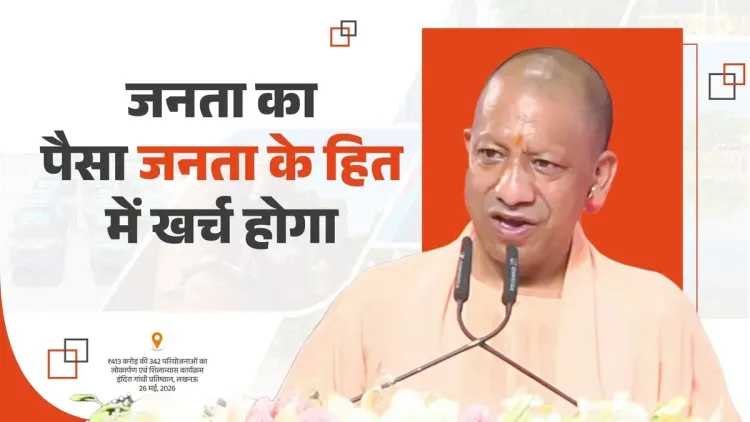
The Chief Minister's Office of Uttar Pradesh on Tuesday, 26 May 2026, shared a statement from Chief Minister Yogi Adityanath reaffirming that public funds must be spent in the interest of the people — attributing this governance philosophy directly to Prime Minister Narendra Modi.
The post, shared from the official CMO handle, quotes CM Yogi as saying: 'जनता का पैसा जनता के लिए और जनता के हित में खर्च होगा' ('Public money will be spent for the people and in the interest of the people'). It describes this as the 'vision and inspiration' of PM Modi, adding that the result is development now visibly manifest on the ground.
Context
Uttar Pradesh, India's most populous state, has under successive BJP administrations made the efficient delivery of public funds a central governance plank. CM Yogi Adityanath, in office since 2017, has consistently aligned state administration with central directives on fiscal discipline, framing visible infrastructure and welfare outcomes as evidence of that alignment.
The statement is part of an established pattern in which BJP-governed states publicly credit central leadership for governance improvements, reinforcing a shared accountability narrative between Lucknow and New Delhi.
Policy Backdrop
Since 2014, the central government under PM Modi has expanded Direct Benefit Transfer (DBT) and Aadhaar-linked delivery systems to reduce the diversion of welfare funds — a policy commonly described as eliminating 'leakages' from public schemes.
From 2017 onward, the Uttar Pradesh government launched departmental spending reviews to operationalise the principle of public money for public good at the state level. These measures are credited by the administration with improving on-ground delivery of welfare and infrastructure programmes.
Stakeholders and Impact
The primary beneficiaries of this governance philosophy are Uttar Pradesh's welfare recipients and residents who depend on state-administered central schemes for housing, healthcare, food security, and infrastructure. Efficient fund utilisation directly affects the quality and reach of these programmes across the state's 75 districts.
The statement also carries political weight: by crediting PM Modi's 'vision' as the source of visible development, the CM's office reinforces a top-down accountability chain that links scheme outcomes to central leadership — a messaging framework used consistently across BJP-ruled states since 2014.
What's Next
Observers and policy analysts will watch upcoming Uttar Pradesh budget documents and audit reports on scheme-wise expenditure efficiency for data that either substantiates or complicates the administration's claims of on-ground development delivery.
Statements of this nature often precede or accompany budget cycles and scheme reviews, suggesting the administration may be setting the narrative frame for an upcoming fiscal or policy announcement.
Point of View
Reinforcing a vertical accountability narrative that runs from New Delhi to Lucknow. This framing serves a dual purpose — it positions CM Yogi as a faithful executor of PM Modi's agenda while simultaneously claiming credit for visible outcomes in India's most electorally significant state. The invocation of 'public money for public good' echoes the anti-leakage discourse that has anchored BJP's welfare politics since 2014, lending ideological continuity to what might otherwise be a routine administrative statement. Whether the claim of ground-level development holds up will ultimately depend on independent expenditure audits and beneficiary-level data from UP's vast welfare apparatus.
NationPress
19 Sept 2026
Frequently Asked Questions
What did CM Yogi Adityanath say about public money in May 2026?
CM Yogi Adityanath stated that public money will be spent for the people and in their interest, describing this as PM Modi's vision and attributing visible ground-level development in Uttar Pradesh to this principle.
What is Direct Benefit Transfer and how does it relate to UP governance?
Direct Benefit Transfer (DBT) is a central government mechanism that transfers welfare funds directly to beneficiaries' bank accounts via Aadhaar linkage, reducing diversion. The UP government has used DBT-linked delivery since 2017 as part of its fiscal discipline framework.
Why does CM Yogi credit PM Modi for UP's development?
CM Yogi Adityanath has consistently framed UP's governance improvements as outcomes of PM Modi's central vision on fiscal discipline and anti-leakage policy, reflecting the BJP's coordinated messaging strategy across states it governs.
What is the significance of 'public money for public good' in Indian politics?
The phrase encapsulates the BJP government's stated anti-corruption and anti-leakage stance since 2014, used to contrast technology-driven welfare delivery with earlier systems perceived as prone to fund diversion.
What should citizens watch for to verify UP's development claims?
Uttar Pradesh's annual budget documents, Comptroller and Auditor General (CAG) reports on scheme-wise expenditure, and beneficiary surveys across the state's 75 districts will provide the most reliable evidence of on-ground delivery outcomes.