CM Yogi Targets Critics Who Once Called Hindu Faith Communal
Synopsis
Uttar Pradesh Chief Minister Yogi Adityanath on 1 July 2026 accused opposition voices of hypocrisy, saying those who once branded Hindu faith as communalism now claim faith is being toyed with — a sharp political salvo ahead of the 2027 state elections.
Key Takeaways
Yogi Adityanath posted on X on 1 July 2026 targeting critics who historically labelled Hindu faith as communalism.
He accused these critics of now claiming that Hindu faith is 'being toyed with,' framing it as a reversal of their earlier position.
The post continues a post- 2014 BJP narrative that frames Hindu religious practice as mainstream cultural identity rather than communal politics.
The 2019 Supreme Court Ram Janmabhoomi verdict and the Ram Temple in Ayodhya form the key policy backdrop to this political messaging.
The remark is widely read as early electioneering ahead of the 2027 Uttar Pradesh assembly elections .
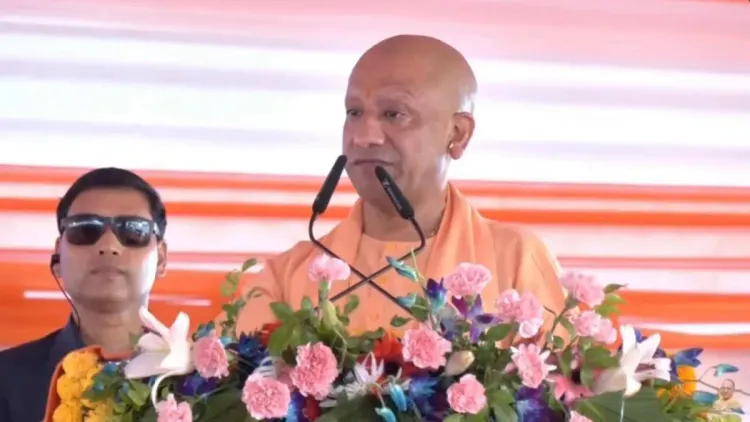
Uttar Pradesh Chief Minister Yogi Adityanath on Wednesday, 1 July 2026, took a sharp political swipe at opposition voices, asserting that those who historically labelled Hindu religious belief as communalism are now claiming that faith itself is under threat.
Posting on X, the Chief Minister wrote in Hindi: 'Jo log hamesha Hindu aastha ko sampradayikta ke saath jodte the... aaj ve kahte hain ki aastha ke saath khilwad ho raha hai...' — translated: 'Those who always associated Hindu faith with communalism... today they say that faith is being toyed with...'
Context
The post lands as Uttar Pradesh moves deeper into a politically charged period ahead of the 2027 state assembly elections. Yogi Adityanath, who has led the state since 2017, has consistently framed Hindu religious identity as mainstream cultural expression rather than sectarian politics. His remark appears directed at opposition parties that have historically invoked constitutional secularism to contest state-backed religious activity.
The underlying tension dates to long-running debates in Indian public life over the boundary between the state's relationship with religion and the constitutional principle of non-discrimination. BJP leaders have repeatedly argued that the pre-2014 political consensus stigmatised Hindu devotional life by treating it as inherently communal.
Policy Backdrop
The ideological ground for this argument was significantly shifted by the Supreme Court's 2019 Ram Janmabhoomi verdict, which cleared the way for the construction of the Ram Temple in Ayodhya. The Uttar Pradesh government played a central facilitative role in that process, presenting it as institutional recognition of Hindu faith rather than communal assertion.
Since then, the state government has pursued a broader agenda of temple trust administration, religious site development, and cultural programming that it frames as correcting decades of perceived neglect. Critics from opposition parties have countered that such moves blur the line between the state and organised religion.
Stakeholders and Impact
Hindu devotees across Uttar Pradesh — a state with one of the country's largest concentrations of pilgrimage sites — represent the primary audience for this political messaging. For this constituency, the Chief Minister's post reinforces the narrative that the current government is a defender of faith against those who once dismissed it.
Opposition parties, particularly those that governed the state or the Centre during earlier decades, are the implicit target. The post puts them in a rhetorical bind: having previously questioned the conflation of faith and politics, they now face the charge of inconsistency if they raise concerns about religious governance. BJP's broader national strategy has leaned into precisely this kind of reversal argument since 2014.
What's Next
With the 2027 Uttar Pradesh assembly elections drawing closer, observers will watch whether this messaging translates into concrete policy announcements — particularly around temple trust management, religious site infrastructure, or new cultural schemes. The Chief Minister's post signals that the politics of Hindu identity will remain a central axis of the ruling party's campaign architecture in the state. How opposition parties choose to respond without appearing to validate either charge — of past dismissiveness or present inconsistency — will be a defining challenge in the months ahead.
Point of View
The statement functions as a broad political indictment rather than a response to a defined controversy, giving it maximum flexibility. This fits a pattern of pre-election positioning in Uttar Pradesh where Hindu identity is activated as a mobilising frame well before formal campaign season. The real test will be whether the opposition can articulate a coherent counter-narrative that neither concedes the framing nor appears dismissive of genuine devotional sentiment.
NationPress
1 Jul 2026
Frequently Asked Questions
What did CM Yogi Adityanath say about Hindu faith and communalism?
On 1 July 2026 , CM Yogi posted on X that those who always associated Hindu faith with communalism are now claiming that faith is being toyed with, accusing them of hypocrisy.
Who is Yogi Adityanath and why is he significant in UP politics?
Yogi Adityanath is the Chief Minister of Uttar Pradesh since 2017 and head of the Gorakhnath Math . He is a senior BJP leader and one of India's most prominent Hindu nationalist political figures.
What is the political context of Yogi Adityanath's remark on Hindu aastha?
The remark comes ahead of the 2027 Uttar Pradesh assembly elections and continues a pattern of BJP messaging that frames Hindu religious identity as mainstream culture rather than communal politics, a narrative reinforced since the 2019 Ram Temple verdict .
Which opposition parties is CM Yogi targeting with this post?
The post does not name specific parties, but the criticism is broadly directed at opposition groups — particularly those associated with pre- 2014 governance — who invoked secularism to challenge state involvement in Hindu religious affairs.
How does this relate to the Ram Temple in Ayodhya?
The Ram Temple in Ayodhya , built following the Supreme Court's 2019 verdict , is the landmark event that the UP government and BJP cite as proof that Hindu faith is now institutionally recognised, underpinning arguments like the one CM Yogi made on 1 July 2026 .