CM Bhajan Lal Slams Congress on DBT, Touts Direct Welfare Delivery
Synopsis
Rajasthan Chief Minister Bhajan Lal Sharma on 1 July 2026 attacked the Congress over welfare leakages, asserting that DBT and technology now ensure scheme benefits reach beneficiaries directly, bypassing middlemen.
Key Takeaways
Bhajan Lal Sharma posted on 1 July 2026 contrasting BJP's welfare delivery model with the Congress era.
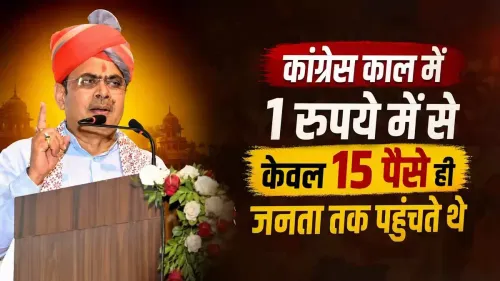
He alleged that during Congress rule, the system was marked by 'leakages and middlemen.' The Direct Benefit Transfer (DBT) mechanism was first launched in 2013 and expanded nationally after 2014 via the JAM trinity .
The BJP government in Rajasthan has been in office since December 2023 , following its victory in state assembly elections.
Independent audits and CAG reviews of Rajasthan's DBT performance are expected to provide verifiable data on leakage reduction claims.
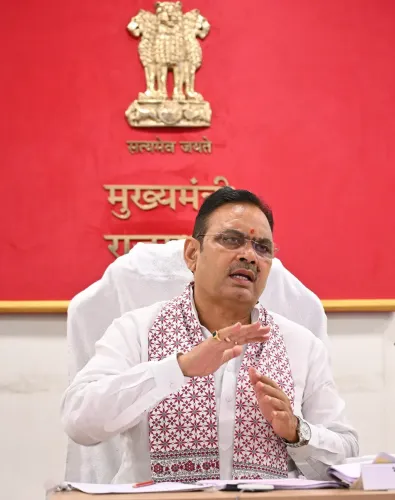
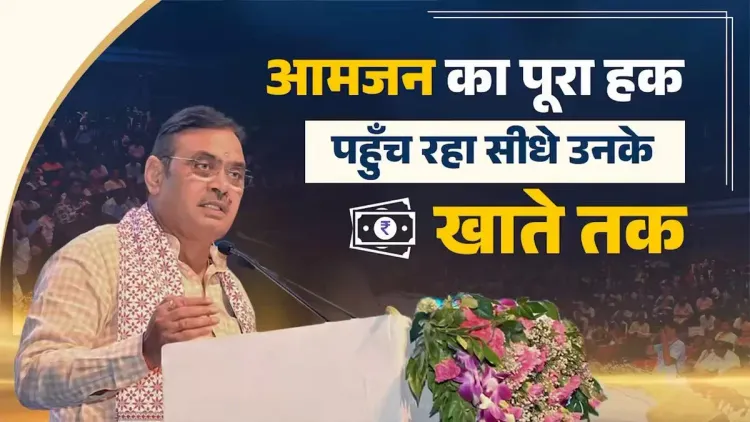
Rajasthan Chief Minister Bhajan Lal Sharma on Wednesday, 1 July 2026, took to X to contrast the current BJP government's welfare delivery model with what he described as a leakage-ridden system under the previous Congress administration, asserting that technology and Direct Benefit Transfer (DBT) are now ensuring scheme benefits reach beneficiaries directly in their bank accounts.
Context
Sharma's post, originally in Hindi, states: 'Kांग्रेस के समय व्यवस्था में लीकेज और बिचौलियों का बोलबाला था' — 'During the Congress era, the system was riddled with leakages and middlemen dominated.' He contrasted that with the present, saying technology, transparency, and DBT are now ensuring that 'the benefits of schemes reach directly into the bank accounts of beneficiaries.'
The remarks come as the BJP government in Rajasthan, which took office in December 2023 after defeating the incumbent Congress in state assembly elections, continues to position digital governance as a defining feature of its administration.
Policy Backdrop
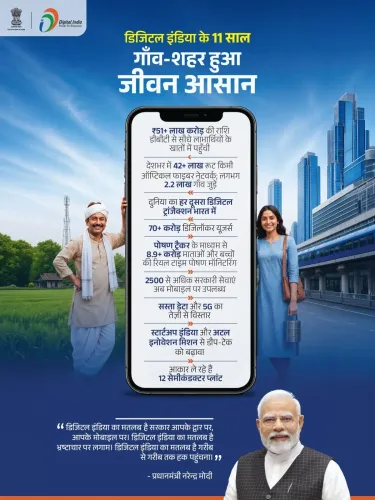
The Direct Benefit Transfer mechanism was formally launched by the Government of India in 2013 to reduce subsidy leakages by routing payments through Aadhaar-linked bank accounts. The system was significantly scaled after 2014 through the JAM trinity — Jan Dhan accounts, Aadhaar, and Mobile — enabling direct transfers across a wide range of central and state welfare schemes.
BJP governments at both the central and state levels have consistently promoted DBT and technology-driven delivery as a counter-narrative to what they characterise as the 'middlemen culture' of earlier administrations. Rajasthan's post-2023 emphasis on DBT mirrors similar pushes in other BJP-ruled states.
Stakeholders and Impact
The primary beneficiaries of a functional DBT framework are welfare recipients — including those enrolled in schemes covering food security, agriculture support, scholarships, and social pensions — who receive funds directly without intermediary handling. State implementing agencies are responsible for maintaining accurate beneficiary databases and ensuring Aadhaar-bank account linkages are current.
Critics of DBT frameworks have previously pointed to exclusion errors — instances where eligible beneficiaries are dropped due to Aadhaar linkage failures — as a concern that sits alongside the gains from reduced leakage. The post does not address such exclusion risks.
What's Next
The Rajasthan government's periodic DBT performance reports and any independent audits comparing pre- and post-2023 leakage figures will be closely watched to substantiate the claims made in Sharma's post. Parliamentary and Comptroller and Auditor General (CAG) reviews of state-level adoption of central DBT platforms are also expected to provide a more granular picture of actual delivery outcomes.
As the BJP sharpens its governance narrative ahead of future electoral cycles, DBT performance data in Rajasthan will likely become a key benchmark in the political debate between the ruling party and the Congress opposition.
Point of View
Positioning DBT as the institutional corrective to Congress-era inefficiency. The timing — mid-term in a state where BJP won on an anti-incumbency wave — suggests the party is already building its governance record for the next electoral cycle. By anchoring the critique in a verifiable policy mechanism (DBT) rather than anecdote alone, the messaging carries more political durability than simple rhetoric. The broader pattern is clear: BJP-ruled states are increasingly using digital welfare metrics as both a governance tool and a campaign asset.
NationPress
1 Jul 2026
Frequently Asked Questions
What is Direct Benefit Transfer (DBT) in India?
Direct Benefit Transfer (DBT) is a Government of India mechanism, launched in 2013, that routes welfare subsidies and scheme payments directly into Aadhaar-linked bank accounts of beneficiaries, cutting out intermediaries.
What did Rajasthan CM Bhajan Lal Sharma say about Congress and welfare leakages?
On 1 July 2026, CM Bhajan Lal Sharma said that during the Congress era the welfare system was riddled with leakages and dominated by middlemen, and that the current BJP government is using technology and DBT to send benefits directly to beneficiaries' bank accounts.
When did the BJP come to power in Rajasthan?
The BJP formed the government in Rajasthan in December 2023, after winning the state assembly elections and defeating the incumbent Congress government.
What is the JAM trinity and how does it support DBT?
The JAM trinity refers to Jan Dhan bank accounts, Aadhaar identity numbers, and Mobile connectivity. Scaled nationally after 2014, it forms the infrastructure backbone that makes Direct Benefit Transfer possible at scale.
How can Rajasthan's DBT performance be independently verified?
Rajasthan government DBT reports, along with audits by the Comptroller and Auditor General (CAG) and parliamentary committee reviews, are the primary mechanisms for independently assessing leakage reduction and beneficiary coverage claims.