CM Yogi targets 'dividers' with Babur-Aurangzeb barb
Synopsis
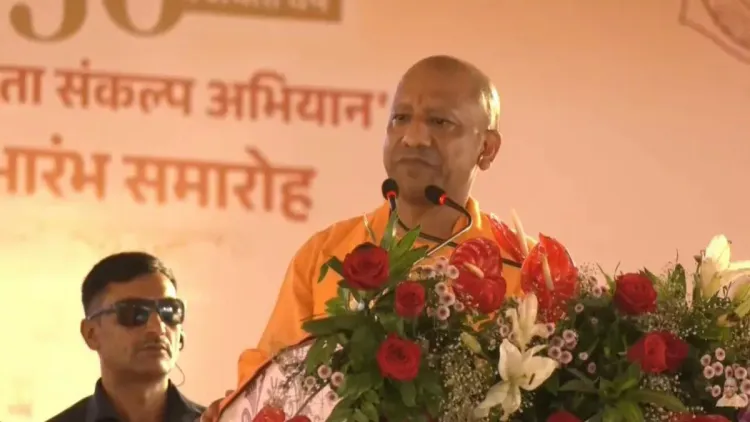
Uttar Pradesh Chief Minister Yogi Adityanath posted on X on 29 July 2026, declaring that those who divide society hold Babur and Aurangzeb as their ideals — a pointed, unnamed charge at political opponents using historical Mughal figures as rhetorical markers.
Key Takeaways
CM Yogi Adityanath posted on 29 July 2026 , stating that 'those who divide' society idolise Babur and Aurangzeb .
The post names no political party or individual, but is widely read as a charge against opposition parties in Uttar Pradesh .
Babur founded the Mughal Empire in 1526 ; Aurangzeb ruled from 1658 to 1707 — both are recurring references in BJP cultural-political messaging.
In 2018 , Yogi Adityanath's government renamed Allahabad to Prayagraj as part of a broader effort to revise Mughal-era place names in UP.
The statement follows an established BJP pattern of framing political competition as a contest between cultural unity and historical exclusion.
A sharp political salvo from Lucknow on Wednesday, 29 July 2026: Uttar Pradesh Chief Minister Yogi Adityanath fired a pointed broadside at unnamed political opponents, invoking two of the most charged names in India's historical memory to frame a stark binary between unity and division.
Posting in Hindi on X, the Chief Minister wrote: 'Yaad rakhna! Baantne waale log wahi hain, jinke aadarsh Babar aur Aurangzeb hain...' — 'Remember! Those who divide are the very people whose ideals are Babur and Aurangzeb.' The sentence is a rhetorical dagger: no party is named, no individual is accused, but the implication is unmistakable to any observer of Uttar Pradesh's political landscape.
Why Babur and Aurangzeb carry such political voltage
Babur, who founded the Mughal Empire after the First Battle of Panipat in 1526, and Aurangzeb, who ruled from 1658 to 1707 and whose reign included the reimposition of the jizya tax and recorded actions against temples, have long been flashpoints in debates over India's medieval history. In contemporary BJP political messaging, both figures are routinely used as shorthand for policies seen as exclusionary or divisive — the inverse of what the party frames as its own cultural-unity agenda. CM Yogi has a documented record of deploying this historical register. In 2018, his government renamed Allahabad to Prayagraj and targeted other place names associated with Mughal-era nomenclature — moves that drew both applause from supporters and sharp criticism from opposition parties as identity-driven politics.The message and its audience
The post carries no specific policy announcement, no named target, and no immediate legislative consequence. Its power is entirely rhetorical — and deliberately so. By anchoring the charge of 'division' to historical figures rather than living rivals, Yogi Adityanath sidesteps defamation risk while maximising the cultural resonance with a voter base that responds strongly to civilisational framing. This is a pattern well-established in Uttar Pradesh politics: BJP leaders contrast a narrative of Hindu cultural continuity against what they characterise as the legacy of Mughal-era exclusion. Opposition parties — most prominently the Samajwadi Party and the Congress — have consistently pushed back, arguing such rhetoric inflames communal sentiment rather than addressing governance. With the state's political calendar always in motion, statements like this function as both ideological positioning and advance mobilisation — a reminder to the base of the cultural stakes the party says are on the ballot. The opposition's response to this particular salvo will be the next data point to watch.Point of View
Thereby keeping the charge broad and legally insulated. It fits a consistent BJP strategy in Uttar Pradesh of contesting elections on cultural-identity terrain as much as governance performance. The absence of a specific trigger suggests this is ambient base-mobilisation rather than a response to a discrete event. Opposition parties face the familiar dilemma: engaging with the historical framing risks amplifying it, while silence cedes the narrative ground.
NationPress
30 Jul 2026
Frequently Asked Questions
What did CM Yogi Adityanath say about Babur and Aurangzeb?
On 29 July 2026 , CM Yogi posted on X in Hindi saying: 'Remember! Those who divide are the very people whose ideals are Babur and Aurangzeb' — a rhetorical attack on unnamed political opponents framed through historical Mughal figures.
Who are Babur and Aurangzeb?
Babur was the founder of the Mughal Empire, who won the First Battle of Panipat in 1526 . Aurangzeb was a Mughal emperor who ruled from 1658 to 1707 and is associated with policies including the reimposition of jizya and actions against temples — both figures are frequently cited in modern Indian political debates.
Why does Yogi Adityanath reference Mughal rulers in political speeches?
BJP leaders in Uttar Pradesh, including CM Yogi, use references to Mughal rulers as shorthand for policies they characterise as divisive or exclusionary, contrasting them with a narrative of Hindu cultural unity. This framing has been a consistent element of BJP political messaging in the state.
What did Yogi Adityanath rename Allahabad to?
In 2018 , the Yogi Adityanath government renamed Allahabad to Prayagraj , part of a broader effort to replace Mughal-era place names in Uttar Pradesh.
Which parties are being targeted by CM Yogi's Babur-Aurangzeb remark?
CM Yogi's post does not name any party or individual. Political observers in Uttar Pradesh widely interpret such remarks as directed at opposition parties like the Samajwadi Party and Congress, who have historically criticised BJP's use of Mughal-era historical references as communally charged rhetoric.