CM Yogi Vows Long Fight to End Welfare Exclusion in UP
Synopsis
Chief Minister Yogi Adityanath says that a large section of society was excluded from government schemes due to enumeration neglect, and that his government has fought persistently to extend welfare benefits to these previously uncounted communities in Uttar Pradesh.
Key Takeaways
CM Yogi Adityanath publicly identified enumeration neglect — not scheme absence — as the root cause of welfare exclusion in Uttar Pradesh .
His statement was posted on November 16, 2026 by the official Chief Minister's Office account on X.
India's welfare frameworks like the NFSA and SECC are entirely dependent on accurate enumeration; missed households fall off all downstream benefit lists.
The Chief Minister framed the drive to include excluded communities as a 'long fight', signalling a continuing political priority rather than a one-time exercise.
Watch for follow-up government orders, revised survey guidelines, or new beneficiary inclusion drives from the Uttar Pradesh administration.
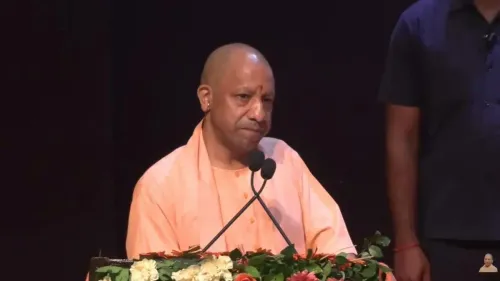
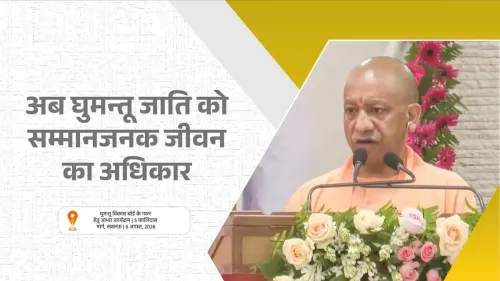
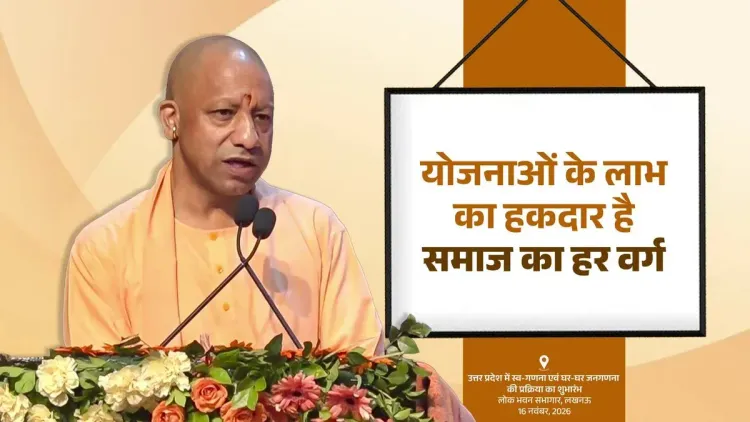
A large section of society was being left behind — not because of a lack of schemes, but because they were never counted in the first place. Chief Minister Yogi Adityanath of Uttar Pradesh made that pointed admission on Monday, November 16, 2026, declaring that his government has waged a sustained campaign to bring previously uncounted, deprived communities into the fold of state welfare delivery.
The Enumeration Gap That Left Millions Behind
The Chief Minister's statement cuts to a chronic fault line in India's welfare architecture: exclusion errors at the survey and enumeration stage. His words — 'गणना के समय उनकी उपेक्षा होती थी' ('they were neglected at the time of enumeration') — name the problem precisely. When a household is missed during a census or socio-economic survey, it falls off every downstream beneficiary list: food rations, housing allotments, pension rolls, health cover. The error compounds silently for years.
India's flagship welfare delivery frameworks — including the National Food Security Act (NFSA) and the Socio-Economic and Caste Census (SECC) — depend entirely on the accuracy of enumeration data. Outdated or incomplete lists mean that even a well-funded scheme cannot reach the people it was designed for. Uttar Pradesh, with the country's largest state population, magnifies every such gap to a scale felt by millions.
UP's Ongoing Drive to Revise Beneficiary Rolls
Yogi Adityanath, who has led the state since 2017, has periodically pushed for revised survey exercises to identify missed households and add them to live beneficiary databases. The language of his statement — 'a long fight' (ek lambi ladai) — frames welfare inclusion not as a one-time administrative task but as an active, continuing political commitment. That framing matters: it signals that beneficiary list revision is a standing government priority, not a campaign-season announcement.
Across India, state governments have undertaken fresh enumeration drives under NFSA frameworks to plug coverage gaps, with varying degrees of success. Uttar Pradesh's scale makes such exercises logistically demanding — but also high-impact. Getting even a fraction of previously excluded households onto ration or housing lists in a state of this size translates to a substantial national shift in welfare reach.
What the Statement Signals Going Forward
The Chief Minister's public framing of this as a battle fought and ongoing is a prompt to watch for concrete follow-through: revised survey guidelines, new beneficiary inclusion orders, or fresh enumeration drives issued by the state administration. Statements of intent from a Chief Minister's official account typically precede or accompany ground-level action. The specifics — which communities, which schemes, which districts — remain to be announced.
The core message, however, is unambiguous: Uttar Pradesh is treating the excluded-at-enumeration problem as a governance failure worth naming out loud, and fixing it as a matter of political will.
The real test, as always, is in the next survey list — and in who finally gets counted.
Point of View
Yogi Adityanath is making a structurally significant political argument — one that shifts accountability from programme design to state administrative machinery. It aligns with a broader national reckoning over how beneficiary databases get built and maintained. For the BJP in Uttar Pradesh, demonstrating active course-correction on inclusion ahead of any electoral cycle is both a governance imperative and a vote-bank play among precisely the communities historically missed by earlier surveys. The durability of that claim will depend entirely on whether revised lists and fresh enumeration orders follow the rhetoric.
NationPress
16 Nov 2026
Frequently Asked Questions
What did CM Yogi Adityanath say about welfare exclusion in UP?
Chief Minister Yogi Adityanath said that a large section of society had been excluded from government welfare schemes because they were neglected at the time of enumeration, and that his government has fought a long battle to provide various benefits to these deprived people.
Why do people get left out of welfare schemes in India?
A common reason is enumeration exclusion — households missed during socio-economic surveys or censuses do not appear on beneficiary lists for schemes like food security, housing, or pensions, even if they are genuinely eligible.
What is the NFSA and how does it relate to enumeration?
The National Food Security Act (NFSA) determines who receives subsidised food grains in India; eligibility is based on survey data, so households missed during enumeration are automatically excluded from ration benefits.
Has Uttar Pradesh revised its welfare beneficiary lists before?
Yes, the Uttar Pradesh government has periodically revised beneficiary databases under NFSA and SECC frameworks to identify previously missed households and bring them into active welfare coverage.
What should we watch for after CM Yogi's welfare statement?
Policy observers are watching for concrete follow-up measures such as revised survey guidelines, new enumeration drives, or fresh government orders directing inclusion of previously uncounted communities in state welfare schemes.