CM Yogi to Set Up Employment & Industrial Zones in Every UP District
Synopsis
Chief Minister Yogi Adityanath has announced that Uttar Pradesh will establish Sardar Vallabhbhai Patel-named Employment and Industrial Zones in every district, integrating MSME support, vocational training, and labour services under one framework to drive decentralised job creation across the state.
Key Takeaways
Employment and Industrial Zones will be set up in all 75 districts of Uttar Pradesh, named after Sardar Vallabhbhai Patel .
Three departments — MSME , Vocational Education and Skill Development , and Labour and Employment — will jointly run each zone.
The initiative extends Uttar Pradesh's decentralised industrialisation strategy that began with the One District One Product scheme in 2018 .
The zones aim to close the gap between skill training and formal job placement at the district level.
Announcement was made by the Chief Minister's Office of Uttar Pradesh on 15 July 2026 , quoting CM Yogi Adityanath directly.
Operational details including land allocation , funding , and rollout timelines are yet to be announced.
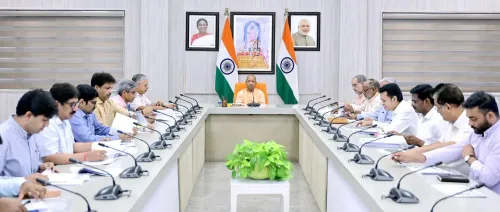
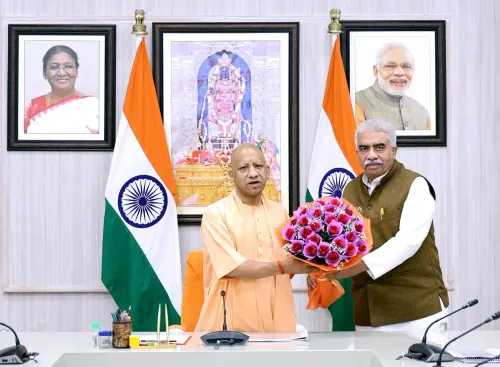
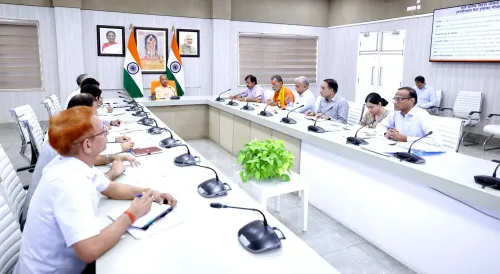
The Chief Minister's Office of Uttar Pradesh announced on Wednesday, 15 July 2026 that Employment and Industrial Zones will be established in every district of the state, named after Sardar Vallabhbhai Patel — India's first Home Minister, revered as the 'Iron Man of India.' The zones will be set up jointly by the MSME Department, the Department of Vocational Education and Skill Development, and the Department of Labour and Employment, under a directive from Chief Minister Yogi Adityanath.
Context
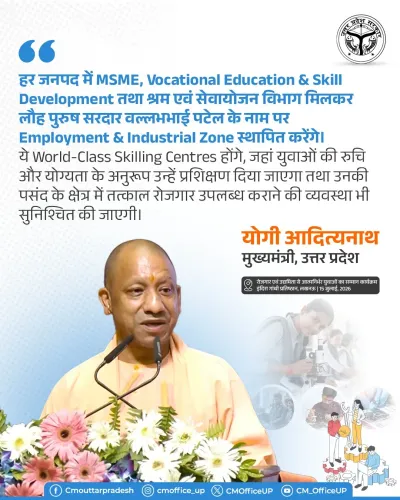
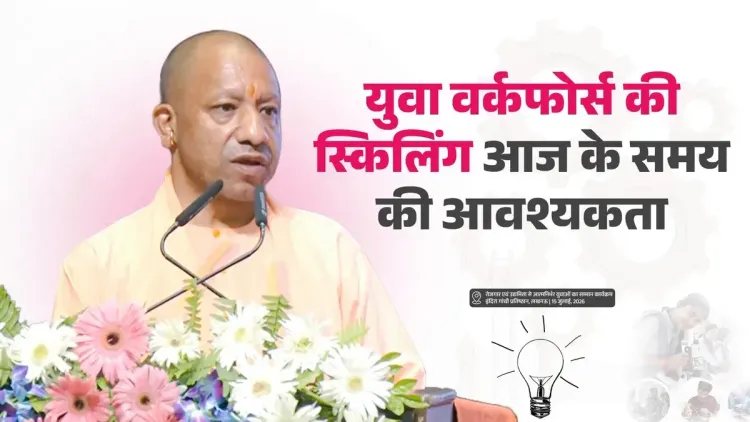
The Chief Minister's Office quoted CM Yogi Adityanath announcing: 'हर जनपद में MSME, Vocational Education & Skill Development तथा श्रम एवं सेवायोजन विभाग मिलकर लौह पुरुष सरदार वल्लभभाई पटेल के नाम पर Employment and Industrial Zone स्थापित करेंगे' — meaning, 'In every district, the MSME, Vocational Education and Skill Development, and Labour and Employment departments will together establish an Employment and Industrial Zone in the name of the Iron Man Sardar Vallabhbhai Patel.' The naming links the initiative to a national figure synonymous with unity and institution-building, lending it symbolic weight beyond its administrative scope.
Policy Backdrop
Uttar Pradesh has pursued a decentralised industrialisation strategy since 2017, most visibly through the One District One Product (ODOP) scheme launched in 2018, which anchored district-level manufacturing around a signature product. The state also hosted large-scale investor summits in 2018 and 2023 to attract industrial capital and generate formal employment. The new Employment and Industrial Zones extend that logic by institutionalising a permanent, multi-department infrastructure in each of Uttar Pradesh's 75 districts, rather than relying on event-driven investment pledges.
The integration of three departments under one zonal framework is notable: MSME units will receive a physical ecosystem, vocational trainees will have a pipeline directly into industry, and employment exchanges under the Labour Department will sit within the same zone — reducing friction between skill creation and job placement.
Stakeholders and Impact
The primary beneficiaries are district-level youth seeking formal employment, micro, small and medium enterprises looking for organised industrial space outside major urban centres, and vocational training graduates who currently face a gap between certification and placement. By mandating zones in every district, the policy targets Uttar Pradesh's semi-urban and rural districts that have historically been bypassed by industrial investment concentrated in cities such as Lucknow, Kanpur, Agra, and Noida.
For the state government, the initiative also carries political salience: Uttar Pradesh has one of India's largest youth populations, and employment generation remains a central electoral and governance priority. Naming the zones after Sardar Patel — a figure claimed across party lines — signals an attempt to frame the policy in a non-partisan, nation-building idiom.
What's Next
The announcement sets a policy direction but the operational details — land allocation in each district, budget provisions, and a rollout timeline — are yet to be made public. Observers will watch the next Uttar Pradesh state budget session for dedicated line-item allocations to the zones. Pilot inaugurations in select districts within the next 12 to 18 months would serve as the first concrete test of the initiative's implementation pace. Coordination among three departments with distinct mandates will also be a key variable determining how quickly the zones become functional.
Point of View
District-embedded industrial infrastructure. By mandating all 75 districts rather than a handful of pilot locations, the government is making a high-visibility commitment that will be easy to track and hold accountable. Naming the zones after Sardar Patel is a deliberate act of political symbolism, associating a state-level economic initiative with a pan-Indian historical figure to broaden its appeal. The real test will be whether inter-departmental coordination and district-level land availability can match the ambition of the announcement.
NationPress
15 Jul 2026
Frequently Asked Questions
What is the Sardar Patel Employment and Industrial Zone in Uttar Pradesh?
It is a proposed district-level zone announced by CM Yogi Adityanath where the MSME, Vocational Education and Skill Development, and Labour and Employment departments will work together to support small businesses and connect trained youth with jobs. Zones will be established in all 75 districts of Uttar Pradesh and named after Sardar Vallabhbhai Patel.
Which departments will run the Employment and Industrial Zones in UP?
Three state departments will jointly operate the zones: the MSME Department, the Department of Vocational Education and Skill Development, and the Department of Labour and Employment.
Why are the zones named after Sardar Vallabhbhai Patel?
Sardar Vallabhbhai Patel, India's first Home Minister, is known as the 'Iron Man of India' for unifying the country's princely states after independence. The Uttar Pradesh government has named the zones after him to link the initiative to a nationally respected figure associated with unity and institution-building.
How many Employment and Industrial Zones will be set up in Uttar Pradesh?
The directive covers all 75 districts of Uttar Pradesh, meaning at least one zone is planned per district, though the exact number per district and a formal rollout timeline have not yet been announced.
When will the UP Employment and Industrial Zones be operational?
No official implementation timeline has been announced yet. Policy observers expect district-level land allocation and budget details to emerge in the next state budget session, with pilot zones potentially inaugurated within 12 to 18 months.