CM Yogi: UP is now India's economy growth engine, not BIMARU
Synopsis
Chief Minister Yogi Adityanath declared on 18 November 2026 that Uttar Pradesh has broken free of its 'BIMARU' tag and become India's economic growth engine, blaming dynastic and caste-based politics for the state's earlier stagnation.
Key Takeaways
CM Yogi Adityanath declared on 18 November 2026 that Uttar Pradesh is no longer a 'BIMARU' state but India's economic growth engine.
He blamed dynastic politics, casteism, and divisive politics for the state's earlier economic stagnation.
The BJP government in UP took office in 2017 with a development-first mandate after defeating SP and BSP governments associated with identity-based politics.
UP hosted Global Investors Summits in 2018 and 2023 as part of its repositioning as an investment hub.
Uttar Pradesh holds 80 Lok Sabha seats , making its economic narrative central to national BJP politics.
Independent verification of UP's claimed economic transformation through state GDP and employment data remains the key benchmark to watch.
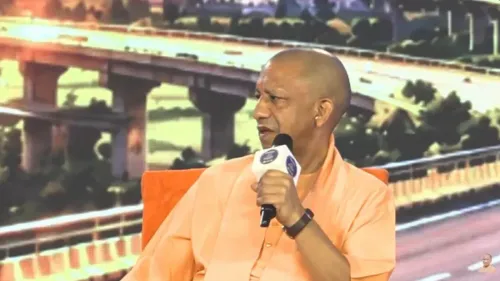
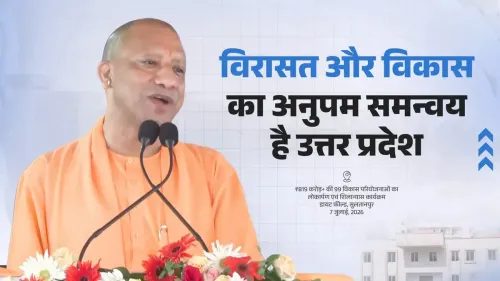
For decades, Uttar Pradesh carried the weight of a label — 'BIMARU' — that shorthand-branded it among India's most economically laggard states. On Wednesday, 18 November 2026, Uttar Pradesh Chief Minister Yogi Adityanath pushed back hard against that legacy, declaring on X that the state has shed its old identity and emerged as the country's economic growth engine.
Posting in Hindi, CM Yogi wrote: 'Uttar Pradesh ka har vyakti jaanta hai ki parivaarvaad, jaativaad aur vibhajankaari raajneeti ne pradesh ka beda gark kiya tha.' ('Every person in Uttar Pradesh knows that dynastic politics, casteism, and divisive politics had ruined the state.') He went on to declare that UP now carries a new identity — no longer 'BIMARU,' but a growth engine for India's economy.
From BIMARU to boardroom: what the label shift means
The word 'BIMARU' — an acronym coined in the 1980s covering Bihar, Madhya Pradesh, Rajasthan, and Uttar Pradesh — became shorthand for a cluster of northern states marked by low per-capita income, poor health outcomes, and sluggish industrial growth. For UP, the tag stuck longest, partly because the state's sheer size — it is India's most populous state — meant that its underperformance dragged national averages. Claiming to exit that category is not a minor rhetorical flourish; it is a direct pitch about the state's developmental trajectory. CM Yogi's government, which first took office after the BJP's 2017 assembly victory, staked its identity from day one on replacing what it called identity-based governance with a development-first agenda. The state hosted Global Investors Summits in 2018 and 2023, positioning Lucknow and the broader UP corridor as credible investment destinations — a sharp contrast to the decades when investors cited law-and-order concerns as a reason to route capital elsewhere.The political subtext behind the economic claim
The framing is deliberate. By invoking parivaarvaad (dynastic politics) and jaativaad (casteism) as the twin villains of UP's past, the post draws an unmistakable contrast with the Samajwadi Party and Bahujan Samaj Party governments that alternated power in the state before 2017. Both parties built their bases explicitly around caste arithmetic; both were led by political families. The BJP's counter-narrative — anchored since 2014 at the national level and since 2017 in UP — positions development metrics as the alternative to identity mobilisation. This messaging pattern is not unique to UP. Across BJP-governed states, the party has increasingly moved to frame its electoral record in economic terms — industrial corridors, expressways, logistics hubs — while attacking opponents as practitioners of 'vote-bank' politics. UP, given its electoral weight of 80 Lok Sabha seats, remains the centrepiece of that argument.What the numbers will have to prove
The post arrives ahead of what analysts and investors will watch closely: the release of updated state GDP data, the next UP budget cycle, and any fresh investor outreach events that test whether the summit pledges have translated into ground-level employment and output. Claims of BIMARU exit only calcify into conventional wisdom when output-per-capita, formal-employment, and infrastructure-utilisation figures back them up — and those data points will face scrutiny in the months ahead. For now, CM Yogi has staked his government's reputation on a single, sweeping claim: that UP's story is no longer one of lost decades but of a state rewriting the terms of its own ambition. The numbers will deliver their own verdict.Point of View
CM Yogi sharpens the contrast with SP and BSP, the two parties most associated with those identities, ahead of what are likely to be consequential electoral cycles. The 'growth engine' framing also aligns UP's brand with the broader 'Viksit Bharat' (Developed India) narrative the BJP has built at the national level since 2014. Whether this messaging holds will depend on whether independently verified economic data — particularly per-capita income and formal employment — corroborates the transformation claim.
NationPress
18 Nov 2026
Frequently Asked Questions
What does BIMARU mean and why is Uttar Pradesh associated with it?
BIMARU is an acronym from the 1980s standing for Bihar, Madhya Pradesh, Rajasthan, and Uttar Pradesh — states marked by low income, poor health outcomes, and slow growth. UP carried the label longest due to its size and historically sluggish development indicators.
What did CM Yogi Adityanath say about Uttar Pradesh's economy in November 2026?
On 18 November 2026, CM Yogi posted on X that UP is no longer a BIMARU state but has become the growth engine of India's economy, attributing past stagnation to dynastic and caste-based politics.
What has Yogi Adityanath's government done to attract investment in Uttar Pradesh?
The Yogi government hosted Global Investors Summits in 2018 and 2023 to position UP as an investment destination, alongside emphasis on law-and-order improvements and infrastructure development since 2017.
Who did CM Yogi's post target when he criticised dynastic and caste politics in UP?
The post implicitly targets the Samajwadi Party and Bahujan Samaj Party, which governed UP before 2017 and built their political bases around family leadership and caste identity, though no party was named directly.
How many Lok Sabha seats does Uttar Pradesh have and why does it matter politically?
Uttar Pradesh sends 80 members to the Lok Sabha, the largest share of any state, making it the single most decisive state in any national election and the centrepiece of BJP's political strategy.