Uttarakhand CMO: 30% women job quota, 3 lakh Lakhpati Didis
Synopsis
Uttarakhand's CMO quoted CM Pushkar Singh Dhami as citing 30 percent horizontal reservation for women in government jobs, 33 percent in cooperatives, and more than three lakh Lakhpati Didis. The 26 November 2026 post tied legal quotas to the DAY-NRLM livelihood drive.
Key Takeaways
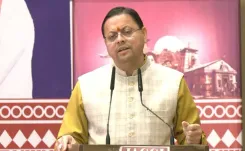
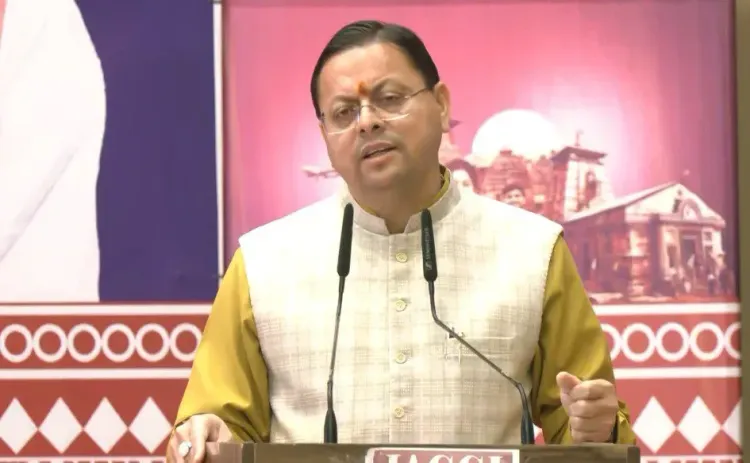
The Chief Minister's Office of Uttarakhand on 26 November 2026 quoted CM Pushkar Singh Dhami on women-centric reservations and incomes.
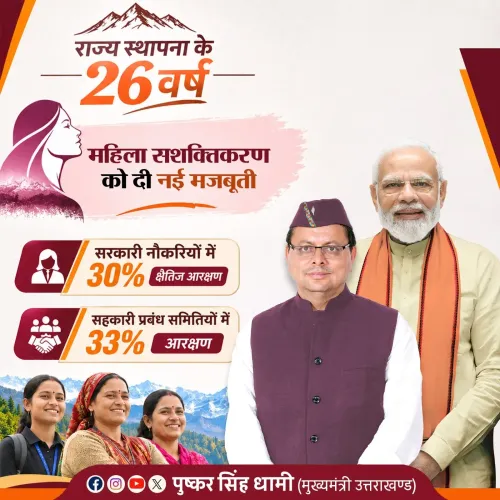
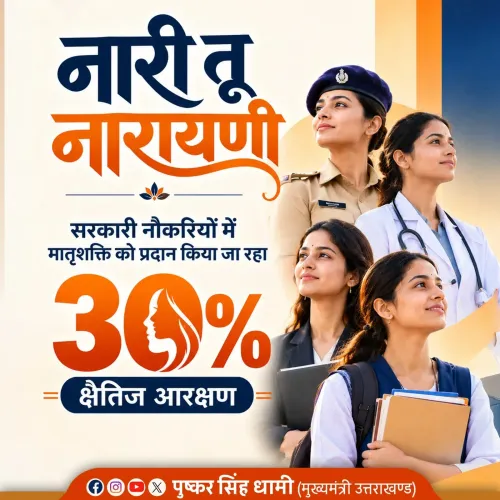
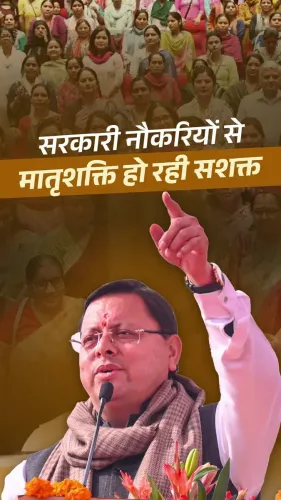
Dhami said the state has provided 30 percent horizontal reservation for women in government jobs.
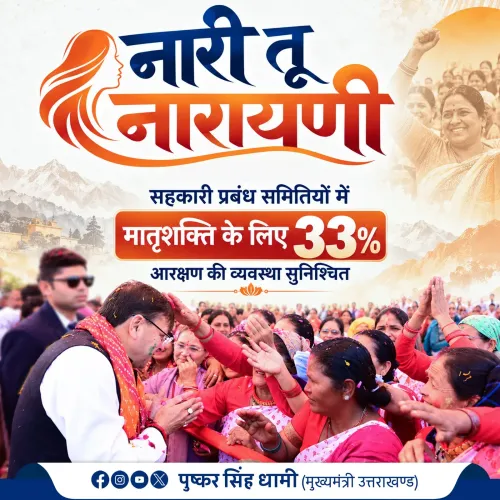
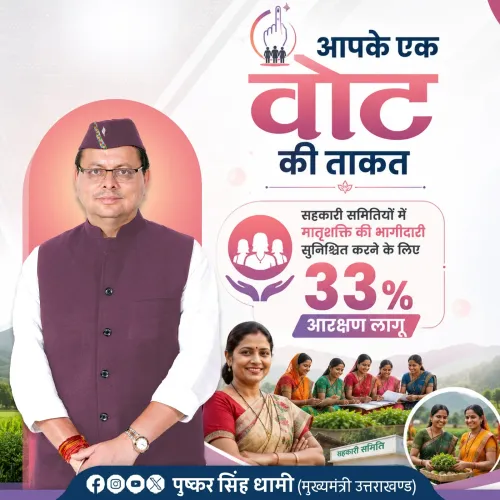
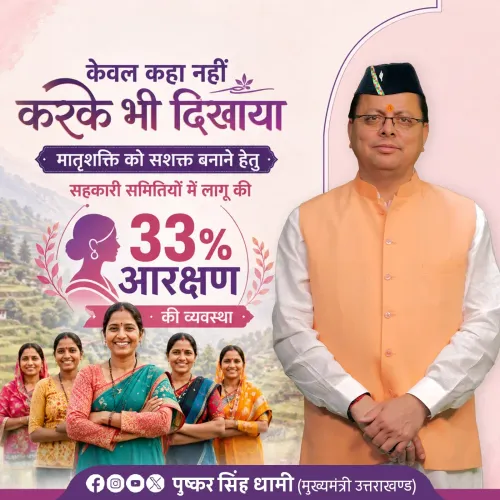
He also cited 33 percent reservation for women in cooperative societies.
The CM said more than three lakh women have become Lakhpati Didis under the livelihood drive.
Lakhpati Didi is a DAY-NRLM label for self-help group women earning at least Rs 1 lakh a year.
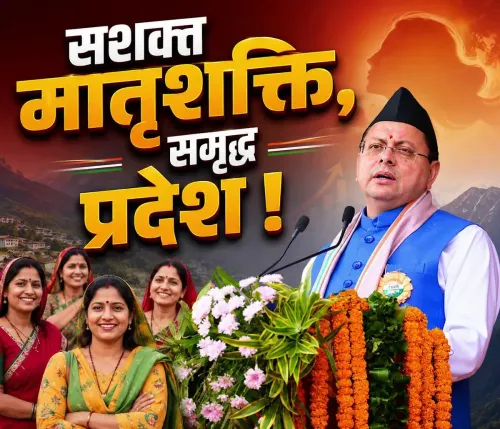
The Chief Minister's Office of Uttarakhand on Thursday put a hard number on the state's women-empowerment pitch: more than three lakh women have become Lakhpati Didis, Chief Minister Pushkar Singh Dhami was quoted as saying, after the government set aside a 30 percent horizontal reservation in government jobs and a 33 percent quota in cooperative societies. The post, issued on 26 November 2026, framed those measures as an investment in matrishakti (women's power). In a Himalayan state where public employment and cooperative credit still shape household income, the claim is meant to land as both policy and proof.
Horizontal 30 percent on the state payroll
Dhami's office quoted him in Hindi: the government has made a provision of 30 percent horizontal reservation for women in government jobs and 33 percent reservation in cooperative societies. Horizontal quotas cut across existing caste and community lists, so a woman candidate can draw the reservation on top of SC, ST, OBC or general categories. The cooperative quota, if fully implemented, would recast membership and leadership in societies that handle credit, milk and farm produce across the hills.
That legal track sits on a longer national timeline. The 73rd Constitutional Amendment of 1992 already locked in 33 percent reservation for women in panchayats and municipalities. What Uttarakhand is advertising is an extension of the same logic into the state's own payroll and cooperative boards — a pattern several other states have also used to lift female workforce participation.
The three-lakh Lakhpati Didi claim
The second half of the quote is economic, not legal. Dhami said that today more than three lakh women have become Lakhpati Didis — a label under the Centre's Deendayal Antyodaya Yojana-National Rural Livelihoods Mission (DAY-NRLM), launched in 2011, for self-help group women who earn at least Rs 1 lakh a year. The CMO presented that figure as evidence that quotas and SHG income programmes are moving together.
The post did not attach an independent beneficiary list. Rural women and self-help groups are the named stakeholders; the test ahead is whether recruitment notifications carry the 30 percent line, whether cooperative boards actually seat women at 33 percent, and whether official tallies match the three-lakh claim.
In the hills, a reservation on paper is only the first mile. The next one is a payslip — and a balance sheet that stays above one lakh.
Point of View
Pairing reservation optics with NRLM livelihood numbers. The 30 percent horizontal job quota is the sharper instrument because it can change who actually sits in district offices. The political question is conversion: do recruitment rules and cooperative elections start reflecting those percentages, and is the Lakhpati Didi count published with district-wise lists. Gender equity is being sold as both a continuation of the 73rd Amendment and a results dashboard.
NationPress
26 Nov 2026
Frequently Asked Questions
What reservation did Uttarakhand provide for women in government jobs?
The Chief Minister's Office quoted CM Pushkar Singh Dhami as saying the state has provided 30 percent horizontal reservation for women in government jobs. Horizontal reservation applies across existing category lists rather than as a separate vertical block.
What is the women's quota in Uttarakhand cooperative societies?
According to the CMO post quoting Dhami, the state has provided 33 percent reservation for women in cooperative societies. That would affect membership and leadership in credit, milk and farm-produce cooperatives.
What is the Lakhpati Didi scheme?
Lakhpati Didi is a label under the Centre's DAY-NRLM, launched in 2011, for women in self-help groups who earn at least Rs 1 lakh a year through livelihood activities. Dhami said more than three lakh women in the state have reached that mark.
Who is Pushkar Singh Dhami?
Pushkar Singh Dhami is the Chief Minister of Uttarakhand, in office since 2021. His government has promoted women-centric measures including job and cooperative reservations.
When did the Uttarakhand CMO post this claim?
The Chief Minister's Office posted the statement on 26 November 2026. It quoted Dhami on the 30 percent and 33 percent reservations and the Lakhpati Didi count.