CM Dhami: 30% govt job quota, 33% cooperative quota for Uttarakhand women
Synopsis
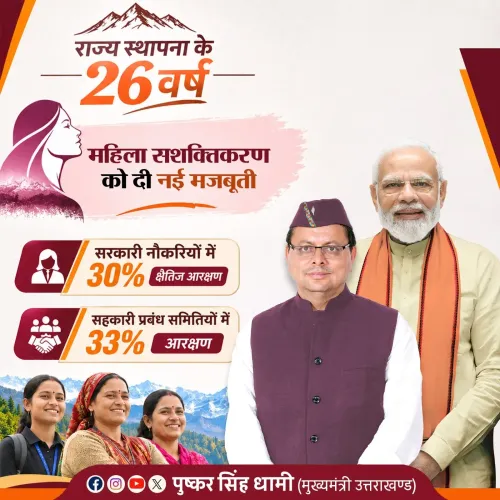
Chief Minister Pushkar Singh Dhami has announced 30% horizontal reservation for women in Uttarakhand government jobs and 33% in cooperative societies, positioning the state among peers like Rajasthan and Madhya Pradesh in advancing women's economic self-reliance through structural quotas.
Key Takeaways
The Chief Minister's Office of Uttarakhand shared CM Pushkar Singh Dhami 's statement on 17 November 2026 .
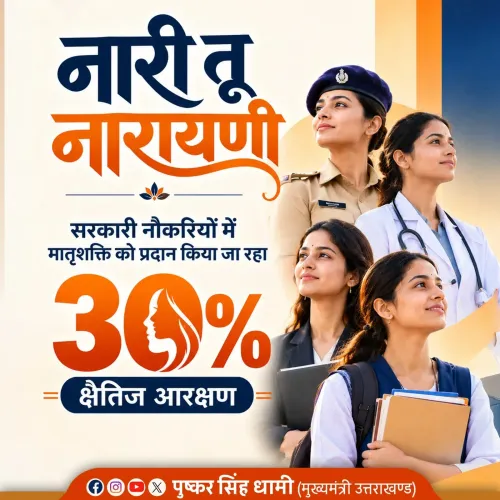
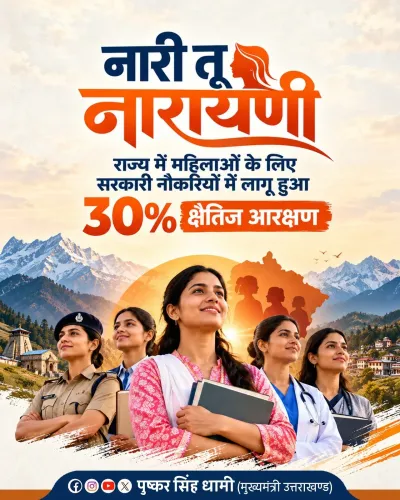
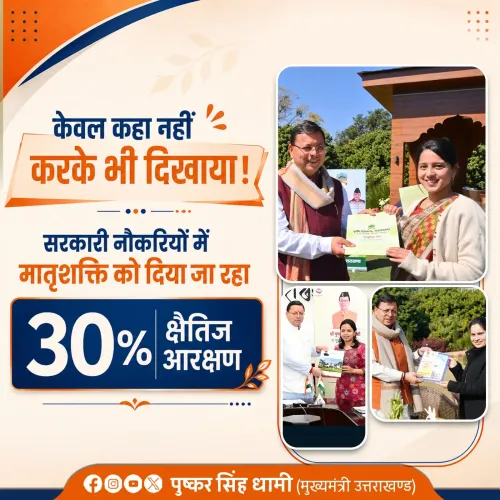
Women will receive 30% horizontal reservation in Uttarakhand state government jobs, cutting across all social categories.
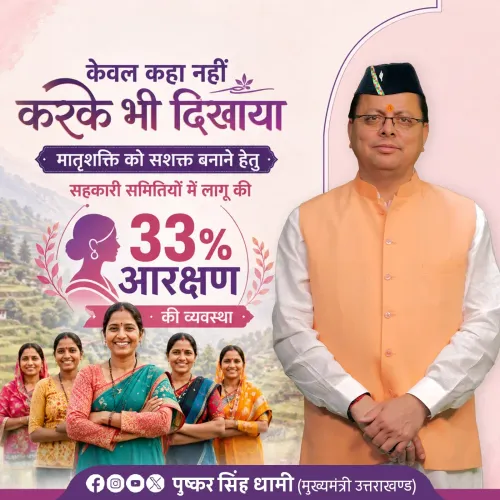
Women will receive 33% reservation in cooperative societies, extending economic participation beyond salaried employment.
Horizontal reservation ensures women are not displaced by male candidates within any existing vertical (caste) reservation category.
The policy builds on the precedent of the 73rd and 74th Constitutional Amendments (1992) , which mandated one-third reservation for women in local bodies.
Similar horizontal reservation policies are already in place in Rajasthan and Madhya Pradesh .
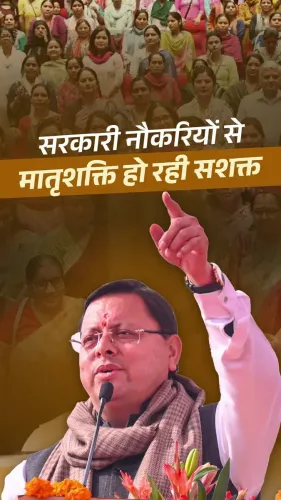
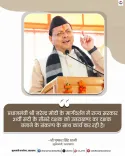
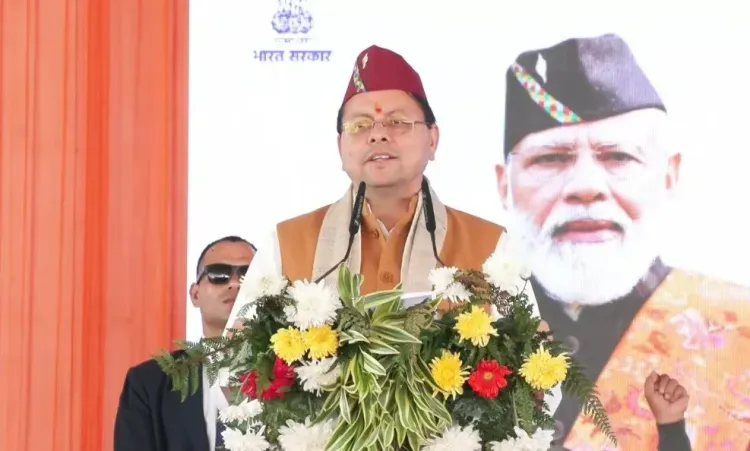
Uttarakhand is writing a new chapter in women's economic empowerment — and the numbers are specific. Chief Minister Pushkar Singh Dhami, in a statement shared by the Chief Minister's Office of Uttarakhand on Tuesday, 17 November 2026, declared that the state government is actively working to make women financially self-reliant through twin reservation guarantees: 30 per cent horizontal reservation in government jobs, and 33 per cent reservation in cooperative societies.
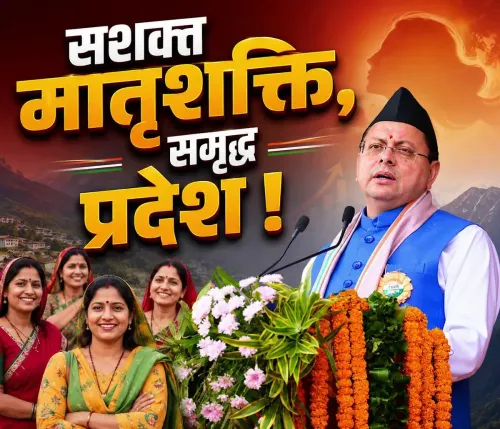
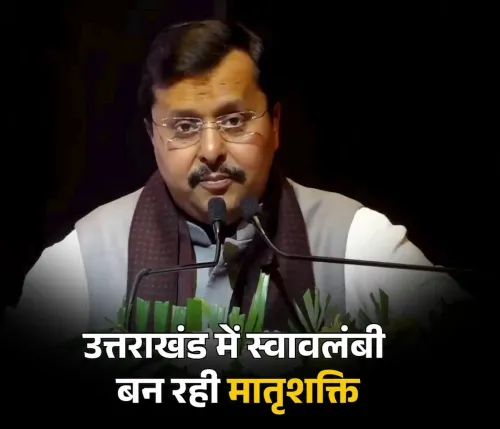
Quoting the Chief Minister directly, the post states: 'प्रदेश सरकार भी मातृशक्ति को आर्थिक रूप से आत्मनिर्भर और सशक्त बनाने के लिए निरंतर कार्य कर रही है' — 'The state government is continuously working to make women economically self-reliant and empowered.' The measures, he said, are designed to open 'new opportunities in leadership, employment and self-reliance.'
What horizontal reservation for women in government jobs actually means
Horizontal reservation is distinct from vertical (caste-based) reservation. It cuts across all existing categories — General, OBC, SC, ST — ensuring that 30 per cent of seats in each category are filled by women. The practical effect: a woman candidate competes first within her social category, and the horizontal quota ensures she is not squeezed out by male candidates even in categories where women are underrepresented. It is a structurally stronger guarantee than a simple add-on quota. Uttarakhand's move mirrors policies already in place in states such as Rajasthan and Madhya Pradesh, which have adopted similar horizontal reservation bands for women in state government recruitment.The cooperative society quota and its roots in the Constitution
The 33 per cent reservation in cooperative societies targets a different lever of economic participation — not salaried employment, but collective enterprise. Cooperatives in Uttarakhand span dairy, horticulture, and self-help group linkages, sectors where women do much of the labour but historically hold little decision-making power. This quota builds on the foundational precedent set by the 73rd and 74th Constitutional Amendments of 1992, which mandated one-third reservation for women in panchayats and urban local bodies nationwide. Extending a similar principle to cooperatives continues that constitutional logic into the economic sphere.Dhami government's broader push on women's self-reliance
The framing of the announcement — using the Sanskrit-rooted term mātṛśakti (mother-power) alongside the policy language of ātmanirbhartā (self-reliance) — signals alignment with the national 'Atmanirbhar Bharat' vocabulary. For a Himalayan state where male out-migration is high and women often anchor rural economies, the stakes of meaningful reservation in both public employment and cooperatives are tangible. What to watch now: whether future state recruitment notifications and cooperative election schedules explicitly reflect these quotas, and whether compliance data surfaces to show how many beneficiaries the reservations are actually delivering.Point of View
The Dhami government is consciously threading state policy into the national self-reliance narrative, maximising political resonance while delivering a structurally sound measure. The cooperative society quota is the more consequential of the two in a state defined by high male out-migration, since it converts women's existing rural economic labour into formal decision-making power. The critical test will be implementation fidelity — whether recruitment notifications and cooperative elections actually reflect these quotas or whether they remain aspirational declarations.
NationPress
17 Nov 2026
Frequently Asked Questions
What is the 30% horizontal reservation for women in Uttarakhand government jobs?
It means 30% of seats in every government job category — General, OBC, SC, ST — must go to women. This 'horizontal' structure ensures women are not squeezed out by male candidates within any existing caste-based reservation vertical.
What is the 33% reservation for women in Uttarakhand cooperative societies?
One-third of positions in Uttarakhand's cooperative societies are reserved for women, giving them formal decision-making roles in collective enterprises such as dairy, horticulture, and self-help group-linked cooperatives.
Which other Indian states have similar horizontal reservation for women in government jobs?
States including Rajasthan and Madhya Pradesh have adopted comparable horizontal reservation policies for women in state government recruitment, making Uttarakhand part of a broader national trend.
What is the constitutional basis for women's reservation in India?
The 73rd and 74th Constitutional Amendments of 1992 established one-third reservation for women in panchayats and urban local bodies. State-level horizontal reservations in government jobs build on this constitutional framework for gender equity.
What does horizontal reservation mean compared to vertical reservation?
Vertical reservation allocates a fixed percentage of total seats to a social group (SC, ST, OBC). Horizontal reservation cuts across all vertical categories, ensuring women get their share within each vertical band rather than competing in a separate pool.