Are Security Agencies Concerned About Militancy Resurgence Due to Yunus' Remarks on the 'Seven Sisters'?
Synopsis
As Tarique Rahman assumes office as Bangladesh's Prime Minister, the potential for renewed militancy looms due to controversial remarks from former adviser Mohammad Yunus about the Seven Sisters. Security agencies express concern over the implications for India-Bangladesh relations and regional stability.
Key Takeaways
Tarique Rahman's leadership will be pivotal for India-Bangladesh relations.
Remarks by Mohammad Yunus have raised fears of revived militancy.
The Seven Sisters are a sensitive issue in regional politics.
Security agencies remain vigilant against potential threats.
Investment in northeastern states is crucial for stability.
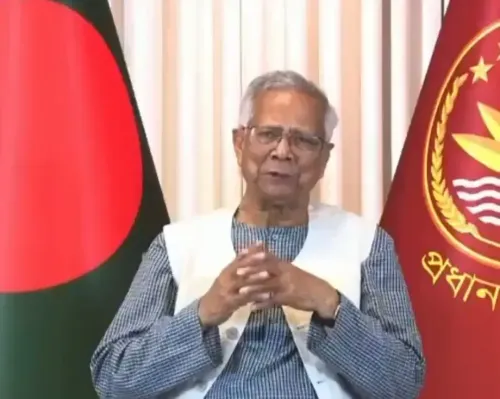
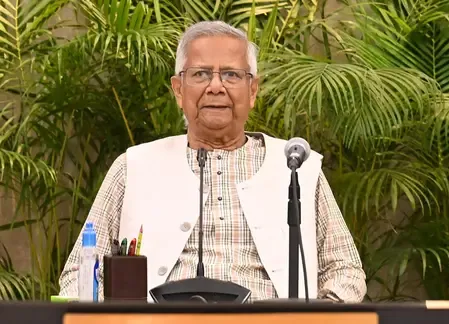
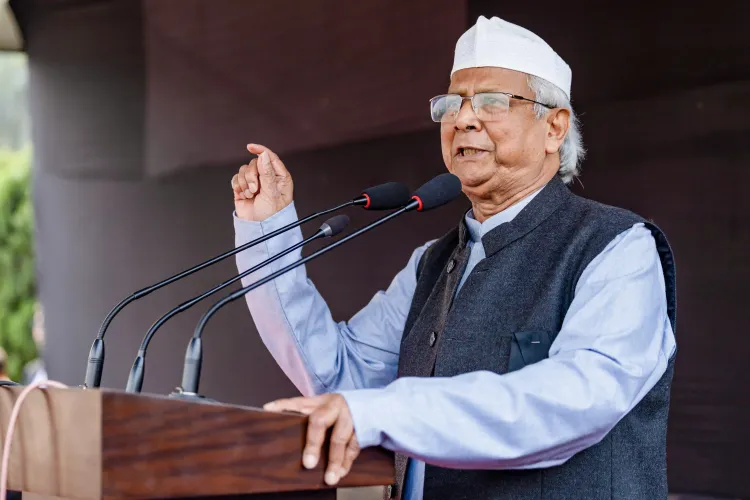
New Delhi, Feb 19 (NationPress) As Tarique Rahman begins his inaugural term as Prime Minister of Bangladesh, the focus is on how he will navigate relations with neighboring countries. The initial indications seem favorable, particularly towards India. Nevertheless, security agencies have raised alarms about a potential resurgence of militancy following remarks made by former chief adviser Mohammad Yunus regarding the 'Seven Sisters' during his recent farewell address.
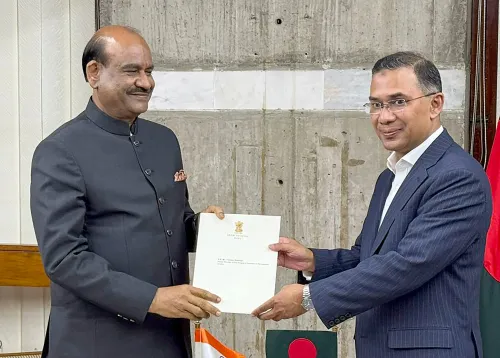
While Prime Minister Narendra Modi was invited to attend Rahman’s swearing-in ceremony, he could not participate due to commitments at the India AI Impact Summit 2026 and a meeting with French President Emmanuel Macron.
Representing India in his absence was Lok Sabha Speaker Om Birla.
Rahman appears to understand the significance of maintaining positive relations with India. However, Yunus's farewell speech included several provocative statements, particularly about future economic integration involving Nepal, Bhutan, and the Seven Sisters—a term referring to the northeastern states of India.
Analysts of Bangladesh politics suggest that Yunus expressed discontent regarding the improving ties between India and Bangladesh, opting to distance himself from India while aligning more closely with Pakistan and Nepal, thereby fostering anti-India sentiments among extremists within Bangladesh.
Officials from the Intelligence Bureau have voiced concerns that Yunus’s comments about the northeastern states could indicate a problematic trajectory. Historically, India has encountered issues with militant groups from these regions operating out of Bangladesh, particularly during the period from 2001 to 2006, when the Bangladesh Nationalist Party (BNP) and Jamaat-e-Islami were in control.
At a time when both India and Bangladesh are striving to improve their relationship, Yunus's remarks regarding the Seven Sisters are seen as reckless.
India has made substantial investments in the northeastern states, many of which are highly sensitive. The country has long battled insurgency in the region and has largely managed to stabilize the situation. Such statements by Yunus, particularly about sensitive areas, are perceived as intentional provocations, potentially influenced by foreign interests, according to officials.
This situation is compounded by apprehensions within Indian agencies about a renewed effort to establish militant infrastructures near the border.
All previously existing infrastructures were dismantled with India’s assistance. Continuous engagement with Dhaka on this matter is essential to prevent any revival.
An official from the Intelligence Bureau noted that the Siliguri Corridor, often referred to as the Chicken’s Neck, is particularly vulnerable, serving as a critical linkage between the northeastern states and the rest of India. Given the area's sensitivity, Yunus's comments are viewed as a deliberate move to incite insurgent groups, some of which reportedly have support from China, the official added.
Adding to the concerns of Indian security agencies is the fact that the Jamaat has won a significant number of seats in districts bordering India. Over the years, the Jamaat has entrenched itself in these areas through the establishment of radical schools that propagate anti-India ideologies.
The Jamaat has historically engaged in hate-driven politics, and its influence over border constituencies raises alarms about the potential reactivation of dismantled terrorist infrastructures.
An official remarked that while reactivating such infrastructures may not be straightforward, given India’s heightened vigilance, it remains an ongoing concern for security agencies to ensure border safety.
Another official pointed out that Yunus's actions appear to be guided by external influences. Throughout his farewell address, he extensively discussed China and Pakistan, intentionally neglecting any mention of India.
Despite detailing his achievements over the past 1.5 years, Yunus failed to address his administration’s poor handling of communal violence, during which Hindus and other minorities faced persecution and violence, while extremist preachers and terrorists were allowed to operate freely.
Point of View
It's crucial to recognize the complexities in international relations, particularly between India and Bangladesh. While we acknowledge the positive intentions of new leadership, it's vital to remain vigilant against rhetoric that may destabilize regional harmony. Our commitment is to ensure that national interests and security are prioritized.
NationPress
30 Sept 2026
Frequently Asked Questions
What sparked the security agencies' concerns?
Concerns were raised following Mohamed Yunus's remarks about the Seven Sisters during his farewell speech, which security agencies fear may provoke militancy.
Who is Tarique Rahman?
Tarique Rahman is the newly inaugurated Prime Minister of Bangladesh, and his approach to foreign relations, especially with India, is under scrutiny.
What is the significance of the Seven Sisters?
The Seven Sisters refer to the northeastern states of India, which have historically faced issues with militancy, making them a sensitive topic in India-Bangladesh relations.
How has India invested in the northeastern states?
India has made substantial investments in the northeastern states to promote stability and development, countering long-standing insurgency issues.
What role does the Jamaat play in this context?
The Jamaat, which has a significant presence in border constituencies, has historically engaged in anti-India propaganda and raises concerns about the potential reactivation of extremist infrastructure.