Shringla slams Congress for 'false narrative' on Rudd conversation, cites history of US pressure
Synopsis
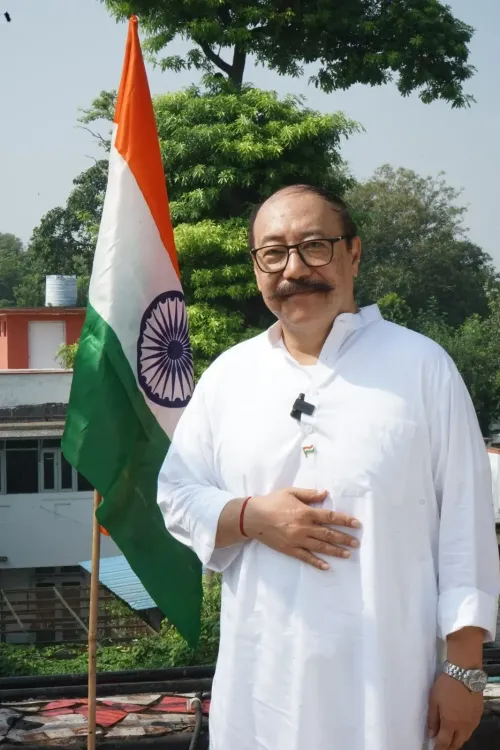
Rajya Sabha MP and former Foreign Secretary Harsh Vardhan Shringla has gone on the offensive against Congress, accusing it of weaponising a selective clip of his Asia Society discussion with Kevin Rudd to spread disinformation about India's Russia oil policy — and then pivoting to a sweeping indictment of Congress's foreign policy legacy, from the 1994 nuclear programme halt to the restrained response after 26/11.
Key Takeaways
Harsh Vardhan Shringla , Rajya Sabha MP and former Foreign Secretary, accused the Congress party on 28 October of spreading a 'false narrative' about his conversation with former Australian PM Kevin Rudd .
The discussion, held at the Asia Society Policy Institute in New Delhi , covered India's energy security , Russian oil purchases, and strategic autonomy.
Shringla alleged Congress selectively portrayed the exchange to mislead the public on India's stance regarding possible US sanctions over Russian oil .
He accused Congress of halting India's nuclear and missile programme in 1994 and cancelling planned nuclear tests in December 1995 under US pressure, contrasting this with PM Atal Bihari Vajpayee's 1998 tests.
Shringla also alleged the UPA government took no military action after the 2008 Mumbai terror attacks following a visit by US Secretary of State Condoleezza Rice .
Congress had not issued a formal response to the allegations at the time of reporting.
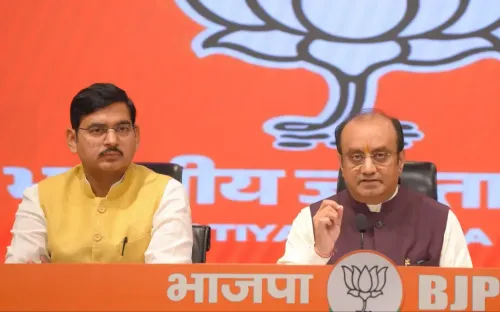
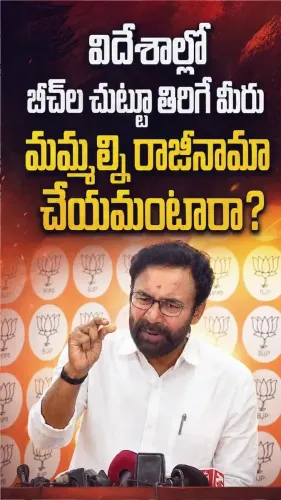
Former Foreign Secretary and Rajya Sabha MP Harsh Vardhan Shringla on Wednesday, 28 October sharply condemned the Congress party for selectively portraying his recent conversation with former Australian Prime Minister Kevin Rudd and accused the party of spreading a 'false narrative' to mislead the Indian public. Shringla, also a former Indian Ambassador to the United States, made the remarks in a detailed post on X.
The Rudd Conversation and What Was Said
Shringla had earlier this month held a wide-ranging discussion with Kevin Rudd — a leading expert on foreign policy — at an event organised by the Asia Society Policy Institute in New Delhi. Topics ranged from Asia's geopolitical future and India's national and international priorities to relations with key partners.
During the conversation, the Bharatiya Janata Party (BJP) MP spotlighted that, under Prime Minister Narendra Modi, India's foreign policy is guided by strategic autonomy and a nation-first approach. He stated that when the issue of possible US sanctions against India over the purchase of Russian oil arose, he placed the matter in historical context — referencing the US withdrawal of exemptions for Iranian oil purchases in 2019 for countries including India and China, and a similar situation involving Venezuela.
'It was the energy security of one and a half billion people that was of paramount importance to the government... all decisions taken in this regard would be based on national interest and a nation-first approach. This has been the policy since 2014,' Shringla stated in his X post.
Shringla's Accusation Against Congress
Shringla alleged that what he described as a 'very, very positive conversation' — appreciated by domestic and international audiences — was selectively excerpted by the Congress to convey a 'false impression' at the public level.
'My advice to Congress stooges who put all this out is to stop using false narratives... a loser in democracy can never be a winner with false narratives,' he said in his post, adding that the party was displaying 'political bankruptcy' and a 'pathetic inability to win the people's ballot.'
Historical Allegations: Nuclear Programme and 26/11
Shringla went further, alleging that the Congress party has a documented history of yielding to external — particularly American — pressure on matters of vital national interest. He cited two specific instances: the alleged halting of India's missile and nuclear programme in 1994 under pressure from then-US President Bill Clinton, and the abrupt cancellation of planned nuclear tests in December 1995, again reportedly under US pressure.
'It took the BJP's first Prime Minister Atal Bihari Vajpayee to undertake these nuclear tests in 1998 and make India the proud and responsible nuclear power we are today,' he said.
He also invoked the 2008 Mumbai terror attacks, alleging that the then-UPA government refrained from any military response after US Secretary of State Condoleezza Rice visited New Delhi and reportedly urged restraint. 'This was a national shame that we haven't gotten over even today,' Shringla said, contrasting it with what he described as the 'bold response' of Prime Minister Modi to Pakistani terrorist provocations.
The Broader Political Context
The BJP MP's remarks come amid ongoing political contestation over India's foreign policy positioning, particularly its continued purchase of discounted Russian crude oil following Russia's invasion of Ukraine. Shringla's framing — that energy security for 1.5 billion people takes precedence over external pressure — aligns with the government's established public posture on the issue.
He also referenced what he called Congress's 'false narratives' on Arunachal Pradesh and the Special Investigation Report (SIR), arguing that a party that has 'consistently succumbed to external pressure on vital issues of national interest' has 'little ground' to question India's commitment to strategic autonomy.
Congress has not issued an immediate formal response to Shringla's remarks. The dispute is likely to intensify political debate over India's foreign policy record and the current government's handling of the Russia-Ukraine energy dilemma.
Point of View
From the nuclear programme to 26/11. The framing is deliberate: by tying India's current Russia-oil stance to 'nation-first' principles, and then contrasting it with alleged Congress capitulations to Washington, the BJP positions its geopolitical pragmatism as patriotism. What the exchange actually reveals, however, is how combustible India's energy-security choices remain politically — even a nuanced academic discussion can be clipped into a diplomatic embarrassment. The real question neither side is answering: what is India's endgame on Russian energy dependence, and what does 'strategic autonomy' mean when the pressure eventually becomes unavoidable?
NationPress
28 Oct 2026
Frequently Asked Questions
What did Harsh Vardhan Shringla say about the Congress party?
Shringla accused the Congress party of selectively portraying his conversation with former Australian Prime Minister Kevin Rudd to spread a 'false narrative' about India's stance on Russian oil and US sanctions. He called on the party to 'stop misleading the people of India.'
What was the Shringla-Kevin Rudd conversation about?
The discussion, held at the Asia Society Policy Institute in New Delhi earlier in October 2026, covered a wide range of topics including Asia's geopolitical future, India's foreign policy priorities, and the country's relationship with key partners. The issue of possible US sanctions over India's purchase of Russian oil also came up during the exchange.
What historical examples did Shringla cite against Congress?
Shringla alleged that Congress halted India's missile and nuclear programme in 1994 under pressure from then-US President Bill Clinton, and cancelled planned nuclear tests in December 1995 under similar pressure. He also alleged the UPA government chose not to retaliate militarily after the 2008 Mumbai terror attacks following a visit by US Secretary of State Condoleezza Rice.
What is India's position on purchasing Russian oil amid US pressure?
According to Shringla, India's energy security for its 1.5 billion citizens takes precedence, and all decisions are based on national interest and a nation-first approach. He stated this has been government policy since 2014 and will continue to remain so.
Has Congress responded to Shringla's allegations?
Congress had not issued a formal response to Shringla's remarks at the time of reporting. The BJP MP's accusations are expected to deepen political debate over India's foreign policy record and its handling of the Russia-Ukraine energy dilemma.