Rajiv Gandhi death anniversary: Congress pays homage at Veer Bhumi, recalls tech vision
Synopsis
On the anniversary of Rajiv Gandhi's assassination, the Congress party's top brass — including Rahul Gandhi, Sonia Gandhi, and Mallikarjun Kharge — gathered at Veer Bhumi to honour the former PM. Leaders invoked his tech and youth vision, with Mani Shankar Aiyar warning that his dream for India faces an active threat today.
Key Takeaways
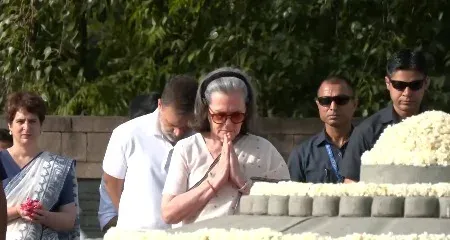
Congress leaders paid tribute to former PM Rajiv Gandhi at Veer Bhumi, New Delhi on 21 May 2025 , his death anniversary.
Rahul Gandhi , Sonia Gandhi , Mallikarjun Kharge , and Priyanka Gandhi Vadra offered floral tributes at the memorial.
Mani Shankar Aiyar said there is 'a major attempt being made to almost destroy' Rajiv Gandhi's vision for India.
Rajiv Gandhi became India's youngest PM at age 40 in October 1984 and was assassinated on 21 May 1991 in Sriperumbudur, Tamil Nadu .
The day is observed as Sadbhavana Diwas , marking national integration and communal harmony.
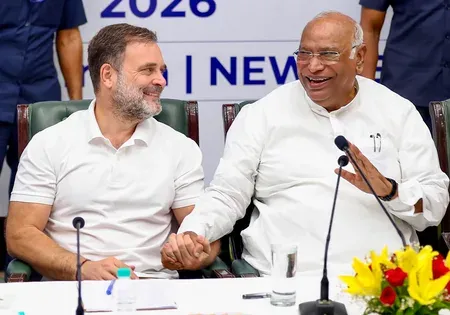
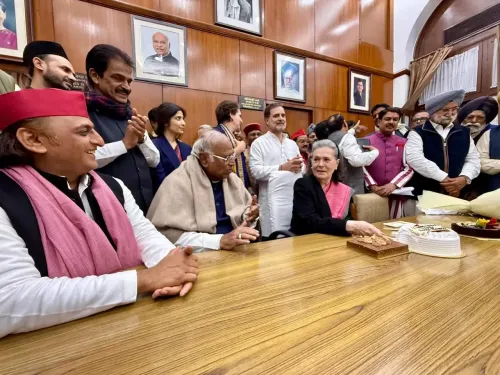
Senior Congress leaders on Thursday, 21 May gathered at Veer Bhumi in New Delhi to pay floral tributes to former Prime Minister Rajiv Gandhi on his death anniversary, remembering him as a transformative leader who championed youth empowerment and India's technological advancement.
Who Attended the Tribute
Leader of the Opposition in the Lok Sabha Rahul Gandhi, Congress President Mallikarjun Kharge, former Congress chief Sonia Gandhi, and Congress MP Priyanka Gandhi Vadra offered floral tributes at the memorial. Senior leaders including Ashok Gehlot, P. Chidambaram, and Mukul Wasnik, along with party workers and supporters, also participated in the commemoration.
What Leaders Said
Congress leader Jagdish Tytler described Rajiv Gandhi as an exceptional and deeply humane figure. 'He was a leader and a person like whom I have never seen in my life. He was a very kind and truly humane person. The country needed someone like him — a leader with scientific thinking, concern for children, and a vision for the youth,' Tytler said.
Congress leader Mani Shankar Aiyar urged those present to revisit the inscription at Veer Bhumi. 'I would say that what is written here at Veer Bhumi should be read again because, in just a few lines, it explains the meaning of his life, his message, and the kind of India he envisioned. Today, there is a major attempt being made to almost destroy that dream,' Aiyar said.
Leader of Opposition in the Haryana Assembly Bhupinder Singh Hooda said, 'Rajiv Gandhi had a vision for India and particularly for the youth, and the entire country had high expectations from him.' Congress leader Srinivas B.V. noted that Rajiv Gandhi's ideology continues to inspire the party globally, calling the day Sadbhavana Diwas.
Delhi Pradesh Congress Committee President Devender Yadav credited Rajiv Gandhi with giving the country 'a new direction and energy', specifically citing his role in bringing the computer and digital revolution to India.
Rajiv Gandhi: A Brief Profile
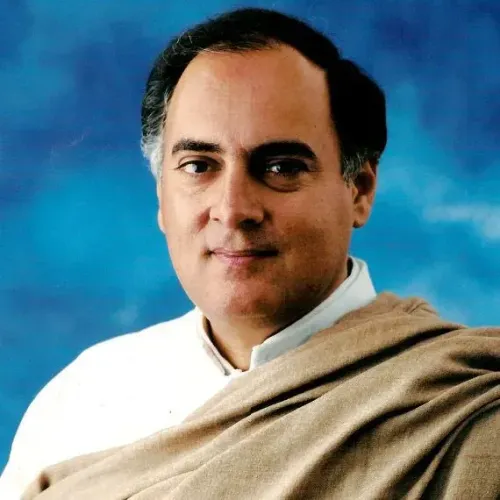
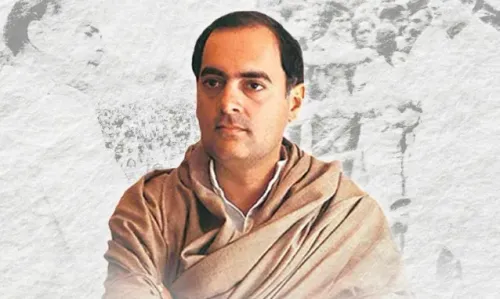
Rajiv Gandhi was born on 20 August 1944 and became India's youngest Prime Minister at the age of 40 in October 1984, following the assassination of his mother, then Prime Minister Indira Gandhi. He served as Prime Minister until December 1989. He was assassinated on 21 May 1991 by an LTTE suicide bomber during an election rally in Sriperumbudur, Tamil Nadu.
Legacy and Significance
Rajiv Gandhi is widely credited with initiating India's information technology push in the 1980s, lowering the voting age to 18, and expanding telecom infrastructure. His tenure is frequently cited by Congress as the foundation for India's eventual digital economy. Notably, this anniversary is observed annually as Sadbhavana Diwas — a day promoting national integration and communal harmony — across Congress-governed states and party units worldwide. This year's tribute comes at a politically charged moment, with the Congress using the occasion to sharpen its contrast with the ruling dispensation.
Point of View
Or whether the anniversary serves primarily as a contrast exercise against the BJP. The tribute's size and seniority of attendance suggest the party views the Rajiv legacy as an electoral asset worth investing in.
NationPress
24 Sept 2026
Frequently Asked Questions
When and where was Rajiv Gandhi assassinated?
Rajiv Gandhi was assassinated on 21 May 1991 by an LTTE suicide bomber during an election rally in Sriperumbudur, Tamil Nadu. He was 46 years old at the time of his death.
Why is 21 May observed as Sadbhavana Diwas?
21 May is observed as Sadbhavana Diwas — meaning 'goodwill day' — to honour Rajiv Gandhi's commitment to national integration, communal harmony, and peace. Congress party units across India and abroad mark the occasion with tributes and public programmes.
Who attended the Rajiv Gandhi death anniversary tribute at Veer Bhumi in 2025?
Rahul Gandhi, Sonia Gandhi, Congress President Mallikarjun Kharge, and Priyanka Gandhi Vadra led the tributes at Veer Bhumi. Senior leaders Ashok Gehlot, P. Chidambaram, and Mukul Wasnik also attended, along with party workers.
What is Rajiv Gandhi remembered for?
Rajiv Gandhi is remembered for initiating India's computer and digital revolution in the 1980s, lowering the voting age to 18, and expanding telecom infrastructure. He served as India's youngest Prime Minister from October 1984 to December 1989.
What did Mani Shankar Aiyar say at the Veer Bhumi tribute?
Mani Shankar Aiyar urged attendees to re-read the inscription at Veer Bhumi, saying it captures the meaning of Rajiv Gandhi's life and his vision for India. He added that 'today, there is a major attempt being made to almost destroy that dream.'