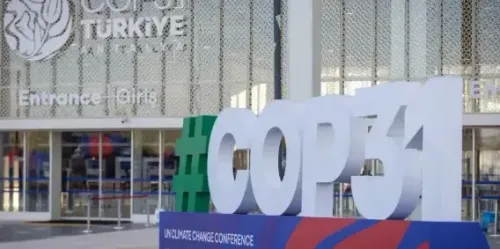
COP31: Electrification emerges as key driver in global fossil fuel transition push
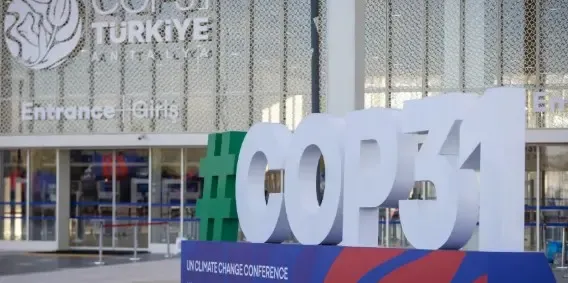
Synopsis
COP31's final negotiating week in Antalya has crystallised around a single question: can the world's agreed commitment to move away from fossil fuels be backed by a binding electrification target and genuine finance for the Global South? With the IEA, the We Mean Business Coalition and parliamentarians from a Fossil-Free Future network all pushing the same direction, the pressure on Turkey and Australia as co-Presidencies is unprecedented.
Key Takeaways
COP31 negotiations in Antalya, Turkey are in their final week, with electrification emerging as the central implementation mechanism for the global fossil fuel transition.
The first draft of the COP31 cover text includes a global electrification target , welcomed by the We Mean Business Coalition .
Parliamentarians from the Parliamentarians for a Fossil-Free Future network are calling on COP31 co-Presidencies — Turkey and Australia — to commit concrete, measurable climate finance for developing nations.
Climate finance is framed as a legal obligation under Article 9.1 of the Paris Agreement , not voluntary charity.
The IEA's special report for COP31 finds that faster electrification reduces emissions even under current energy mixes, with gains compounding as grids decarbonise.
Global temperatures have already exceeded 1.5°C above pre-industrial levels in individual years, heightening urgency at the talks.
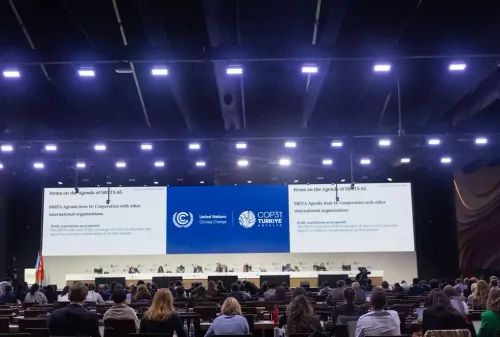
As the United Nations Climate Change Conference (COP31) enters its final week of negotiations in Antalya, Turkey, electrification has emerged as a critical focal point, with governments, businesses and civil society converging on the need to translate the global commitment to transition away from fossil fuels into concrete, investment-ready action.
From Commitment to Concrete Action
The first Global Stocktake established a landmark international commitment to transition away from fossil fuels in energy systems in a just, orderly and equitable manner. The debate has since shifted decisively toward implementation — with greater emphasis on credible national transition strategies, financing frameworks and scalable pathways. The COP30 Presidency's roadmap for transitioning away from fossil fuels, alongside the Santa Marta Conference scheduled for 2026, has helped sharpen the global debate around the practical challenges countries face in turning agreed ambition into viable action.
Upcoming milestones — including the Tuvalu-Ireland conference, the road towards COP32, and the second Global Stocktake — are seen by experts as critical to maintaining momentum and converting international commitments into measurable outcomes.
Electrification Target in Draft Cover Text
The 'We Mean Business Coalition' has welcomed the inclusion of a global electrification target in the first draft of the COP31 cover text, calling on governments to build on the language and secure an ambitious agreement. Gillian Nelson, Director of Policy and Strategy at the coalition, said: 'The inclusion of a global electrification target in the draft cover decision is an important step forward. The text recognises both the role electrification plays in cutting emissions immediately, even while power systems are still transitioning to clean power. The draft also highlights the significant benefits to energy security, energy efficiency, economic development and energy access — particularly in conjunction with delivering on the commitments made in Dubai on renewable energy and efficiency.'
Nelson added: 'Governments now have an opportunity to agree a target that will drive investment, strengthen energy security and accelerate the transition away from fossil fuels. The priority must be to secure the broadest possible participation and turn that ambition into action.'
Developing Nations Must Not Bear the Costs Alone
Parliamentarians from the Parliamentarians for a Fossil-Free Future network have called on the COP31 Presidencies — Turkey and Australia — to deliver concrete, measurable climate finance commitments to ensure that developing countries are not left to bear the costs of the global energy transition. In a statement assessing the first week of negotiations in Antalya, the lawmakers warned that climate ambition cannot translate into meaningful action without adequate, predictable, public and non-debt-creating finance from developed countries.
The parliamentarians stressed that climate finance is not a matter of charity but an obligation established under Article 9.1 of the Paris Agreement, which requires developed countries to provide financial resources to developing nations. Their appeal comes amid mounting concerns over the accelerating climate crisis — global temperatures have already exceeded 1.5 degrees Celsius above pre-industrial levels in individual years, and scientific assessments warn of increasing risks tied to critical tipping points, including degradation of the Amazon rainforest and collapse of major ice sheets.
Africa and the Global South: A Demand for Equity
Mohamed Adow, Director of energy and climate think tank Power Shift Africa, argued that 'if historic polluters are serious about reducing global temperatures, they need to rapidly phase out fossil fuels and share the technological and financial resources to help developing countries accelerate the energy transition.' His remarks reflect a broader frustration across the Global South, where nations argue that they face disproportionate adaptation costs despite contributing least to historical emissions.
IEA Findings Back Faster Electrification
The International Energy Agency (IEA)'s special report prepared for the COP31 Presidency reinforces the economic and emissions case for accelerated electrification. According to the IEA, faster electrification brings emissions down even with a power mix based on today's policies — and as grids get cleaner, the savings compound across the full working life of every electric vehicle, heat pump and electrified industrial process. For businesses, the central debate is increasingly about how the transition can be delivered in ways that are economically viable, commercially scalable and attractive to investors, with consistent national policies and robust financing frameworks seen as essential to providing certainty for industry.
How the final COP31 agreement frames the electrification target — and what finance commitments accompany it — will set the tone for climate negotiations well into 2027.
Point of View
But targets without finance are theatre — and that is precisely the fault line running through Antalya. Developed nations have repeatedly made headline commitments on climate finance that have failed to materialise in the form developing countries can actually deploy; the Paris Agreement's Article 9.1 obligation has been acknowledged far more than it has been met. What COP31 needs to deliver is not aspirational language about electrification, but a legally anchored, grant-heavy finance framework that lets the Global South build clean grids without accumulating debt. Without that, the transition remains a rich-country project that poor countries are expected to fund themselves.
NationPress
17 Nov 2026
Frequently Asked Questions
What is COP31 and where is it being held?
COP31 is the 31st United Nations Climate Change Conference, currently being held in Antalya, Turkey. It serves as the primary global forum for nations to advance commitments made under the Paris Agreement, including the transition away from fossil fuels.
What is the global electrification target in the COP31 draft?
The first draft of the COP31 cover text includes a global electrification target, recognising electrification's role in cutting emissions even as power systems continue transitioning to clean energy. The We Mean Business Coalition has called on governments to build on this language and secure a final ambitious agreement.
Why are developing countries demanding climate finance at COP31?
Parliamentarians from the Fossil-Free Future network argue that developing nations should not bear the financial costs of a transition they did not cause. They cite Article 9.1 of the Paris Agreement, which legally obligates developed countries to provide financial resources to developing nations for climate action.
What does the IEA say about electrification and emissions?
The IEA's special report prepared for the COP31 Presidency concludes that faster electrification reduces emissions even under current energy policy mixes. As electricity grids get cleaner, the emissions savings compound across the full lifetimes of electric vehicles, heat pumps and electrified industrial processes.
What comes after COP31 in terms of climate milestones?
Key upcoming milestones include the Tuvalu-Ireland conference, the road to COP32, and the second Global Stocktake. Experts see these as essential to maintaining momentum and converting the commitments made at COP31 into measurable progress on the ground by 2027.