COP31 Antalya enters final week with deep divides on climate finance
Synopsis
COP31 in Antalya is at a crunch point: a week of technical talks has exposed, not bridged, the divide between rich nations demanding higher ambition and developing nations demanding money first. With ministers now in the room and the summit closing 20 November, the question is whether Antalya will deliver binding commitments or become another exercise in deferred accountability.
Key Takeaways
COP31 entered its high-level ministerial phase in Antalya, Turkey on 15 November 2026 , with the summit scheduled to conclude on 20 November .
Deep divisions persist between developed nations ( EU, UK, Japan, Canada ) and developing blocs ( India, China, Arab and African Groups ) over climate finance and ambition linkage.
The Fill the Fund campaign is demanding at least $120 billion a year in adaptation finance, via grants rather than loans, plus new pledges to the Loss and Damage Fund .
Solomon Islands PM Matthew Wale announced his country's first pledge to the Green Climate Fund replenishment.
An unnamed observer described a 'sense of drift,' with the cover text described as 'a mess' and support for the 35% by 2035 electrification deal uncertain.
The Just Transition Mechanism from the Belém summit has reportedly been reduced to 'a knowledge hub and an annual meeting,' drawing sharp criticism from campaigners.
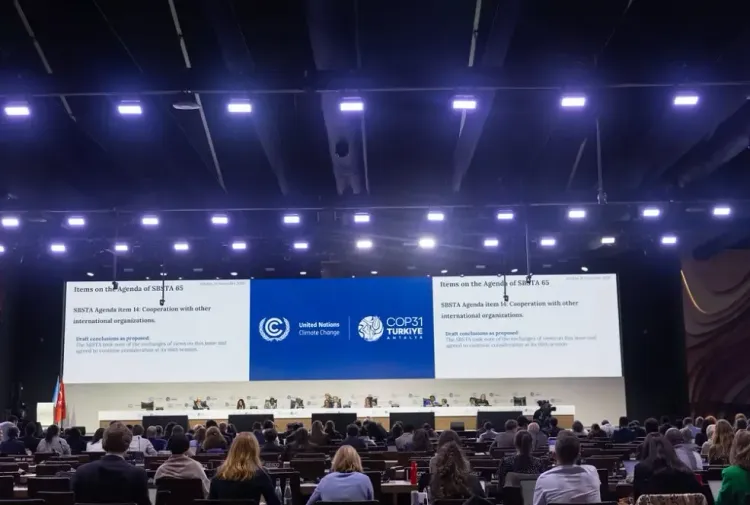
The 31st Conference of the Parties (COP31) to the United Nations Framework Convention on Climate Change has entered its decisive final week in Antalya, Turkey, with ministers now taking the helm after technical negotiators from nearly 200 countries spent seven days narrowing — but far from resolving — fundamental differences over climate finance, adaptation, mitigation, and a just transition. The summit is scheduled to conclude on 20 November 2026.
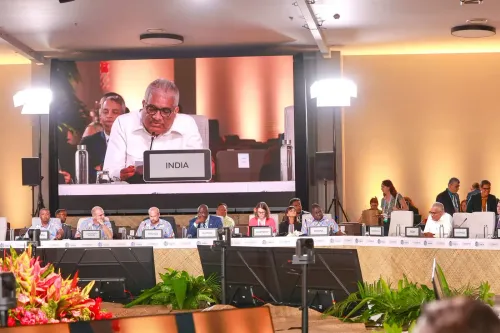
The first week exposed a sharp fault line: the European Union, United Kingdom, Japan, and Canada pushed for stronger links between national commitments and Global Stocktake outcomes, while India, China, and the Arab and African Groups insisted on nationally determined action and demanded adequate finance before accepting higher ambition thresholds. Bridging that gap now falls to ministers.
What Negotiators Agreed — and What They Did Not
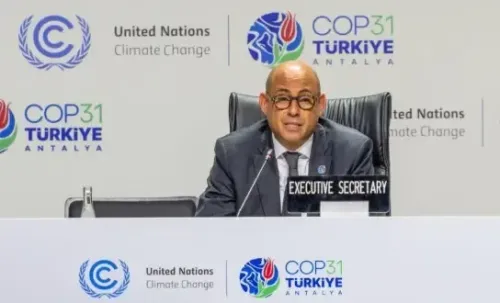
Technical teams made incremental progress on carbon markets and adaptation frameworks, but a substantial block of unresolved issues was carried forward to the high-level segment. UN Climate Change Executive Secretary Simon Stiell addressed a press summit, urging delegations to accelerate progress and avoid tactical delays. He also called on governments to make climate action more tangible for ordinary communities, pointing to the potential of sports, entertainment, and culture in building public support.
Observers are less sanguine. An unnamed observer told reporters on Sunday: 'A week into COP31 and there's a definite sense of drift. The co-hosts are lying low, work on a main political and cover text seems a mess and levels of support for the 35 per cent by 2035 electrification deal are a mystery.'
Climate Finance: The Most Contested Ground
Climate finance is widely regarded as the summit's most sensitive fault line. Harjeet Singh, Global Convener of the Fill the Fund campaign, said the first week followed a 'familiar pattern': wealthy nations arrived with what he described as 'empty pockets and fossil fuel lobbyists in their delegations.' Scaling up adaptation finance was, he argued, pushed off the agenda on day one, with no new pledge to the Loss and Damage Fund despite what he called a 'monumental finance gap.'
Singh was equally critical of the fate of the Just Transition Mechanism promised at the previous summit in Belém: 'The Just Transition Mechanism promised in Belém has been watered down overnight into a knowledge hub and an annual meeting. Workers and communities cannot eat reports,' he said. His campaign is demanding a time-bound plan to triple adaptation finance to at least $120 billion a year, with grants rather than loans, alongside new pledges to the Loss and Damage Fund.
Voices From the Front Lines
Solomon Islands Prime Minister Matthew Wale delivered one of the summit's most pointed interventions, describing climate change as an immediate lived reality rather than a future projection. 'Saltwater is creeping into our wells, king tides are washing through homes, and families are facing the painful question of whether they can remain on the land their ancestors called home,' he said.
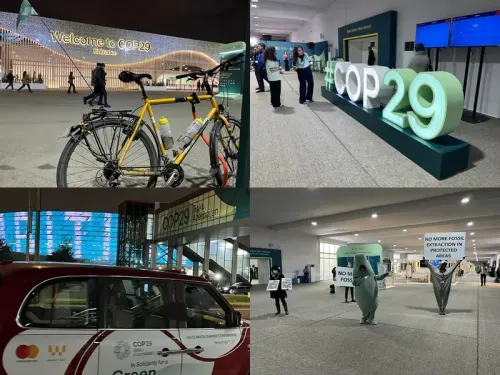
Wale announced that Solomon Islands would make the first pledge to the Green Climate Fund's next replenishment, framing it as an act of leadership despite the country's limited resources. Separately, thousands of participants at the Peoples' Climate Summit — including Indigenous peoples, social movements, peasants, and affected communities — marched through Antalya demanding climate justice.
What the Final Week Must Deliver
Negotiators are expected to push for movement on adaptation resilience targets, clarifications on just transition pathways, and resolution of outstanding questions on international carbon markets. A first draft of a possible agreement text is expected to serve as the basis for more intensive negotiations, though significant differences remain before any final text can be adopted.
This comes amid broader anxiety about whether multilateral climate cooperation can produce binding outcomes rather than statements of intent. COP31 represents the third major stocktake cycle since the Paris Agreement, and pressure is mounting for measurable commitments rather than aspirational language. The final week will be a critical test of whether Antalya can deliver more than its predecessors.
Point of View
And the political phase runs out of time. The specific deterioration of the Just Transition Mechanism — from a funded commitment at Belém to what critics are calling a glorified newsletter — is a telling signal of where the political will actually sits. The demand for $120 billion in annual adaptation finance sounds ambitious, but it is a fraction of the economic damage climate change is already inflicting on frontline nations. Antalya's real test is not whether a text gets signed, but whether that text contains any enforceable mechanism — and on current evidence, the answer is not obvious.
NationPress
15 Nov 2026
Frequently Asked Questions
What is COP31 and where is it being held?
COP31 is the 31st Conference of the Parties to the UN Framework Convention on Climate Change, the annual summit where nearly 200 nations negotiate global climate commitments. It is being held in Antalya, Turkey, and is scheduled to conclude on 20 November 2026.
What are the main disagreements at COP31?
The central divide is between developed nations — including the EU, UK, Japan, and Canada — which are pushing for stronger links between national pledges and Global Stocktake outcomes, and developing countries — led by India, China, and Arab and African Groups — which insist on nationally determined action and demand that adequate finance be delivered before higher ambition is accepted.
What is the Loss and Damage Fund and why does it matter at COP31?
The Loss and Damage Fund is a mechanism designed to channel financial support to countries already suffering irreversible climate impacts — such as rising sea levels, flooding, and displacement. Critics say no new pledges have been made to the fund during COP31's first week, leaving a 'monumental finance gap' for the most vulnerable nations.
What happened to the Just Transition Mechanism at COP31?
The Just Transition Mechanism, which was committed to at the previous summit in Belém, has reportedly been scaled back at COP31 into what campaigners describe as a 'knowledge hub and an annual meeting.' Climate campaigner Harjeet Singh said this falls far short of the funded, mandated mechanism that workers and affected communities need.
What does the final week of COP31 need to deliver?
Ministers must resolve outstanding differences on climate finance, adaptation targets, carbon markets, and just transition pathways before a final text can be adopted on 20 November. The Fill the Fund campaign is calling for at least $120 billion a year in adaptation finance via grants, new Loss and Damage Fund pledges, and a cover decision committing countries to a fossil fuel transition roadmap.