CSIR-IICT surgical adhesive enables rapid wound closure without sutures
Synopsis
CSIR-IICT has developed a clinically tested, indigenous surgical adhesive that bonds tissue instantly in moist conditions — potentially replacing sutures in a wide range of procedures from caesarean sections to laparoscopy. With one licensing deal already signed, the lab is now seeking more industry partners to scale access across Indian hospitals and emergency care.
Key Takeaways
CSIR-IICT , based in Hyderabad , has developed an indigenous biocompatible surgical adhesive based on alkyl 2-cyanoacrylate technology .
The adhesive bonds instantly under moist conditions, reducing the need for sutures in selected surgical procedures.
It has completed clinical trials and been declared safe for surgical use.
Applications span ENT , vascular , cosmetic , dental , periodontal surgeries, and procedures including appendectomy , caesarean section , and laparoscopy .
The product has been licensed to a pharmaceutical company and launched; IICT is seeking additional commercialisation partners.
IICT was established in 1944 and is one of the oldest laboratories under CSIR .
The Indian Institute of Chemical Technology (IICT), a laboratory under the Council of Scientific and Industrial Research (CSIR), has developed an indigenous surgical adhesive capable of closing wounds rapidly in both post-operative and emergency trauma settings, officials said on Saturday, 8 August. The product has already been licensed to a pharmaceutical company and launched commercially, with IICT now seeking additional industry partners for wider distribution.
What the Adhesive Does
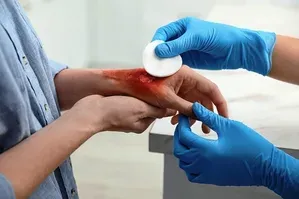
According to researchers at IICT, the adhesive is a biocompatible tissue-bonding agent based on alkyl 2-cyanoacrylate technology. It provides instant bonding under moist conditions, making it effective in trauma care and emergency procedures where dry surfaces cannot be guaranteed. Crucially, it reduces the need for sutures in selected surgical procedures while also permitting tissue sealing in surgeries that continue to use sutures.
The adhesive has undergone clinical trials and has been declared safe for surgical use. 'It is instant and ready to use, requiring no special preparation. Its biocompatible formulation makes it safe for use on humans. It reduces the need for sutures in certain surgeries. It is effective in moist conditions, enhancing surgical efficiency,' a scientist at IICT said.
Where It Can Be Used
The product is suited for a broad range of medical applications. IICT researchers have identified it as ideal for ENT, vascular, cosmetic, dental, and periodontal surgeries. Its utility has also been demonstrated in procedures including appendectomy, caesarean section, hysterectomy, laparoscopy, and biopsy.
Affordability and Accessibility Goals
'This is a safe and cheap product. Our aim is to make it more accessible to hospitals and emergency healthcare providers. While providing convenience to medical practitioners, this adhesive will also come as a comfort for patients who may no longer require sutures,' the scientist added. The emphasis on cost and accessibility positions the product as a potential alternative to imported surgical adhesives currently used in Indian hospitals.
About IICT and CSIR's Commercialisation Push
IICT, established in Hyderabad in 1944, is among the oldest laboratories under CSIR and has a long track record of translating chemical and biotech research into industrial applications. Both CSIR and IICT are actively seeking industry partnerships to commercialise emerging technologies. Several state governments have also expressed interest in adopting and promoting indigenous technologies developed under the CSIR umbrella. With the licensing deal already in place, IICT is now looking to scale the adhesive's reach across public and private healthcare systems.
Point of View
And a domestically developed, clinically validated tissue adhesive could meaningfully cut procedure costs in public hospitals. The IICT product's real test, however, is not the lab bench — it is the supply chain. Licensing one pharmaceutical partner is a start, but surgical adhesives require cold-chain logistics, regulatory shelf-life compliance, and procurement integration with government health schemes like Ayushman Bharat. The science appears sound; the harder task is whether CSIR's commercialisation machinery can move fast enough to give this product genuine reach before imported alternatives entrench further.
NationPress
23 Sept 2026
Frequently Asked Questions
What is the surgical adhesive developed by CSIR-IICT?
It is an indigenous, biocompatible tissue adhesive based on alkyl 2-cyanoacrylate technology, developed by the Indian Institute of Chemical Technology (IICT) under CSIR. It provides instant wound closure under moist conditions and reduces the need for sutures in selected surgical procedures.
Has the CSIR-IICT surgical adhesive been tested for safety?
Yes. The adhesive has undergone clinical trials and has been declared safe for surgical use. Its biocompatible formulation is designed for direct use on human tissue without special preparation.
Which surgeries can use this adhesive?
The adhesive is suited for ENT, vascular, cosmetic, dental, and periodontal surgeries. It has also been highlighted for use in appendectomy, caesarean section, hysterectomy, laparoscopy, and biopsy procedures.
Is the CSIR-IICT adhesive available commercially?
Yes. IICT has licensed the product to a pharmaceutical company and it has been launched. The laboratory is now actively seeking additional industry partners to expand its commercial reach and hospital accessibility.
Why does this adhesive matter for Indian healthcare?
It offers a domestically developed, affordable alternative to imported surgical adhesives, with the potential to reduce procedure costs and improve care in trauma and emergency settings. IICT has stated its goal is to make the product accessible to hospitals and emergency healthcare providers across India.