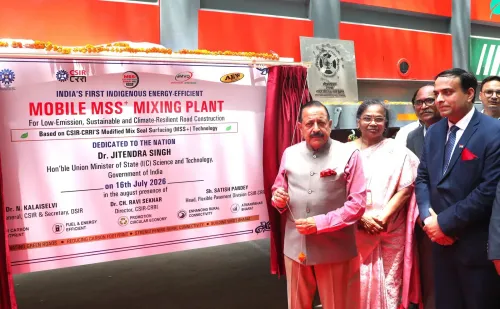
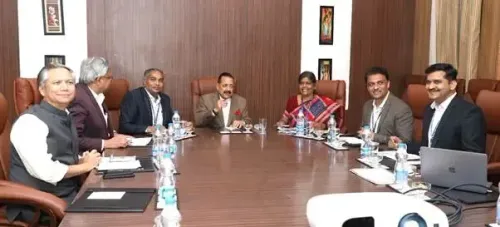
Dr. Jitendra Singh marks CSIR's 85th Foundation Day

Synopsis
Union Minister Dr. Jitendra Singh celebrated CSIR's 85th Foundation Day on 25 September 2026, highlighting the 37-lab network's landmark innovations — from the Swaraj Tractor and Saheli pill to bio-jet fuel and a hydrogen catamaran — and launching commemorative editions including a postal stamp and mascot CIRA.
Key Takeaways
CSIR was established on 26 September 1942 and now operates 37 national laboratories across India.
Historic innovations include the Swaraj Tractor , indelible election ink , Saheli contraceptive pill , and indigenous Paracetamol technology .
Recent breakthroughs span bio-jet fuel , steel slag roads , the HANSA-NG trainer aircraft , a sickle cell anaemia test kit , and a hydrogen fuel-cell catamaran .
The CSIR Technology Compendium and Industry Connect Short Film aim to accelerate commercial adoption of laboratory technologies.
Commemorative launches include a CSIR@85 Postal Stamp , Tech Connect Special Issue , and mascot named CIRA .
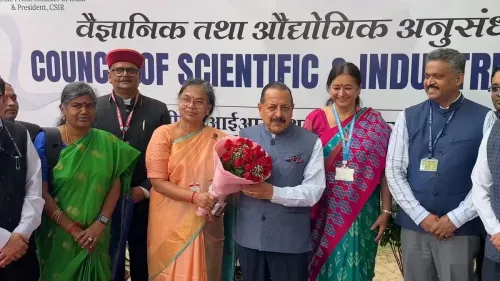
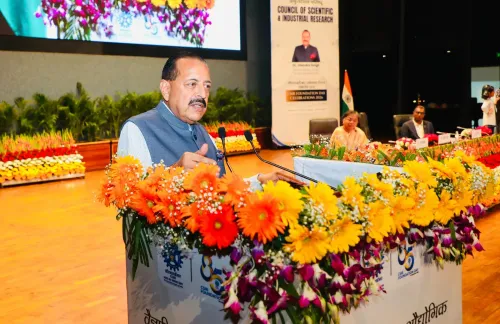
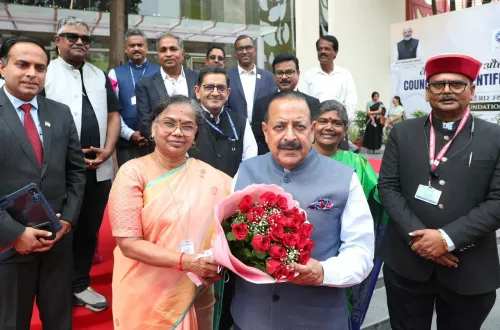
Eighty-four years of indelible election ink, life-saving contraceptives, and the tractor that mechanised a hungry nation — and Union Science and Technology Minister Dr. Jitendra Singh wants India to remember every milestone. On Friday, 25 September 2026, Singh marked the 85th Foundation Day of the Council of Scientific and Industrial Research (CSIR), cataloguing the organisation's sweep from post-independence necessity to a 21st-century innovation engine.
Eight decades, 37 labs, and a list that reads like a national timeline
Founded on 26 September 1942 — just five years before Independence — CSIR was built to answer a blunt question: could India manufacture its own future? The answer has come in the form of 37 national laboratories spread across the country, bridging university research and factory floor. The minister's post ticked off landmarks that span generations: the Swaraj Tractor, India's first indigenous agricultural machine developed in the 1960s; the indelible election ink that has marked democratic participation for decades; the Saheli contraceptive pill, a non-steroidal oral contraceptive developed entirely within India; and indigenous Paracetamol technology that anchored domestic pharmaceutical manufacturing.
The National Aroma Mission added a quieter revolution — pushing aromatic crop cultivation into smallholder farms and feeding India's fragrance and essential-oil industries. Each of these was not a laboratory curiosity; each shipped, scaled, and changed daily life.
From bio-jet fuel to a hydrogen catamaran — CSIR's recent frontier
The newer entries on the list signal where CSIR is placing its bets. Bio-jet fuel and steel slag roads — turning industrial waste into highway material — represent CSIR's pivot toward circular-economy and low-carbon mandates. The HANSA-NG, a next-generation trainer aircraft developed by CSIR's National Aerospace Laboratories, puts India in a small global club capable of indigenous civil-aviation training platforms. A sickle cell anaemia test kit addresses one of India's most persistent public-health burdens, especially in tribal communities. The hydrogen fuel-cell catamaran stakes a claim in clean maritime transport, and the RO Bus — a water-purification vehicle — brings safe drinking water to underserved populations on wheels.
Together they sketch a consistent institutional character: applied, deployment-focused, and oriented toward gaps the market has not filled on its own.
The CSIR@85 commemoration — stamp, compendium, and mascot CIRA
To mark the milestone, a set of commemorative launches was announced: a Special CSIR@85 Postal Stamp, a Tech Connect Special Issue, a CSIR Technology Compendium documenting the organisation's deployable technologies for potential industry partners, an Industry Connect Special Short Film, and a special mascot named CIRA. The compendium and the industry film are particularly forward-looking — they are designed to compress the gap between laboratory shelf and commercial adoption, a chronic challenge for public R&D organisations worldwide.
India's push for technological self-reliance — formalised through programmes like Aatmanirbhar Bharat (self-reliant India) — gives CSIR's 85th anniversary more than ceremonial weight. The organisation is, in many respects, the original blueprint for that ambition, predating the slogan by eight decades. Whether the latest compendium triggers the next Swaraj-scale deployment is the question CSIR's next chapter will have to answer.
Point of View
A persistent weak link in India's innovation system. If the industry-connect initiatives generate real licensing or co-development deals, CSIR's 85th could mark not just a historical reckoning but a strategic inflection point.
NationPress
25 Sept 2026
Frequently Asked Questions
When was CSIR established and how many labs does it have?
CSIR was established on 26 September 1942 and today operates a network of 37 national laboratories focused on applied science and industrial research across India.
What are CSIR's most famous inventions?
CSIR's landmark innovations include the Swaraj Tractor (India's first indigenous tractor), indelible election ink , the Saheli contraceptive pill , and indigenous Paracetamol technology , among many others spanning agriculture, health, and transport.
What is the HANSA-NG aircraft developed by CSIR?
The HANSA-NG is a next-generation indigenous trainer aircraft developed by CSIR's National Aerospace Laboratories , designed for civil aviation pilot training in India.
What is CIRA, the CSIR mascot?
CIRA is a special mascot launched as part of the CSIR@85 Foundation Day commemorations in September 2026 to mark the organisation's 85-year journey in science and innovation.
What is the CSIR Technology Compendium?
The CSIR Technology Compendium is a publication launched on CSIR's 85th Foundation Day that documents the organisation's deployable technologies, aimed at helping industry partners identify and adopt innovations developed in CSIR's laboratories.