Cyclone Murasu: 14 NDRF teams deployed in Andhra Pradesh, 6 districts worst-hit
Synopsis
Cyclone Murasu completed its landfall on Andhra Pradesh's coast by 9 a.m. on Tuesday with 14 NDRF teams on the ground and six districts flagged as worst-hit. The storm is expected to weaken to a deep depression by midnight — but its wide impact zone spans five states, making early coordination the real story here.
Key Takeaways
Cyclone Murasu made landfall in Andhra Pradesh starting at 1:00 a.m. on 3 November , completing the process by 9:00 a.m. according to IMD data.
NDRF deployed 14 teams in Andhra Pradesh, including 3 teams relocated from Tamil Nadu.
Six districts in Andhra Pradesh have been identified as the worst-affected zones.
Five states — Andhra Pradesh , Odisha , Chhattisgarh , Telangana , and northern Tamil Nadu — are in the cyclone's impact zone.
The system is expected to weaken to a cyclonic storm and then a deep depression by midnight on Tuesday.
No casualties have been reported as of the latest official update.
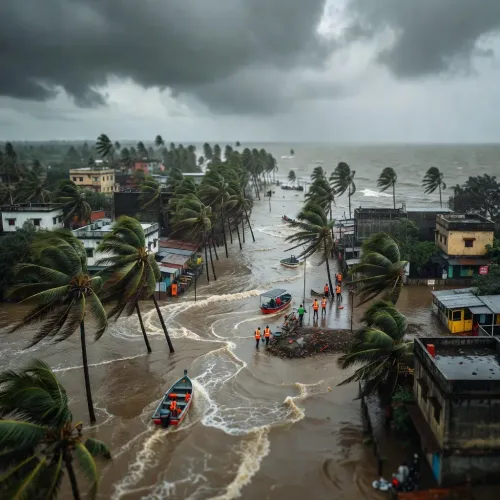
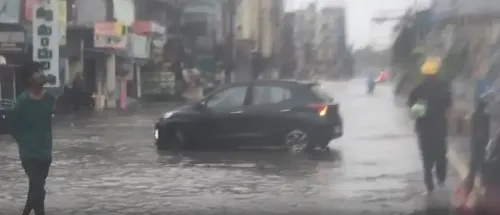
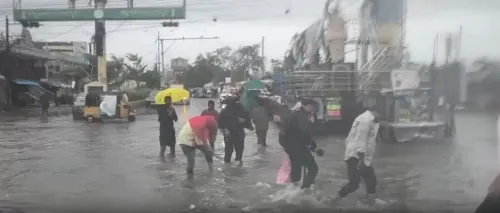
The National Disaster Response Force (NDRF) has deployed 14 teams across Andhra Pradesh following the landfall of Cyclone Murasu on Tuesday, 3 November, with six districts identified as the areas facing the most significant impact. Authorities confirmed that no casualties had been reported as of the latest update.
Landfall and Timeline
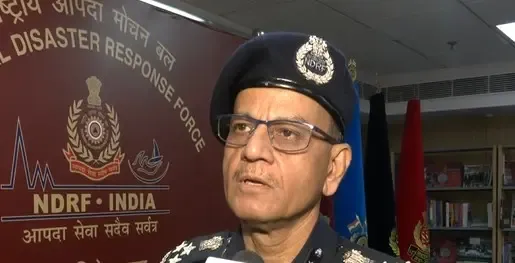
NDRF Deputy Inspector General (DIG) Mohsen Shahedi said the landfall process began at around 1:00 a.m. on Tuesday and was completed by approximately 9:00 a.m., according to information received from the India Meteorological Department (IMD). Three of the 14 NDRF teams were relocated from Tamil Nadu to reinforce response efforts in Andhra Pradesh.
Six Districts Identified as Worst-Affected
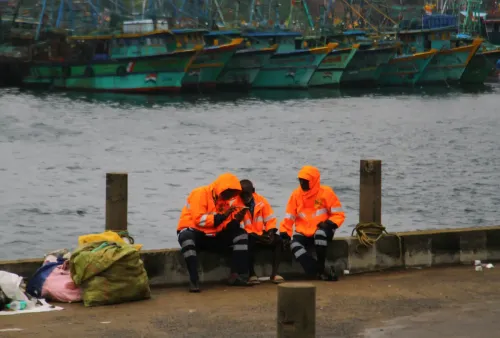
The NDRF has identified six districts in Andhra Pradesh as the zones likely to bear the brunt of the cyclone, though the specific districts were not named in official statements. NDRF personnel are operating in coordination with the State Disaster Response Force (SDRF) and local administration to carry out ground-level relief and rescue operations. This kind of multi-agency coordination reflects the standard response protocol for Category-level cyclonic systems making landfall on India's eastern coast.
Five States in the Impact Zone
DIG Shahedi confirmed that five states were identified as potentially affected by Cyclone Murasu. Beyond Andhra Pradesh, parts of Odisha, Chhattisgarh, Telangana, and northern Tamil Nadu were also expected to experience strong winds and heavy rainfall. NDRF teams have been pre-positioned across all five states. Shahedi noted that 'the impact zone of a cyclone is usually extensive due to strong winds and rainfall,' underscoring the wide geographic footprint such systems typically carry.
Cyclone Expected to Weaken Rapidly
According to IMD projections shared with NDRF, the system is expected to downgrade from a cyclone to a cyclonic storm shortly, and further to a deep depression by midnight on Tuesday. Shahedi indicated that this trajectory would significantly limit the storm's destructive reach beyond Andhra Pradesh. 'The impact of this cyclone outside Andhra is expected to be less,' he said. This is consistent with the typical weakening pattern of Bay of Bengal systems once they cross the coastline and encounter drier inland air masses.
No Casualties Reported So Far
Authorities confirmed that no casualties had been reported as of Tuesday morning, attributing this in part to pre-emptive evacuations and early deployment of response teams. Monitoring operations are ongoing across the affected districts. With the system expected to weaken through the day, focus is likely to shift toward damage assessment and restoration of essential services in the coming hours.
Point of View
If it holds, would reflect a genuine improvement in India's cyclone preparedness architecture — pre-emptive NDRF deployment, multi-state coordination, and early IMD tracking all appear to have worked as designed. Yet the absence of named districts in official communications is a transparency gap that could complicate accountability if damage reports emerge later. Cyclone Murasu also arrives as a stress test for Andhra Pradesh's relatively new administrative structure, and how quickly the state pivots from response to restoration will matter more than the landfall headline. The broader lesson from repeated Bay of Bengal cyclones is that India is getting better at saving lives but slower at restoring livelihoods — a gap that seldom makes the top of disaster coverage.
NationPress
3 Nov 2026
Frequently Asked Questions
Where did Cyclone Murasu make landfall?
Cyclone Murasu made landfall on the Andhra Pradesh coast, with the process beginning at around 1:00 a.m. on Tuesday, 3 November, and completing by approximately 9:00 a.m. according to the India Meteorological Department (IMD).
How many NDRF teams have been deployed for Cyclone Murasu?
A total of 14 NDRF teams have been deployed across Andhra Pradesh, with three of those teams relocated from Tamil Nadu. Additional NDRF teams have also been positioned in other affected states including Odisha, Chhattisgarh, Telangana, and northern Tamil Nadu.
Which states are affected by Cyclone Murasu?
Five states have been identified as falling within the cyclone's impact zone: Andhra Pradesh, Odisha, Chhattisgarh, Telangana, and northern Tamil Nadu. Andhra Pradesh is expected to bear the most significant impact, while effects in other states are projected to be comparatively limited.
Are there any casualties from Cyclone Murasu?
No casualties had been reported as of the latest official update on Tuesday, 3 November. Authorities are continuing to monitor the situation and carry out response operations across the six worst-affected districts.
When will Cyclone Murasu weaken?
According to IMD projections, Cyclone Murasu is expected to downgrade to a cyclonic storm shortly after landfall and further weaken into a deep depression by midnight on Tuesday. NDRF DIG Mohsen Shahedi stated that this trajectory should significantly reduce the storm's impact outside Andhra Pradesh.