Defence Minister Rajnath Singh honours 26/11 martyrs
Synopsis
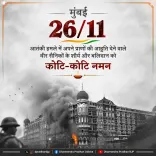
On the 26/11 anniversary, Union Defence Minister Rajnath Singh honoured Mumbai attack victims and the police and security personnel who died stopping the 2008 siege, restating India's pledge to eliminate terrorism in all its forms.
Key Takeaways
Union Defence Minister Rajnath Singh paid tributes on the 26/11 anniversary to victims and to security personnel who died.
The 26/11 Mumbai attacks ran from 26 to 29 November 2008, were carried out by Lashkar-e-Taiba militants, and killed 166 people.
Singh saluted police and security forces who stood firm in the face of terror and called their sacrifice an enduring inspiration.
He restated India's commitment to eliminating terrorism in all its forms.
The National Investigation Agency was created by legislation in December 2008 after investigative gaps exposed by the attacks.
The siege lasted three nights and left 166 people dead. On its anniversary, Union Defence Minister Rajnath Singh paid humble tributes to the victims of the 26/11 Mumbai terror attacks and remembered the police and security personnel who made the supreme sacrifice defending the nation.
Writing on 26 November, Singh said he was paying his humble tributes to the victims and remembering the bravehearts who died in defence of the country. He saluted the courage, valour and unwavering dedication of police and security personnel who, in his words, 'stood firm in the face of terror.' Their courage, he added, reflects the highest traditions of duty, sacrifice and service. Their supreme sacrifice, he said, remains an enduring inspiration. India, he underlined, remains steadfast in its commitment to eliminating terrorism in all its forms.
166 dead in the 26/11 Mumbai siege
The 26/11 attacks began on 26 November 2008 and stretched into 29 November. Militants of Lashkar-e-Taiba struck multiple sites across Mumbai. The coordinated assault killed 166 people, including civilians and the security personnel who moved in to stop it.
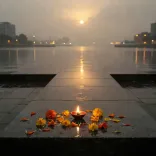
Families of the dead still mark the date each year. So do the forces that answered the first distress calls, Mumbai Police and the National Security Guard among them, commemorated for their role in ending the siege.
A salute to those who faced the gunmen
Singh's message dwelt on the officers who did not step back. He described their stand as a reflection of duty and service to the nation, and called their sacrifice an enduring inspiration. The tribute is addressed as much to victims' families as to the ranks still serving in the police and the armed forces.
From the NIA to a standing zero-tolerance line
India marks 26 November every year with official tributes that restate a consistent zero-tolerance position on terrorism. The 2008 attacks exposed gaps in investigation, coastal watch and intelligence sharing. Within weeks, Parliament created the National Investigation Agency through legislation in December 2008.
Those attacks also drove lasting changes to coastal security and the legal framework for terror cases. Successive governments have used the anniversary to signal continuity in counter-terror policy, irrespective of the party in power. Singh's closing line, that India remains steadfast in eliminating terrorism in all its forms, sits in that long, unbroken register.
The next test of that language will come at multilateral counter-terrorism forums, and in any parliamentary mention of pending anti-terror law or coastal security upgrades.
Point of View
Rajnath Singh is restating a zero-tolerance line that successive governments have held since 2008. The structural legacy of that night, the National Investigation Agency and a tighter coastal-security architecture, still frames how New Delhi talks about terror. The political content is the insistence that 26/11 remains a national wound, not a partisan one.
NationPress
26 Nov 2026
Frequently Asked Questions
When did the 26/11 Mumbai terror attacks take place?
The 26/11 attacks began on 26 November 2008 and continued until 29 November 2008 in Mumbai. Lashkar-e-Taiba militants struck multiple sites in a coordinated assault.
How many people were killed in the 26/11 Mumbai attacks?
The attacks killed 166 people, including civilians and security personnel. Official tributes each year remember both the victims and the officers who responded.
What did Rajnath Singh say on the 26/11 anniversary?
Union Defence Minister Rajnath Singh paid humble tributes to the victims and saluted police and security personnel who stood firm in the face of terror. He said their sacrifice remains an enduring inspiration and that India remains steadfast in eliminating terrorism in all its forms.
Why was the National Investigation Agency created?
The National Investigation Agency was established by legislation in December 2008 in direct response to investigative gaps exposed by the 26/11 attacks. It was part of a wider overhaul of terror investigation and coastal security.
Who carried out the 26/11 Mumbai terror attacks?
The attacks were carried out by militants of Lashkar-e-Taiba. Mumbai Police and the National Security Guard were among the forces that responded and helped end the siege.