Delhi AQI hits 'very poor' at 330; Jahangirpuri records severe 451 before Diwali
Synopsis
With Diwali just days away, Delhi's air quality has already crossed into 'severe' territory at eight monitoring stations — and Jahangirpuri's 451 reading is a warning of what firecracker night could bring. GRAP Stage 2 is in force, but the Supreme Court's green-cracker window on 7–8 November means the city is heading into its most dangerous pollution weekend of the year from an already-compromised baseline.
Key Takeaways
Delhi's average AQI stood at 330 ('very poor') at 8 am on 3 November 2026 , according to CPCB data.
Jahangirpuri recorded the highest reading at 451 ('severe'); at least 8 stations logged readings above 400 .
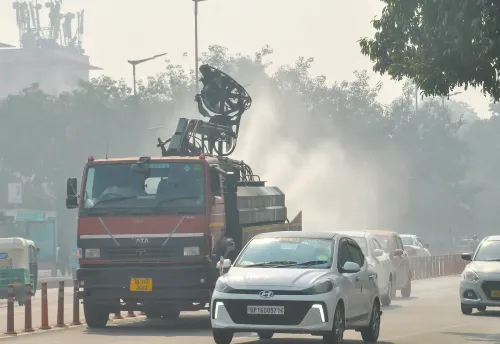
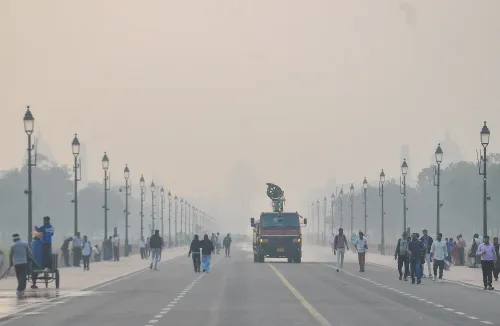
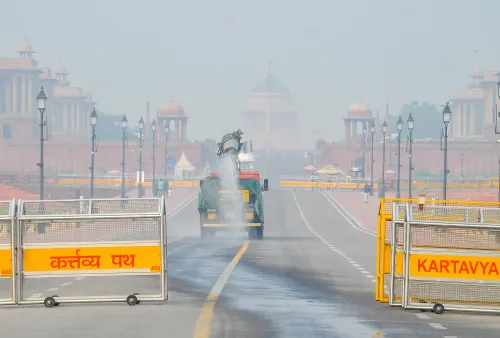
The CAQM invoked GRAP Stage 2 on 2 November , mandating anti-smog guns, road sweeping, water sprinkling, and higher parking charges.
GRAP Stage 1 had already been in effect since 21 October , when air quality first hit 'poor'.
The Supreme Court has permitted green firecrackers in Delhi-NCR on 7 and 8 November (6–7 am and 8–10 pm); a full ban resumes on 9 November .
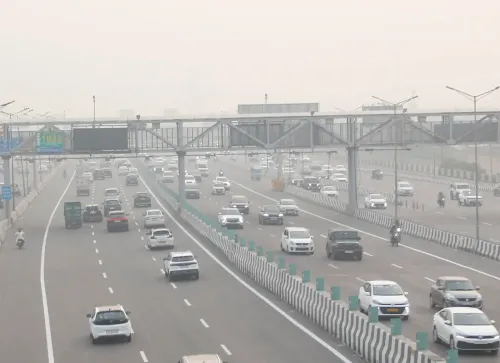
High-rise buildings in Noida and Gurugram were barely visible through haze, signalling NCR-wide impact.
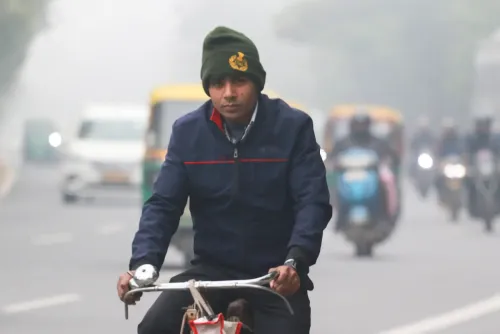
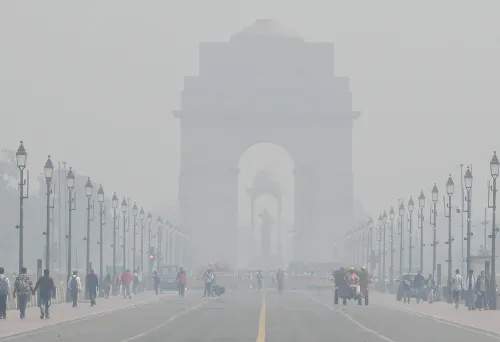
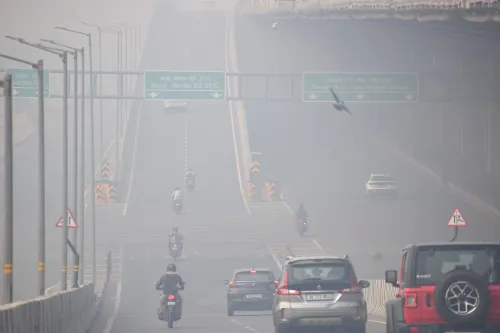
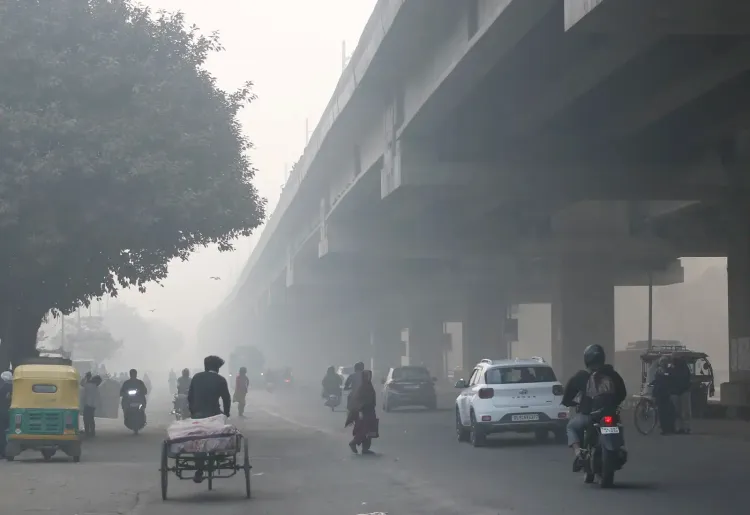
A dense blanket of smog settled over New Delhi on the morning of Tuesday, 3 November 2026, with the city's average Air Quality Index (AQI) reaching 330 by 8 am — firmly in the 'very poor' category — according to data from the Central Pollution Control Board (CPCB). Jahangirpuri logged the worst reading across the region at 451, pushing it into the 'severe' bracket, with Diwali less than a week away.
Station-by-Station Breakdown
At least eight monitoring stations recorded AQI readings above 400 on Tuesday morning, signalling 'severe' air quality across wide swathes of the capital. Among the highest readings: Rohini at 431, Punjabi Bagh at 424, DTU at 409, and Bawana at 409.
Other stations also recorded alarming figures: Pusa at 387, Mundka at 397, North Campus, Delhi University at 384, Burari Crossing at 383, Chandni Chowk at 354, Major Dhyan Chand National Stadium at 350, and Commonwealth Sports Complex at 349. Comparatively lower, but still elevated, were NSUT Jaffarpur at 324, Tikri Kalan at 275, Karala at 299, and NSIT Dwarka at 270.
How Delhi's Air Got Here
This is not an overnight development. Delhi recorded its first 'very poor' AQI reading of the season on Monday, 2 November, when the index stood at 312 at 9 am before climbing to 324 by 4 pm and further to 331 by Tuesday morning, according to the Commission for Air Quality Management (CAQM). The progressive deterioration follows the activation of GRAP Stage 1 measures on 21 October, when air quality first slipped into the 'poor' category.
The smog's impact extended well beyond the city limits. High-rise buildings in Noida and Gurugram were barely visible through the thick haze on Tuesday, underscoring the regional scale of the pollution crisis.
GRAP Stage 2 Measures Now in Force
The CAQM invoked GRAP Stage 2 restrictions across Delhi-NCR on Monday in response to the 'very poor' readings. Under Stage 2, authorities are mandated to intensify dust-control efforts and reduce private vehicle usage. Specific measures include mechanical sweeping of roads, water sprinkling, deployment of anti-smog guns, and increased parking charges to discourage the use of private vehicles. Public transport is being actively promoted as an alternative.
Notably, GRAP is a graded emergency protocol — Stage 1 addresses 'poor' air, Stage 2 'very poor', Stage 3 'severe', and Stage 4 addresses 'severe-plus' emergencies. With readings already breaching the 'severe' threshold at multiple stations, pressure is mounting on authorities to consider escalating to Stage 3.
Supreme Court Order on Diwali Firecrackers
Against this backdrop, the Supreme Court has permitted the use of green firecrackers in Delhi-NCR on 7 and 8 November — with strictly defined windows of 6 am to 7 am and 8 pm to 10 pm. A complete ban on firecrackers will return on 9 November, the day after Diwali. Environmentalists and health experts have cautioned that even green crackers, burned en masse on Diwali night (8 November), risk pushing AQI readings into emergency territory given the already-compromised baseline.
What the Data Means for Residents
Under CPCB classifications, an AQI of 301–400 is 'very poor' and can cause respiratory illness on prolonged exposure; 401–500 is 'severe', affecting healthy individuals and seriously impacting those with existing lung or heart conditions. With the average hovering at 330 and several pockets already at 400+, health authorities are urging vulnerable groups — children, the elderly, and those with respiratory conditions — to minimise outdoor activity.
All eyes are now on whether CAQM escalates to Stage 3 restrictions before Diwali and how the firecracker season this weekend shapes the pollution trajectory in the days that follow.
Point of View
Stage 2 by the first week of November, and firecracker season arriving just as the pollution curve is steepest. The Supreme Court's green-cracker window is a compromise that satisfies neither environmentalists nor those who want Diwali celebrated without restriction; green crackers still emit particulates, and with the AQI baseline already above 330, even a modest firecracker surge on 8 November could breach Stage 3 thresholds. CAQM's hesitation to pre-emptively escalate to Stage 3 — despite multiple stations already in 'severe' territory — deserves scrutiny. Delhi's annual pollution emergency is no longer a surprise event; the question is whether emergency governance is keeping pace with the data.
NationPress
3 Nov 2026
Frequently Asked Questions
What is Delhi's AQI today, 3 November 2026?
Delhi's average AQI stood at 330 — classified as 'very poor' — at 8 am on 3 November 2026, according to CPCB data. Jahangirpuri recorded the highest individual reading at 451, placing it in the 'severe' category.
What is GRAP Stage 2 and what restrictions does it impose?
GRAP Stage 2 is the second level of the Graded Response Action Plan, triggered when Delhi's AQI enters the 'very poor' range (301–400). It mandates mechanical road sweeping, water sprinkling, deployment of anti-smog guns, and increased parking charges to discourage private vehicle use — all aimed at reducing dust and vehicular pollution.
Are firecrackers allowed in Delhi on Diwali 2026?
The Supreme Court has permitted the use of green firecrackers in Delhi-NCR on 7 and 8 November within defined time windows: 6 am to 7 am and 8 pm to 10 pm. A complete ban on all firecrackers comes back into effect from 9 November.
Which areas in Delhi recorded the worst air quality on 3 November?
Jahangirpuri recorded the worst reading at 451 ('severe'), followed by Rohini at 431, Punjabi Bagh at 424, DTU and Bawana both at 409. At least eight stations in total recorded readings above 400.
Why does Delhi's air quality worsen before Diwali every year?
Delhi's pre-Diwali pollution spike is driven by a combination of stubble burning in neighbouring states, dropping winter temperatures that trap pollutants close to the ground, reduced wind speeds, and increased vehicular and industrial emissions. Diwali firecrackers add a sharp short-term spike on top of an already-elevated baseline.