Rajasthan Launches Integrated Clean Energy Policy
Synopsis
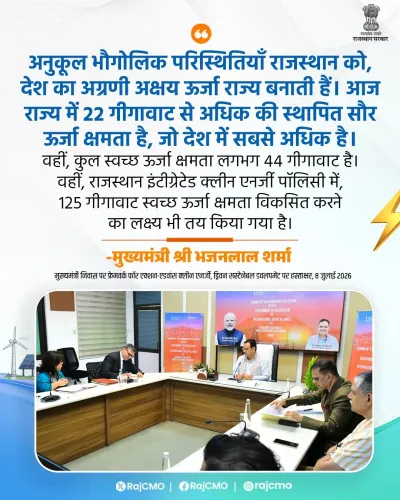
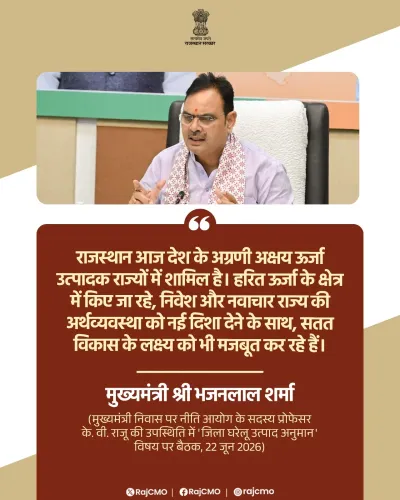
The Rajasthan government has implemented the Rajasthan Integrated Clean Energy Policy, unifying the state's renewable energy frameworks under Chief Minister Bhajanlal Sharma. The move builds on Rajasthan's solar and wind resources and aligns with India's 500 GW non-fossil fuel target.
Key Takeaways
The Rajasthan state government has implemented the Rajasthan Integrated Clean Energy Policy as announced on November 3, 2026 .
Chief Minister Bhajanlal Sharma , in office since December 2023 , was directly tagged in the announcement.
The policy unifies solar, wind, and other clean energy frameworks previously managed separately, succeeding the Rajasthan Solar Energy Policy 2019 .
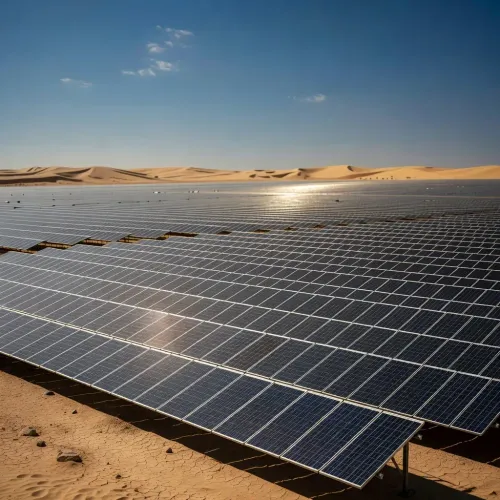
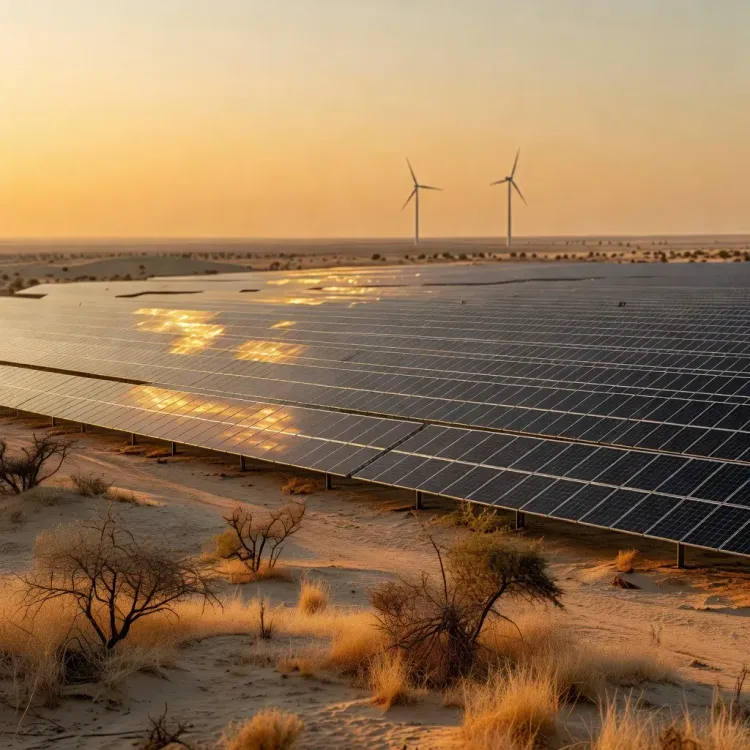
Rajasthan hosts the Bhadla Solar Park , one of the world's largest solar installations, underlining the state's renewable credentials.
The policy aligns Rajasthan with India's national target of 500 GW of non-fossil fuel capacity.
Specific capacity targets, investment commitments, and implementation timelines are yet to be released in official government notifications.
Rajasthan — a state that already hosts one of the world's largest solar parks — has taken another step toward anchoring its identity as India's clean energy capital. The Chief Minister's Office of Rajasthan announced on Tuesday, November 3, 2026 that the state government has implemented the Rajasthan Integrated Clean Energy Policy, a unified framework aimed at accelerating the state's transition to renewable power.
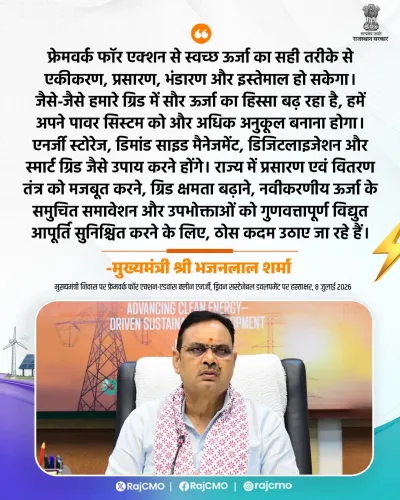
The CMO's post, tagging Chief Minister Bhajanlal Sharma, declared: 'Rajya sarkar ne Rajasthan Ekikrit Swachh Urja Niti laagu ki hai' — 'The state government has implemented the Rajasthan Integrated Clean Energy Policy' — under the banner of #AapnoAgraniRajasthan ('Our Frontrunner Rajasthan'), the government's signature campaign positioning the state as a national leader.
Why Rajasthan Is Built for This Moment
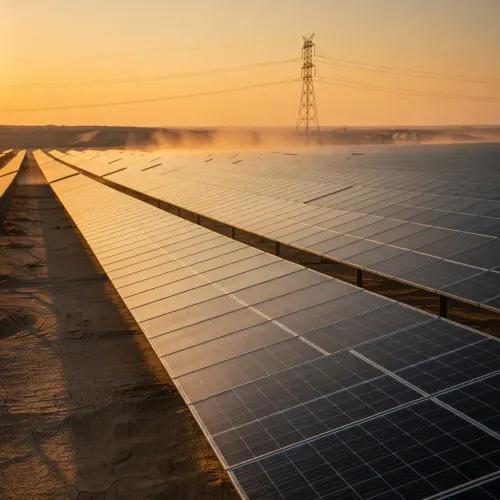
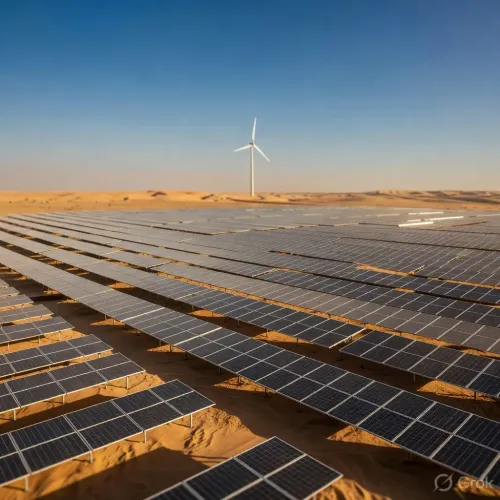
No Indian state is better positioned to make this bet. Rajasthan sits atop some of the country's most abundant solar and wind corridors, and its track record backs the ambition. The Bhadla Solar Park in Jodhpur district — spanning over 14,000 acres — is among the largest solar installations on the planet, a monument to how aggressively successive Rajasthan governments have courted renewable investment over the past decade.
The state's earlier Rajasthan Solar Energy Policy 2019 set the template: targeted capacity additions, developer incentives, and a streamlined approvals process. The new Integrated Clean Energy Policy appears to consolidate and extend that architecture, bringing solar, wind, and other clean sources under a single unified framework rather than managing them through separate sectoral policies.
Fitting Into India's Larger Clean Energy Push
The timing is deliberate. India has committed to reaching 500 GW of non-fossil fuel capacity as part of its climate obligations, and state-level policy coherence is the machinery that makes national targets real. A unified Rajasthan policy — rather than a patchwork of solar-only or wind-only frameworks — signals to developers and investors that the state is ready to serve as a one-stop destination for large-scale clean energy projects.
Renewable energy developers and rural landowners stand to be among the most immediate beneficiaries, as integrated policies typically streamline land acquisition, grid connectivity, and revenue-sharing mechanisms that fragmented frameworks often leave tangled. The full details of capacity targets, investment commitments, and implementation timelines are expected to emerge in subsequent government notifications and the official policy document.
For CM Bhajanlal Sharma, who took office in December 2023, the policy rollout is an early signal that his administration intends to compete on the clean energy stage — not just inherit Rajasthan's solar legacy, but expand it. The desert state, it seems, is still just getting started.
Point of View
Where states race to attract large-scale project investment by offering the clearest policy environment. By replacing fragmented sectoral frameworks with a unified instrument, the Bhajanlal Sharma government is signalling to developers that Rajasthan's regulatory risk has been reduced. Politically, the rollout anchors the BJP administration's governance narrative around economic development and India's climate commitments simultaneously — a dual dividend in a state where energy policy has historically been a vote-mover in rural constituencies dependent on grid reliability and land-lease income from solar farms.
NationPress
3 Nov 2026
Frequently Asked Questions
What is the Rajasthan Integrated Clean Energy Policy?
It is a unified clean energy policy implemented by the Rajasthan state government in November 2026, consolidating the state's solar, wind, and other renewable energy frameworks under a single framework to attract investment and accelerate clean power capacity addition.
Who announced the Rajasthan Integrated Clean Energy Policy?
The announcement was made by the Chief Minister's Office of Rajasthan, tagging Chief Minister Bhajanlal Sharma, on November 3, 2026.
What was Rajasthan's previous clean energy policy?
The Rajasthan Solar Energy Policy 2019 was the key predecessor, setting targets for solar capacity addition and offering incentives for developers. The new integrated policy consolidates and extends that framework.
Why is Rajasthan important for India's renewable energy goals?
Rajasthan has some of India's most abundant solar and wind resources and hosts the Bhadla Solar Park, one of the world's largest solar installations. Its policies directly support India's national target of 500 GW of non-fossil fuel capacity.
What are the specific targets of the Rajasthan Integrated Clean Energy Policy?
Specific capacity targets and investment commitments have not yet been made public. The government is expected to release detailed notifications and an official policy document in the coming weeks.