Delhi gets 300 new e-buses; BJP claims world's 3rd-largest electric fleet
Synopsis
Delhi's ruling BJP claims the capital now operates the world's third-largest electric bus fleet — behind only Shenzhen and Beijing — after adding 300 more e-buses to a DTC fleet that has grown by 2,386 units in just 16 months. The announcement doubles as a political broadside against Arvind Kejriwal, who is accused of buying zero buses in a decade.
Key Takeaways
Delhi BJP President Harsh Malhotra welcomed the induction of 300 new electric buses into the DTC fleet on 7 July .
The BJP government under CM Rekha Gupta claims to have added 2,386 electric buses in 16 months .
DTC now operates 6,297 buses total — 4,538 electric and 1,759 CNG .
Delhi is claimed to have the world's third-largest electric bus fleet , after Shenzhen and Beijing .
Malhotra accused former CM Arvind Kejriwal of purchasing zero buses during a 10-year tenure .
Malhotra also criticised Kejriwal's letter to PM Modi raising concerns over E20 ethanol-blended fuel .
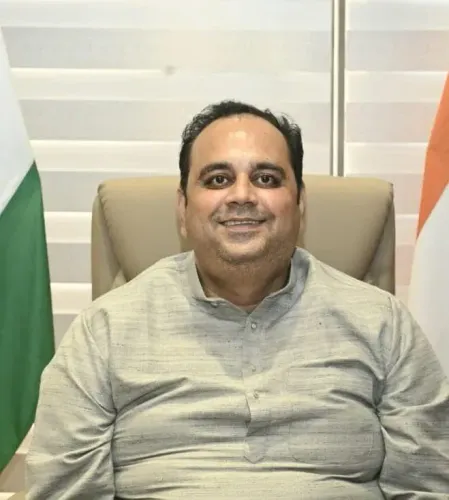
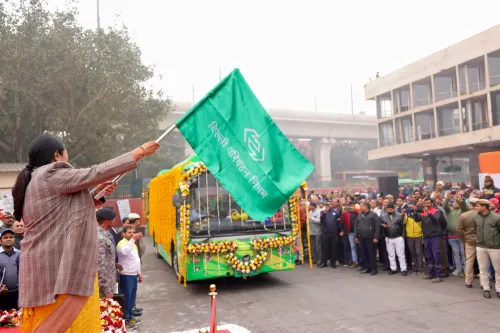
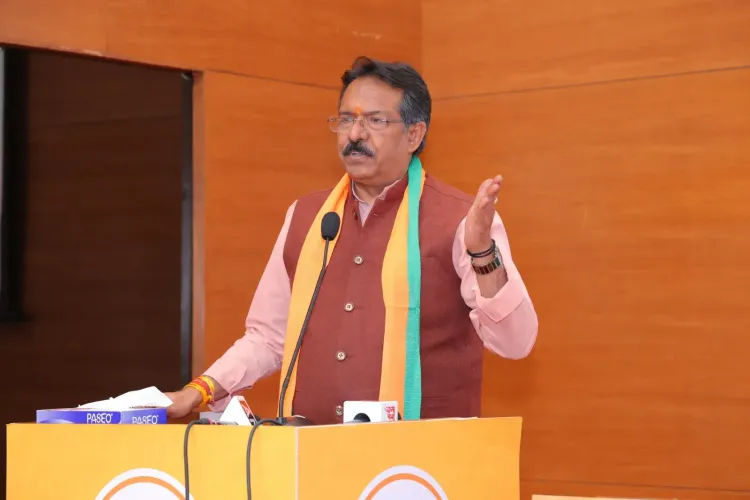
Delhi BJP President Harsh Malhotra on Tuesday, 7 July welcomed the state government's decision to induct 300 new electric buses into the Delhi Transport Corporation (DTC) fleet, calling it a continuation of what he described as a transformation of the capital's public transport system under the Bharatiya Janata Party (BJP)-led administration.
Scale of the Expansion
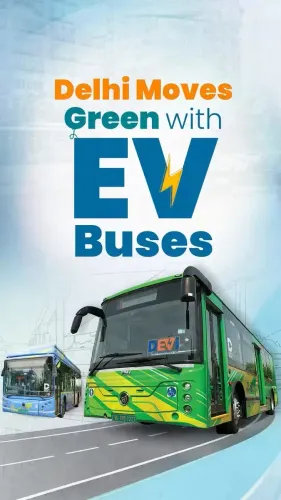
Malhotra, who also holds the position of Minister of State for Road Transport and Highways, said the BJP government under Chief Minister Rekha Gupta has added 2,386 new electric buses to Delhi's roads in just 16 months of governance. With the latest addition, the DTC now operates a total fleet of 6,297 buses, comprising 1,759 CNG buses and 4,538 electric buses.
Malhotra further claimed that Delhi now holds the distinction of operating the world's third-largest electric bus fleet, behind only Shenzhen and Beijing in China — a significant benchmark for an Indian city long associated with severe air pollution.
Attack on the Previous Government
Malhotra levelled sharp criticism at former Chief Minister Arvind Kejriwal and the Aam Aadmi Party (AAP), alleging that the previous government 'failed to purchase even a single bus during its 10-year tenure.' He argued this constituted a 'miserable failure' in strengthening public transport and reducing urban pollution in the capital.
This comes amid a broader political battle between the BJP and AAP over Delhi's governance record, with both parties seeking to define the narrative ahead of upcoming electoral cycles.
Malhotra Hits Back on E20 Fuel Row
Malhotra also responded to Kejriwal's reported letter to Prime Minister Narendra Modi and vehicle manufacturers, in which Kejriwal allegedly raised concerns that E20 ethanol-blended fuel — introduced by the Centre — could damage engines or reduce mileage. Malhotra called it 'astonishing' that Kejriwal was now questioning fuel quality, given what he described as a decade of inaction on pollution and public transport in Delhi.
Notably, the E20 fuel initiative is part of the Centre's broader push to reduce fossil fuel dependence and lower vehicular emissions — the very issues Malhotra accused the previous Delhi administration of neglecting.
Punjab Politics in the Crosshairs
Malhotra also linked Kejriwal's recent public statements to anxiety over the approaching Punjab Assembly elections, suggesting that the AAP national convenor's commentary on issues ranging from the National Eligibility-cum-Entrance Test (NEET) to fuel quality reflects an effort to stay 'politically relevant in the media.'
He alleged that Kejriwal has remained silent on what he described as a 'growing drug menace and crime in Punjab' and on Punjab Chief Minister Bhagwant Singh Mann's alleged disrespect towards the Sikh faith — charges that AAP has not publicly addressed in this context.
With Delhi's electric bus fleet now among the largest in the world and political tensions running high ahead of Punjab polls, the contest over Delhi's urban mobility record is set to intensify in the weeks ahead.
Point of View
538 e-buses would genuinely place Delhi among the world's top cities for zero-emission public transit. But the political framing obscures a more important question: are these buses running at full capacity, on time, and on routes that serve underserved areas? Fleet size is a headline metric; utilisation and ridership are the real test. Malhotra's attack on Kejriwal for writing about E20 fuel is also worth scrutinising — public figures raising concerns about fuel standards and engine compatibility is a legitimate governance function, not inherently a political stunt. The conflation of transport policy with Punjab election positioning suggests both parties are more invested in the optics of urban mobility than its outcomes.
NationPress
6 Oct 2026
Frequently Asked Questions
How many electric buses does Delhi now have after the latest addition?
Following the induction of 300 new electric buses, the Delhi Transport Corporation fleet includes 4,538 electric buses, bringing the total DTC fleet to 6,297 buses including 1,759 CNG units.
Does Delhi really have the world's third-largest electric bus fleet?
According to Delhi BJP President Harsh Malhotra, Delhi now ranks third globally in electric bus fleet size, behind Shenzhen and Beijing in China. This claim has not been independently verified in the source material.
What did Harsh Malhotra say about the previous AAP government's transport record?
Malhotra alleged that the Arvind Kejriwal-led AAP government failed to procure a single new bus during its 10-year tenure in Delhi, contrasting it with the BJP administration's claim of adding 2,386 electric buses in 16 months under Chief Minister Rekha Gupta.
Why did Malhotra criticise Kejriwal over E20 fuel?
Malhotra called it contradictory for Kejriwal to write to PM Modi and vehicle manufacturers raising concerns about E20 ethanol-blended fuel, given what he described as a decade of inaction on pollution and public transport. E20 is the Centre's initiative to blend 20% ethanol in petrol to cut emissions.
What is the connection between Delhi's buses and Punjab elections?
Malhotra suggested Kejriwal's recent public statements on issues like fuel quality and NEET are driven by anxiety ahead of Punjab Assembly elections, and accused him of staying silent on drug-related crime in Punjab and other governance concerns there.