Delhi CM Rekha Gupta: POCSO session led to abuse disclosure, FIR filed

Synopsis
Delhi Chief Minister Rekha Gupta disclosed that a Class V girl revealed abuse by her school van driver during a POCSO awareness session, resulting in an FIR. Gupta used the case to urge continuation of such programmes and appealed to parents to listen when children speak up.
Key Takeaways
A Class V girl disclosed abuse during a POCSO awareness session at a Delhi private school on or before 31 July 2026 .
The accused are the school van driver and one of his associates; an FIR was registered immediately after the disclosure.
Delhi CM Rekha Gupta cited the incident as direct proof of why POCSO awareness programmes in schools must continue.
The POCSO Act, 2012 provides the legal framework under which the FIR was registered and child-friendly procedures apply.
Gupta made a heartfelt public appeal to parents to listen carefully if their child discloses something similar at home.
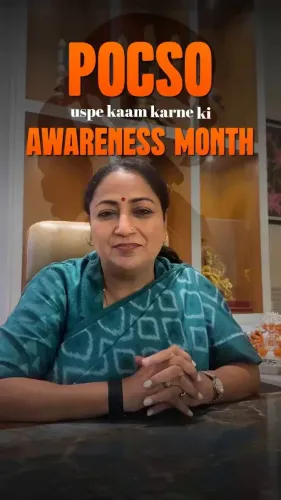
A Class V girl found her voice during a school safety session — and what she said led to an FIR. Delhi Chief Minister Rekha Gupta on Friday, 31 July 2026 revealed that a student at a Delhi private school disclosed during a POCSO awareness programme that she had been subjected to bad touch by her school van driver and one of his associates, prompting immediate police action.
Sharing the incident on social media with a direct appeal to parents, CM Gupta wrote: 'As a woman Chief Minister, I knew how essential it is to educate children about the difference between good touch and bad touch.' She urged parents to listen carefully if their child comes home and shares something similar — 'please listen carefully,' she said.
What the awareness session unlocked
The disclosure happened during one of the POCSO awareness sessions that Rekha Gupta's administration has been running across Delhi schools. A teacher received the girl's account, and authorities moved swiftly: an FIR was registered against the van driver and his associate. The case is precisely the outcome these programmes are designed to produce — a child who knows what bad touch means, and trusts an adult enough to say so.
The Protection of Children from Sexual Offences (POCSO) Act, 2012 created a dedicated legal framework for child sexual abuse cases in India, mandating child-friendly procedures and strict penalties. Since its enactment, states have used school-level good-touch/bad-touch sessions as a frontline tool to raise reporting rates — the gap between actual abuse and reported cases remaining one of child protection's most persistent challenges.
Why school transport is a specific vulnerability
The accused in this case were the school van driver and an associate — a reminder that children's daily commute is a setting where abuse can occur largely outside the view of parents and school staff. Private school transport in Delhi operates across thousands of routes, often with minimal oversight of driver conduct. This incident sharpens the case for extending safety awareness not just inside classrooms, but to children about every adult in their daily environment.
CM Gupta's appeal to parents
Beyond the policy dimension, Gupta's post carries a direct human message. 'Do not ignore it. Please,' she opened — an unusual register for a government communication, and deliberately so. The appeal is simple: if a child speaks up at home the way this girl spoke up in school, parents must create the same safe space a trained teacher did. That chain of trust, from child to adult to authority, is the entire mechanism the POCSO framework depends on.
One girl's courage in a Delhi classroom has now become the clearest argument yet for why these sessions cannot be a one-time exercise — and why every school van, every route, and every parent conversation is part of the same safety net.
Point of View
She ties personal identity to policy design, a posture that strengthens her base among women voters. The broader arc here is significant: POCSO awareness has been a low-visibility welfare measure since 2012, and this disclosure-to-FIR outcome gives the Delhi government a concrete, emotionally resonant data point to justify scaling it up. The appeal to parents also shifts responsibility outward — the state creates the awareness, but the family must complete the chain.
NationPress
31 Jul 2026
Frequently Asked Questions
What happened at the Delhi school during the POCSO awareness session?
A Class V girl gathered the courage to tell her teacher that she had been subjected to bad touch by her school van driver and one of his associates. An FIR was registered against the accused immediately after the disclosure.
What is the POCSO Act and how does it apply here?
The Protection of Children from Sexual Offences (POCSO) Act, 2012 is a central law that defines and penalises sexual offences against children under 18 and mandates child-friendly legal procedures. The FIR in this case was registered under this framework.
Why is Delhi running POCSO awareness sessions in schools?
Delhi Chief Minister Rekha Gupta's administration has been conducting good-touch/bad-touch awareness sessions in Delhi schools to help children identify and report abuse. The goal is to improve disclosure rates, which remain low nationally.
What is Rekha Gupta's appeal to parents?
CM Gupta urged all parents to listen carefully and not ignore it if their child comes home and shares an account of being touched inappropriately, treating the home as an equally important space for disclosure as the classroom.
Who were the accused in the Delhi school van abuse case?
According to CM Rekha Gupta's post, the accused are the driver of the girl's private school van and one of his associates. An FIR has been registered against them.