Delhi court frames charges against ex-PFI chief Abubacker in NIA Caliphate case

Synopsis
A Delhi court has formally framed charges against former PFI chief E. Abubacker and top functionaries in an NIA case alleging a conspiracy to establish an Islamic Caliphate in India by 2047 — dismissing all discharge pleas and clearing the path for full trial under UAPA and IPC provisions.
Key Takeaways
Additional Sessions Judge Prashant Sharma of Patiala House Courts ordered framing of charges on 5 June against former PFI chief E.
Abubacker and other functionaries.
The NIA alleges the accused conspired to overthrow India's government and establish an Islamic Caliphate under Sharia law by 2047 through armed struggle.
Abubacker faces charges under Sections 13, 17, 18, 18A and 18B of the UAPA and Sections 120B, 121A, 122 and 153A of the IPC .
Charges were also framed against PFI chairman O.M.A.
Salam , vice chairman E.M.
Abdul Rahiman , general secretary Anis Ahmed , and other senior functionaries.
The PFI was banned by the Union government under the UAPA in September 2022 ; Abubacker has been in judicial custody since 6 October 2022 .
The Supreme Court previously rejected Abubacker 's medical bail and house arrest pleas in January 2024 .
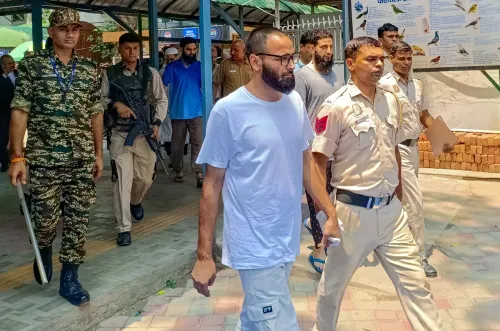
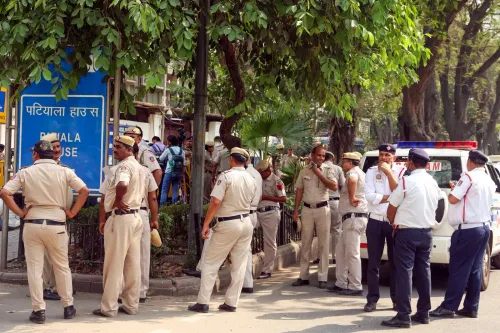
A Delhi court has ordered the framing of charges against former Popular Front of India (PFI) Chairman E. Abubacker and several senior functionaries of the banned organisation in a National Investigation Agency (NIA) case alleging a conspiracy to violently overthrow India's secular democratic government and establish an Islamic Caliphate by 2047. The order was passed on 5 June by Additional Sessions Judge Prashant Sharma of the Patiala House Courts, who dismissed discharge pleas filed by multiple accused.
What the Court Ruled
Additional Sessions Judge Prashant Sharma held that the material on record raised a 'grave suspicion' against the accused, meeting the legal threshold required for framing of charges. The judge clarified that at this stage, the court is not required to return a finding of guilt — only to determine whether sufficient suspicion exists to proceed to trial.
'At the stage of framing of charge, the Court is not called upon to record a finding of guilt. Where the material placed on record discloses grave suspicion against the accused, the Court must frame the charge,' the order stated.
Charges Framed and Accused Named
Abubacker has been directed to face charges under Sections 13, 17, 18, 18A and 18B of the Unlawful Activities (Prevention) Act (UAPA) and Sections 120B, 121A, 122 and 153A of the Indian Penal Code (IPC). The court similarly found sufficient material to frame charges against PFI chairman O.M.A. Salam, vice chairman E.M. Abdul Rahiman, general secretary Anis Ahmed, and several other senior functionaries. The PFI itself has been arrayed as an accused in the case.
The NIA's Case Against PFI
According to the NIA FIR registered in April 2022, the accused — acting through the PFI and its National Executive Council (NEC) — allegedly conspired to wage an armed struggle against the Indian State to establish an Islamic Caliphate under Sharia law by or before 2047. The prosecution's case further alleges that the organisation recruited and radicalised Muslim youth, conducted weapons-training camps across several states, raised funds through multiple channels, attempted to procure firearms, and that some accused provided support to ISIS.
Rejecting the defence argument that no terrorist act had been committed, the court noted that offences under the UAPA — including raising funds, conspiracy, preparation, organising arms training camps, and recruitment — do not require the completion of a terrorist act to be actionable.
Protected Witnesses and Defence Arguments
The court also declined to accept the defence's contention that protected witnesses were unreliable, observing that their credibility could only be tested through cross-examination during trial. 'Trustworthiness of a witness can only be tested during trial, especially when these witnesses are subjected to cross-examination. At the stage of framing of charges, the Court has to accept the statements on the face of it,' the order said.
In Abubacker's specific case, the court relied on statements of protected witnesses and documentary material furnished by the NIA, including allegations relating to recruitment, weapons training, and organisational expansion. 'Accordingly grave suspicion is made out against A-6 (Abubacker),' the court concluded.
Abubacker's Custody and Prior Supreme Court Proceedings
Abubacker was arrested by the NIA on 22 September 2022 and has been in judicial custody since 6 October 2022. The PFI was banned by the Union government under the UAPA in September 2022. In January 2024, the Supreme Court declined to grant him medical bail after examining reports from a panel of doctors from AIIMS Delhi. A bench headed by Justice M.M. Sundresh stated it was not inclined to release him on medical grounds at that stage, while granting him liberty to seek relief before the trial court if his condition worsened. The court also rejected his alternative plea seeking house arrest.
With charges now formally framed, the case moves to the trial stage — a significant procedural milestone in one of India's most closely watched UAPA prosecutions.
Point of View
Not a conviction — but it carries real legal weight. By dismissing all discharge pleas, the court has signalled that the NIA's evidentiary foundation is substantial enough to survive early scrutiny. The case tests a core question in Indian counter-terror law: how far UAPA's inchoate offences — conspiracy, preparation, recruitment — can stretch without proof of a completed terrorist act. The protected-witness framework, which the court has shielded from pre-trial challenge, will face its true test under cross-examination. With the PFI itself arrayed as an accused, the outcome could set a precedent for how India prosecutes organisational conspiracy at scale.
NationPress
26 Sept 2026
Frequently Asked Questions
What charges has the Delhi court framed against ex-PFI chief E. Abubacker?
The Delhi court has framed charges against E. Abubacker under Sections 13, 17, 18, 18A and 18B of the UAPA and Sections 120B, 121A, 122 and 153A of the IPC. These relate to conspiracy, fundraising, recruitment, and preparation for terrorist acts, among other offences.
What is the NIA's core allegation in the PFI Caliphate case?
The NIA alleges that the PFI and its National Executive Council conspired to overthrow India's secular democratic government and establish an Islamic Caliphate under Sharia law by 2047 through armed struggle. The FIR was registered in April 2022 and also includes allegations of weapons training, radicalisation, funding, and support to ISIS by some accused.
Why did the court reject the discharge pleas filed by the accused?
Additional Sessions Judge Prashant Sharma held that the material on record raised 'grave suspicion' against the accused, which is the legal standard required to frame charges. The court clarified that framing of charges does not amount to a finding of guilt and that the credibility of protected witnesses can only be tested during trial.
When was the PFI banned and how long has Abubacker been in custody?
The PFI was banned by the Union government under the UAPA in September 2022. E. Abubacker was arrested by the NIA on 22 September 2022 and has been in judicial custody since 6 October 2022. The Supreme Court rejected his medical bail and house arrest pleas in January 2024.
Who else has been charged alongside Abubacker in this case?
Charges have been framed against PFI chairman O.M.A. Salam, vice chairman E.M. Abdul Rahiman, general secretary Anis Ahmed, and several other senior functionaries under various provisions of the UAPA and IPC. The PFI itself has also been arrayed as an accused in the case.