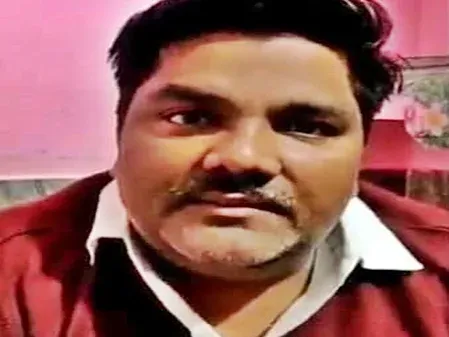
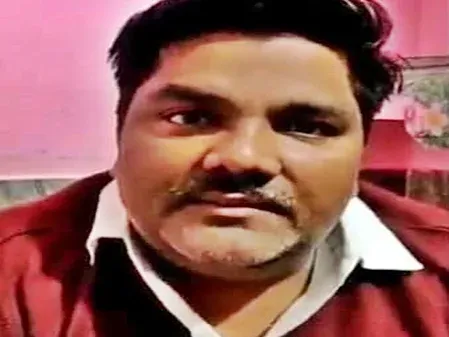
Ankit Sharma murder: Delhi court reserves sentencing order for Tahir Hussain; police seek death penalty
Synopsis
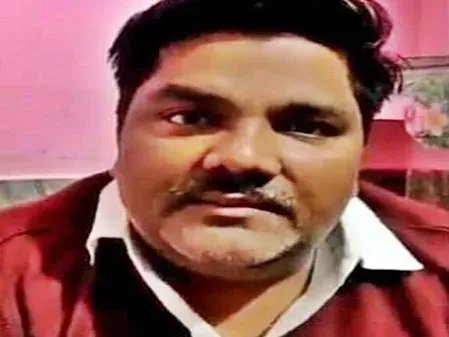
Five years after IB officer Ankit Sharma was killed during the 2020 North-East Delhi riots, a Delhi court is now deciding whether former AAP councillor Tahir Hussain and four co-convicts should face the death penalty. With 51 injuries on the victim's body and a prosecution calling it 'cold-blooded', the sentencing order due 31 July could set a significant precedent for riot-related murder cases in India.
Key Takeaways
The Karkardooma Court reserved its sentencing order on 27 July for former AAP councillor Tahir Hussain and four co-convicts in the Ankit Sharma murder case .
The order will be pronounced on 31 July by ASJ Praveen Singh .
Delhi Police sought the death penalty , citing 51 injuries on Sharma's body and calling the killing 'cold-blooded' and 'brutal'.
The defence argued the case does not meet the 'rarest of rare' threshold and that Hussain was not present at the exact spot of the killing.
Of 11 accused , only 5 were convicted after examination of 91 witnesses ; all five were acquitted of the criminal conspiracy charge under Section 120B IPC .
The 2020 North-East Delhi riots claimed 53 lives and caused property damage worth crores of rupees.
A Delhi court on Monday, 27 July reserved its order on the quantum of sentence to be imposed on former Aam Aadmi Party (AAP) councillor Tahir Hussain and four co-convicts in the murder of Intelligence Bureau (IB) officer Ankit Sharma during the 2020 North-East Delhi riots. Additional Sessions Judge (ASJ) Praveen Singh of the Karkardooma Court announced that the sentencing order will be pronounced on 31 July, following detailed submissions from both prosecution and defence.
Delhi Police Push for Death Penalty
Delhi Police urged the court to award the death penalty, characterising Sharma's killing as a 'cold-blooded' and 'brutal' murder. The prosecution pointed to 51 injuries found on Sharma's body as evidence of extreme brutality, arguing that the severity of the assault warranted the maximum punishment.
The police counsel submitted before the court: 'Those who want mercy should also show mercy. They have no evidence to show that any mercy was shown by any person to carry this person to a hospital.' The prosecution further contended that every member of a violent mob bears responsibility for crimes committed by that unlawful assembly, and that Hussain — rather than participating — should have acted to save Sharma.
Defence Arguments Against Capital Punishment
Counsel representing Hussain and co-convicts Nazir, Asim, Javed, and Anas argued that the case did not fall within the 'rarest of rare' category required to justify a death sentence. The defence noted that after examining 91 witnesses, the court convicted only five of 11 accused and acquitted the remaining six — indicating the prosecution's case was not accepted in its entirety.
The defence further argued that no evidence of criminal conspiracy under Section 120B of the Indian Penal Code (IPC) was established during the trial. It was also contended that while Hussain's presence in the area had been established, he was not at the exact spot where Sharma was killed, and no evidence linked him to a conspiracy to murder the IB officer. The defence additionally submitted that Hussain had himself called the police during the violence, and urged the court to consider the possibility of his reformation.
Conviction and Charges
Earlier in July 2025, the Karkardooma Court convicted Hussain, Javed, Anas, Nazim, and Kasim in the murder case, holding them guilty of offences including murder, kidnapping, rioting, and promoting enmity between different groups. In its detailed judgment, the court held Hussain guilty under Sections 302 (murder), 365 (kidnapping), 188 (disobedience to public servant's order), 153A (promoting enmity on grounds of religion), 147 (rioting), 148 (rioting with a deadly weapon), and 149 of the IPC. All five convicts were, however, acquitted of the criminal conspiracy charge under Section 120B.
Background: The Killing of Ankit Sharma
The case centres on the death of IB officer Ankit Sharma, whose body was recovered from a drain in the Khajuri Khas area on 26 February 2020, during the communal violence that engulfed North-East Delhi. According to the prosecution, Sharma was caught in clashes near his residence on 25 February 2020 when violence broke out near the Chand Bagh Pulia. He was allegedly abducted by a mob, assaulted, stabbed multiple times, and his body dumped in a nearby drain.
An FIR was registered at the Dayalpur police station on the complaint of Sharma's father, Ravinder Kumar, who stated that his son had stepped out to purchase household items and never returned. The North-East Delhi riots of February 2020 claimed 53 lives, left several others injured, and caused property damage worth crores of rupees.
The sentencing order, due on 31 July, will determine whether the court accepts the prosecution's case for capital punishment or opts for a lesser sentence — a decision that carries profound implications for riot-related accountability in India.
Point of View
Setting a precedent with ripple effects across dozens of pending riot-related prosecutions. A lesser sentence, on the other hand, risks being read as institutional reluctance to hold political figures to the same standard as ordinary offenders.
NationPress
26 Oct 2026
Frequently Asked Questions
What is the Ankit Sharma murder case?
It is the case involving the killing of Intelligence Bureau officer Ankit Sharma during the February 2020 North-East Delhi riots. His body was recovered from a drain in the Khajuri Khas area on 26 February 2020; he had allegedly been abducted, assaulted, and stabbed multiple times by a mob.
Who has been convicted in the Ankit Sharma murder case?
Former AAP councillor Tahir Hussain and four co-accused — Javed, Anas, Nazim, and Kasim — were convicted by the Karkardooma Court earlier in July 2025 on charges including murder, kidnapping, rioting, and promoting enmity between groups. Six other accused were acquitted.
Why is Delhi Police seeking the death penalty?
Delhi Police described the killing as 'cold-blooded' and 'brutal', pointing to 51 injuries on Sharma's body. The prosecution argued that the extreme nature of the assault, combined with the failure of anyone to take the victim to a hospital, places this case in the category warranting capital punishment.
What is the defence's argument against the death penalty?
The defence argues the case does not meet the 'rarest of rare' standard required for a death sentence. It notes that Hussain was not present at the exact spot of the killing, that no criminal conspiracy was established, and that Hussain himself called the police during the violence — citing scope for reformation.
When will the sentencing order be pronounced?
The Karkardooma Court is scheduled to pronounce the sentencing order on 31 July, after reserving it on 27 July following arguments from both prosecution and defence.