Delhi HC declares Nehru Place a no-vending zone, allows 90 vendors at alternate site
Synopsis
The Delhi High Court has drawn a hard line at Nehru Place District Centre — declaring it a no-hawking and no-vending zone — while carving out a safety net for 90 legally recognised vendors who must relocate to a designated site by 12 October. With over 400 vendors currently present and the TVC-II yet to be constituted, the ruling sets a firm deadline but leaves the long-term question of vending rights to a body that does not yet exist.
Key Takeaways
The Delhi High Court declared Nehru Place District Centre a no-hawking and no-vending zone on 6 October 2026 .
90 identified vendors — 62 from Manushi Sangathan, 22 from a connected petition, and 6 from two others — may operate at designated Site X temporarily.
All 90 vendors must shift to Site X by 12 October 2026 ; the MCD may remove remaining unauthorised vendors after that date.
More than 400 vendors were found operating at the site, with the court describing most as 'clearly unauthorised'.
The TVC-II , once constituted, must decide vending rights within two months ; a compliance hearing is set for 30 November 2026 .
The ruling applies the Supreme Court's 9 April 2026 precedent requiring authorities to offer workable alternatives before removing vendors from no-vending zones.
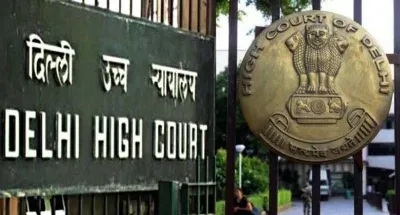
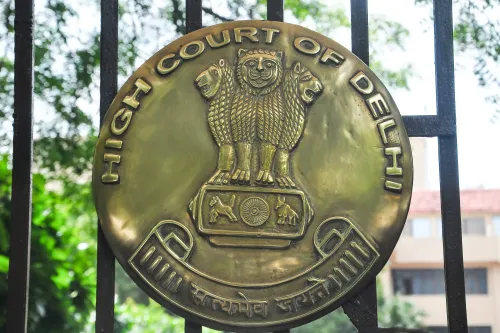
The Delhi High Court on 6 October 2026 declared the Nehru Place District Centre a 'No-hawking zone' and 'No-vending zone', barring a designated alternate site where 90 identified vendors will be permitted to operate temporarily until the Town Vending Committee-II (TVC-II) determines their long-term vending rights. The ruling resolves a long-running legal dispute over unauthorised street vending at one of Delhi's busiest commercial hubs.
The Court's Key Directions
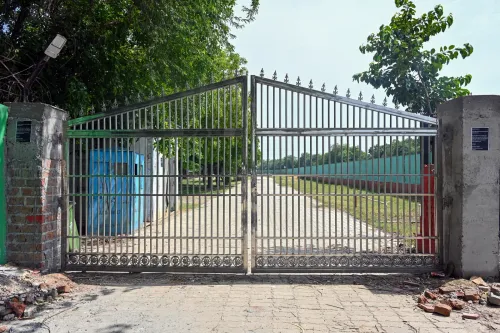
A Division Bench of Justice Prathiba M. Singh and Justice Dinesh Bhatt issued the order while adjudicating a batch of petitions and a contempt case relating to hawking and vending activities in the Nehru Place area. The bench noted that photographs taken as recently as 26 September, placed on record by both petitioners and respondents, left 'no manner of doubt' that declaring the district centre a no-vending zone was warranted.
The court directed the 90 vendors listed in Annexure A to relocate to the designated Site X by 12 October 2026. After that deadline, the Municipal Corporation of Delhi (MCD) will be free to remove all remaining unauthorised vendors from the area.
Who Gets Protection and Who Does Not
The bench observed that more than 400 vendors were currently operating at the Nehru Place District Centre, describing most of them as 'clearly unauthorised'. Of these, only 90 vendors were found to have relevant legal protection or recognition in the connected proceedings — 62 vendors associated with Manushi Sangathan, 22 vendors in W.P.(C) 6823/2017, and 6 vendors in two other connected petitions.
The court grounded its approach in the Street Vendors (Protection of Livelihood and Regulation of Street Vending) Act, 2014, which provides a statutory framework for vendor rights. It also drew on a Supreme Court decision dated 9 April 2026, which held that vendor removal must be carried out 'with care, fairness and responsibility' and that authorities must actively assist displaced vendors in shifting to designated vending zones.
What Authorities Have Been Asked to Do
The court directed the Delhi Fire Services to conduct an inspection of the Nehru Place District Centre once unauthorised vendors are cleared, and to file a compliance report. Delhi Police have been directed to cooperate with the MCD and the Delhi Development Authority (DDA) to ensure adherence to the judgment.
The TVC-II, upon its constitution, must decide within two months whether the 90 vendors are entitled to Certificates of Vending and, if so, specify the zones where each may operate. The matter has been listed for 30 November for review of the Delhi Fire Services' compliance report.
Broader Significance
This ruling is notable as it applies the Supreme Court's April 2026 precedent to a major urban commercial zone, reinforcing that no-vending declarations must be paired with workable resettlement alternatives. Nehru Place, a major electronics and IT market, has long been a flashpoint between traders, vendors, and civic bodies over encroachment and congestion. Notably, this comes at a time when the TVC-II — the statutory body tasked with vending governance in the zone — is yet to be constituted, raising questions about the pace of implementation of the 2014 Street Vendors Act across Delhi.
Point of View
The very body charged with determining vending rights, is not yet constituted, meaning the 90 vendors' futures hinge on a committee whose timeline is undefined. Delhi's repeated failure to operationalise Town Vending Committees a full decade after the 2014 Street Vendors Act is the upstream problem this order cannot fix — and without it, the cycle of encroachment, litigation, and clearances will resume.
NationPress
6 Oct 2026
Frequently Asked Questions
What has the Delhi High Court ordered about Nehru Place District Centre?
The Delhi High Court has declared the entire Nehru Place District Centre, except a specifically demarcated site, a 'No-hawking zone' and 'No-vending zone'. Only 90 legally identified vendors are permitted to continue operating, but only at the designated alternate Site X.
Who are the 90 vendors allowed to stay, and where must they go?
The 90 vendors comprise 62 associated with Manushi Sangathan, 22 from W.P.(C) 6823/2017, and 6 from two other connected petitions — all of whom had some form of legal recognition in the proceedings. They must relocate to the designated Site X by 12 October 2026.
What happens to the other vendors at Nehru Place after 12 October?
The court has authorised the MCD to remove all unauthorised vendors from the Nehru Place District Centre after 12 October 2026. Delhi Police have been directed to cooperate with the MCD and DDA to enforce compliance.
What is the Town Vending Committee-II and what role does it play?
The Town Vending Committee-II (TVC-II) is the statutory body under the Street Vendors Act, 2014, responsible for issuing Certificates of Vending and designating zones. The court has directed it to decide the 90 vendors' rights within two months of its constitution, though it has not yet been formed.
Which Supreme Court ruling did the Delhi High Court rely upon?
The Delhi High Court applied the Supreme Court's decision of 9 April 2026, which held that removing street vendors from no-vending zones must be done with 'care, fairness and responsibility', and that authorities are duty-bound to assist vendors in shifting to designated vending zones.