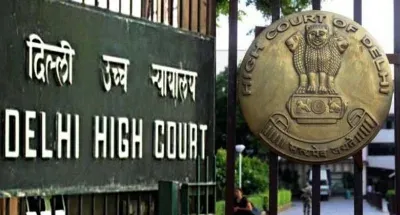
Delhi HC denies Vivo executive's plea to visit ailing father in China
Synopsis
The Delhi High Court has drawn a firm line: humanitarian compassion cannot override flight risk when no extradition treaty or MLAT exists between India and China. The Vivo executive's request to visit his 82-year-old father on life support was rejected — underscoring the legal vacuum that defines India-China judicial cooperation and the enormous scale of the alleged ₹2,02,41,17,72,292.89 PMLA case.
Key Takeaways
Delhi High Court dismissed the travel plea of Guangwen Kuang (Andrew) , a Chinese national and Vivo executive, on 14 July .
The applicant sought permission to visit his 82-year-old father in Guangzhou, China , who is reportedly on life support after a right cerebellar haemorrhage.
Alleged proceeds of crime in the PMLA case stand at approximately ₹2,02,41,17,72,292.89 .
India and China have no extradition treaty or Mutual Legal Assistance Treaty (MLAT) in criminal matters — a key factor in the court's refusal.
The court distinguished the case from Wu Chuannan v.
State of Chhattisgarh , noting the absence of government-backed safeguards present in that ruling.
Justice Madhu Jain held that a private employer's undertaking creates no legally enforceable obligation to secure the accused's return.
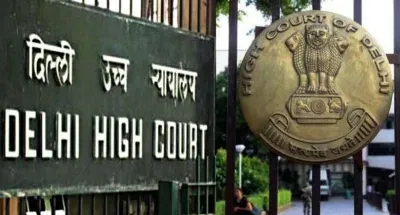
The Delhi High Court has refused to grant a Chinese national and Vivo executive permission to travel to China to visit his critically ill father, ruling on 14 July that humanitarian grounds alone cannot override the imperative of securing an accused's presence during trial — especially when no extradition or legal assistance treaty exists between India and China.
The Application and What Was Sought
The plea was filed by Guangwen Kuang, also known as Andrew, a Chinese national facing prosecution under the Prevention of Money Laundering Act (PMLA). He had sought the release of his passport and temporary permission to travel to Guangzhou, China, to visit his 82-year-old father, who is reportedly on life support following a right cerebellar haemorrhage.
A single-judge bench of Justice Madhu Jain dismissed the application, recording that the allegations against the applicant relate to 'a serious economic offence of an exceptionally high magnitude' — with alleged proceeds of crime amounting to approximately ₹2,02,41,17,72,292.89.
The Court's Reasoning
'This Court is conscious of the humanitarian circumstances projected by the applicant regarding the medical condition of his father. However, while considering an application seeking permission to travel abroad during the pendency of criminal proceedings, humanitarian considerations alone cannot be determinative,' Justice Jain stated in the order.
The court held that it was required 'to balance such considerations with the interest of justice and the necessity of securing the presence of the accused throughout the proceedings.' It accepted the Enforcement Directorate's (ED) contention that the apprehension of non-return 'cannot be brushed aside as merely speculative.'
No Treaty, No Mechanism to Verify or Retrieve
A central concern in the court's reasoning was the complete absence of both an extradition treaty and a Mutual Legal Assistance Treaty (MLAT) in criminal matters between India and the People's Republic of China. This dual gap, the court noted, made it impossible to verify the authenticity of the medical documents submitted in support of the application within a reasonable timeframe.
'In the absence of such a mechanism, the only course available would be by way of issuance of Letters Rogatory or a judicial request through diplomatic channels. Such a process is time-consuming and may take several months, and in some cases approximately a year, before any response is received,' the order observed.
The court also drew on a 2024 Karnataka High Court judgment that had taken note of Chinese law restricting foreign nationals facing criminal proceedings from leaving China — a principle Justice Jain held was equally significant here.
Why Past Precedents Did Not Apply
The applicant had relied on the Supreme Court's decision in Wu Chuannan & Ors. v. State of Chhattisgarh, arguing that travel permission had been granted in comparable circumstances. The court rejected this comparison, noting that the earlier case involved several safeguards absent here: prior compliance with travel permissions, a bank guarantee of ₹1 crore, an undertaking from a government-owned Chinese employer, and an assurance from the Chinese Consulate General.
In the present case, the undertaking was furnished by the applicant's private employer, which, the court said, 'neither emanates from any governmental authority nor creates any legally enforceable obligation capable of securing the applicant's return to India.'
What Happens Next
With the application dismissed, Guangwen Kuang remains bound by the conditions of his bail and must continue to appear before the trial court. The PMLA proceedings against him — and, by extension, the broader probe into alleged financial irregularities linked to Vivo India — are expected to continue. The ruling reinforces a cautious judicial posture in cases involving foreign nationals from countries with which India lacks bilateral legal cooperation frameworks.
Point of View
The courts are left with little recourse beyond holding the line on presence. The Vivo case is not an outlier — it is a stress test. India's expanding economic ties with China sit uneasily alongside the near-total absence of bilateral judicial cooperation. Until that gap is addressed through treaty negotiation, courts will continue to use flight risk as the default veto, regardless of the human cost.
NationPress
13 Oct 2026
Frequently Asked Questions
Why did the Delhi High Court reject Guangwen Kuang's travel plea?
The court rejected the plea primarily because India and China have no extradition treaty or Mutual Legal Assistance Treaty (MLAT), making it impossible to guarantee the accused's return or verify medical documents submitted in support of the application. Justice Madhu Jain held that humanitarian considerations alone cannot override the need to secure the accused's presence during trial.
What is the Vivo PMLA case about?
Guangwen Kuang, a Chinese national and Vivo executive, faces prosecution under the Prevention of Money Laundering Act (PMLA) in a case involving alleged proceeds of crime amounting to approximately ₹2,02,41,17,72,292.89. The Enforcement Directorate is the prosecuting agency.
What is an MLAT and why does its absence matter here?
A Mutual Legal Assistance Treaty (MLAT) is a bilateral agreement allowing countries to share evidence, verify documents, and cooperate in criminal proceedings. Its absence between India and China meant the court could not verify the medical records of the applicant's father through any fast-track mechanism, relying instead on slow diplomatic channels that can take up to a year.
How did the court distinguish this case from the Supreme Court's Wu Chuannan ruling?
The Supreme Court's decision in Wu Chuannan v. State of Chhattisgarh involved safeguards such as a ₹1 crore bank guarantee, an undertaking from a government-owned Chinese employer, and assurance from the Chinese Consulate General. In the present case, the undertaking came only from a private employer, which the court held creates no legally enforceable obligation to secure the accused's return.
What happens to the case now that the travel plea is dismissed?
Guangwen Kuang remains subject to his bail conditions and must continue appearing before the trial court. The PMLA proceedings linked to Vivo India are expected to continue, with the dismissal reinforcing judicial caution in cases involving foreign nationals from countries that lack bilateral legal cooperation agreements with India.