SC issues notice on Chinese national's plea to visit ailing mother in China
Synopsis
The Supreme Court has stepped in where the Allahabad High Court drew the line — bringing in the Ministry of External Affairs to explore whether a man facing serious criminal charges can still reach his cancer-stricken mother in China. With no extradition treaty in place, the bench is navigating uncharted legal territory between humanitarian obligation and criminal justice risk.
Key Takeaways
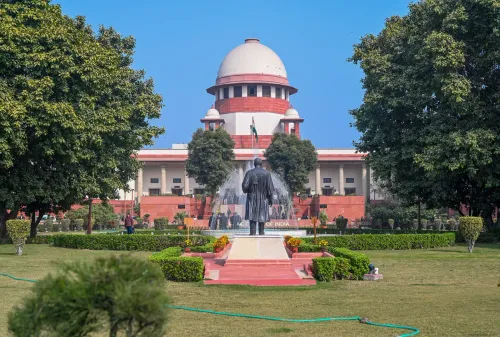
The Supreme Court issued notice on 5 June 2025 on a plea by Liu Fengfei , a Chinese national seeking permission to visit his critically ill mother in China's Henan Province .
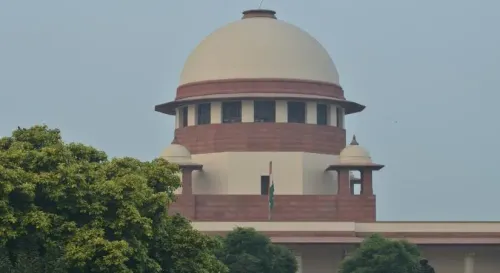
A bench of Justices Dipankar Datta and Satish Chandra Sharma cited 'purely humanitarian grounds' for admitting the matter.
The Ministry of External Affairs was impleaded as an additional respondent due to the absence of an India-China extradition treaty .
Liu faces trial in Gautam Budh Nagar, UP under multiple IPC sections and the IT Act for alleged fraud and forgery.
The Allahabad High Court had on 24 February 2025 refused permission, calling Liu an 'unacceptably high flight risk.' The next hearing is scheduled for the week of 10 August 2025 .
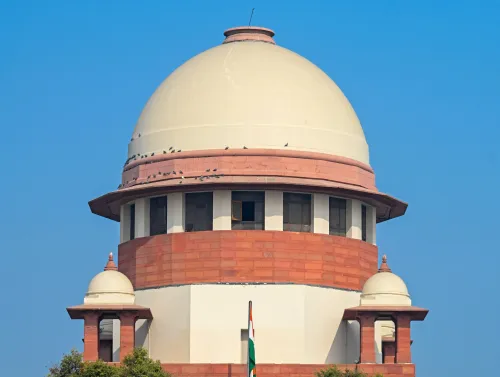
The Supreme Court of India on 5 June 2025 issued notice on a petition filed by Liu Fengfei, a Chinese national facing criminal trial in Uttar Pradesh, who sought permission to travel to China for two months to visit his critically ill mother. A bench of Justices Dipankar Datta and Satish Chandra Sharma observed that the matter warranted consideration on 'purely humanitarian grounds'.
What the Supreme Court Ordered
The bench directed the issuance of notice and also impleaded the Ministry of External Affairs (MEA) as an additional respondent, citing the absence of an extradition treaty between India and China. The court clarified that the MEA's inclusion was 'solely to explore the possibility of finding out a way to enable the petitioner to be by the side of his mother for some time.' The matter has been posted for further hearing in the week commencing 10 August 2025.
Background: The Allahabad High Court's Refusal
Liu had earlier approached the Allahabad High Court seeking permission to travel to Nanyang city in China's Henan Province, where his mother is reportedly suffering from cancer and is critically ill. A single-judge bench of Justice Vivek Kumar Singh, in an order passed on 24 February 2025, dismissed the plea, holding that Liu was an 'unacceptably high flight risk which poses a danger to the process of law.'
The High Court further noted that since India and China have no extradition treaty, if Liu failed to return, 'the criminal justice process would come to a dead end.' Before the High Court, Liu had argued that the trial court had rejected his request in a mechanical manner despite the medical emergency in his family.
The Criminal Case Against Liu
According to court records, Liu Fengfei is currently facing trial in Gautam Budh Nagar, Uttar Pradesh, under Sections 419, 420, 467, 468, 471, 201 and 120B of the Indian Penal Code, as well as Section 66 of the Information Technology Act. He has described himself as an engineering professional associated with a private company.
The Uttar Pradesh government opposed his plea at the High Court stage, submitting that Liu posed a significant flight risk given the serious nature of the charges and the absence of any legal framework with China to ensure his return.
The No-Extradition Treaty Complication
The lack of an extradition arrangement between India and China sits at the heart of this case. The Supreme Court's decision to bring in the MEA signals a search for a diplomatic or administrative mechanism — potentially a travel bond, consular undertaking, or other assurance — that could balance humanitarian considerations against the risk of the accused not returning to face trial. Notably, India-China extradition discussions have remained stalled for decades, making such cases legally novel.
What Happens Next
With the Supreme Court seeking responses from both the Centre and existing respondents, the next hearing in August 2025 will be closely watched. The court's willingness to engage the MEA suggests it is open to exploring a middle path, though the state government's flight-risk argument remains a significant hurdle. The outcome could set a precedent for how Indian courts handle similar humanitarian travel requests from foreign nationals facing trial without extradition cover.
Frequently Asked Questions
Why has the Supreme Court issued notice in Liu Fengfei's case?
The Supreme Court issued notice because Liu Fengfei, a Chinese national facing criminal trial in Uttar Pradesh, sought permission to visit his critically ill, cancer-stricken mother in China on humanitarian grounds. The bench found the matter deserved consideration and also brought in the Ministry of External Affairs given the absence of an India-China extradition treaty.
Why was the Allahabad High Court's permission refused?
The Allahabad High Court refused permission on 24 February 2025, holding that Liu was an 'unacceptably high flight risk.' The court noted that since India and China have no extradition treaty, there was no legal mechanism to ensure his return, which could bring the criminal trial to a dead end.
What criminal charges does Liu Fengfei face in India?
Liu is facing trial in Gautam Budh Nagar, Uttar Pradesh, under Sections 419, 420, 467, 468, 471, 201 and 120B of the IPC and Section 66 of the Information Technology Act — charges that include cheating, forgery, and criminal conspiracy.
Why was the Ministry of External Affairs added to the case?
The Supreme Court impleaded the Ministry of External Affairs because India and China do not have an extradition treaty. The court said the MEA's inclusion was solely to explore whether a diplomatic or administrative arrangement could allow Liu to visit his mother while managing the flight risk.
When is the next hearing in the Supreme Court?
The Supreme Court has posted the matter for further hearing in the week commencing 10 August 2025, by which time the Ministry of External Affairs and other respondents are expected to file their responses.